
How to Find an English Speaking Partner Online for Free
페이지 정보
 Michael Desrosiers
Langclub Co-founder · MA, Johns Hopkins University
Michael Desrosiers
Langclub Co-founder · MA, Johns Hopkins University

Find an English speaking partner online for free with practical places to look, three first-message templates, and a simple plan for your first conversation.
The quickest way to start: choose a language exchange or a scheduled group discussion, state when you are available, and suggest one short conversation about a shared interest. A specific invitation is easier to answer than “Can you help me improve my English?”
You do not need to find a perfect partner before you start speaking. You need someone whose schedule and expectations fit yours. This guide walks you from finding that person to actually having a conversation.
This guide is published by Langclub. We include our group sessions as an alternative to finding a one-to-one partner. The message templates and practice activities below are original examples.
1. Choose between a language exchange and a group conversation
Both formats can help you meet people to practice with, but they ask different things of you.
- A one-to-one language exchange: you help someone practice a language you know, and they help you with English. You arrange the time, choose how to call, and agree on how to divide the conversation between languages.
- Practice with another English learner: both of you use English. Look for compatible goals and enough shared language to keep a conversation going.
- A scheduled group discussion: choose an available session and meet the people attending it. This can suit you if you would rather choose a topic and time than coordinate with an individual partner.
A partner does not have to be a native English speaker. Someone who listens, asks questions, and gives you room to speak can be a useful practice partner. If you need individual correction, agree on that separately; ordinary conversation practice does not automatically include teaching.
2. Where to find an English speaking partner online
Conversation Exchange: arrange an exchange yourself
Conversation Exchange offers ways to find people for language exchange, including text, voice, and video chat. For speaking practice, look for someone interested in calls and agree on the software you will use. Make clear which language you can help with in return.
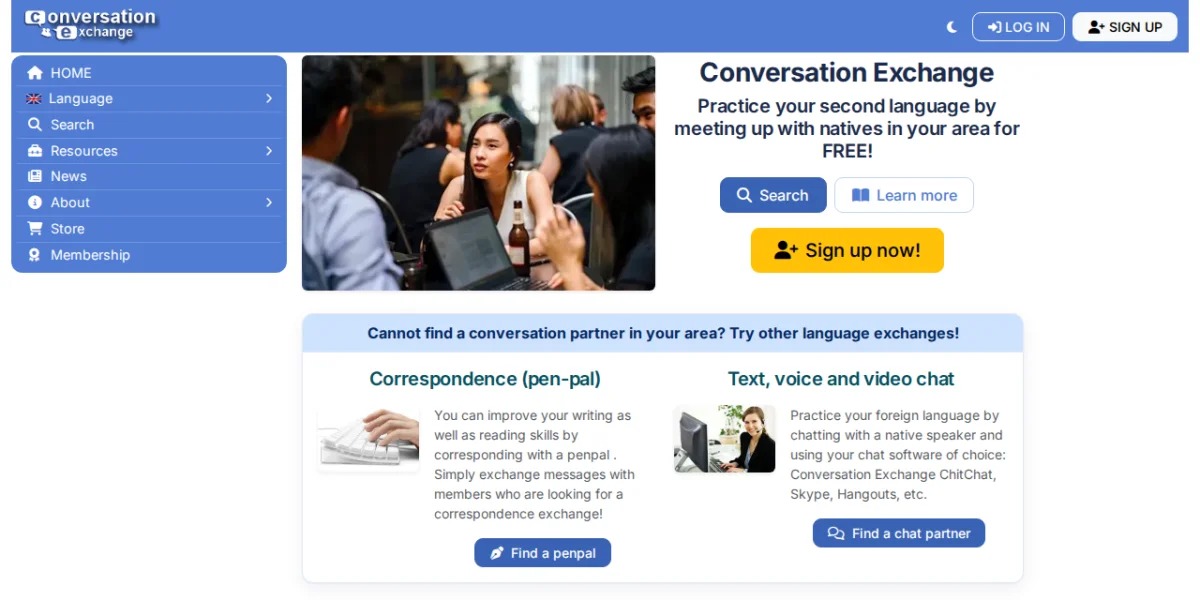
Conversation Exchange website preview. The website lists different exchange formats. For speaking practice, look for the voice and video chat option. Source: Conversation Exchange. Captured October 12, 2026. Enlarge screenshot.
Tandem: look for complementary language goals
Tandem connects language learners through its app. Look for a person learning a language you speak and mention an interest you share. Check the current free-access options for the communication method you want to use.
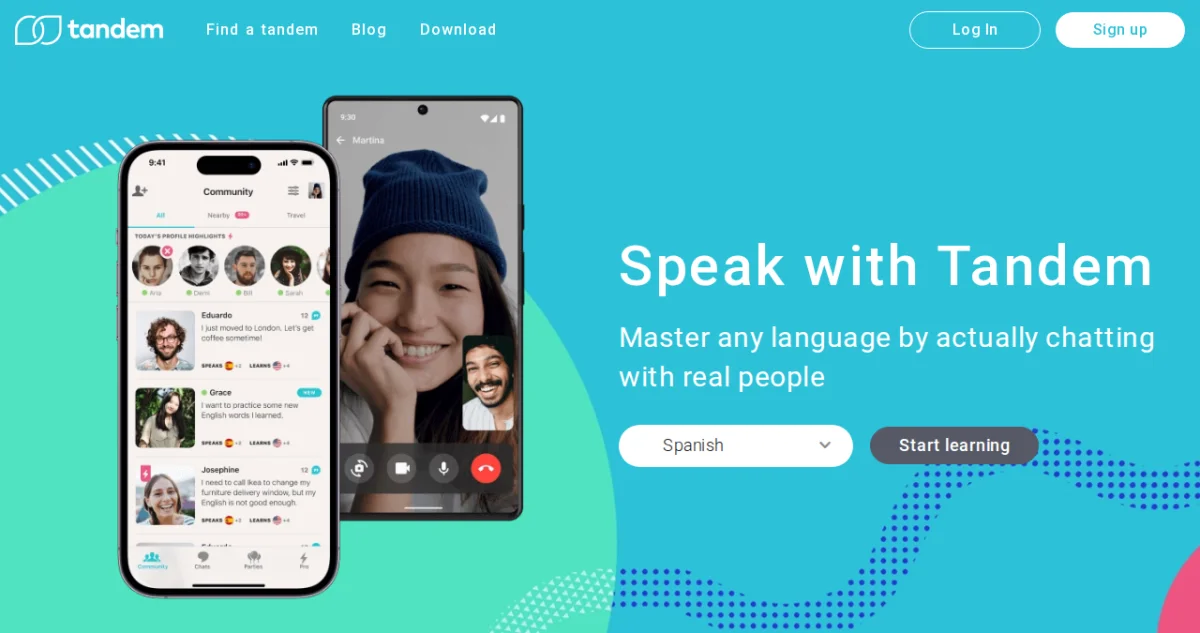
Tandem website preview. The official website previews the app’s community and video calling interface. Source: Tandem. Captured October 12, 2026. Enlarge screenshot.
HelloTalk: turn an introduction into a conversation
HelloTalk offers language exchange through text, voice, and video. Use an initial message to find out whether the other person wants speaking practice too. Once you both feel comfortable, suggest a short conversation instead of assuming that messaging will naturally turn into a call.
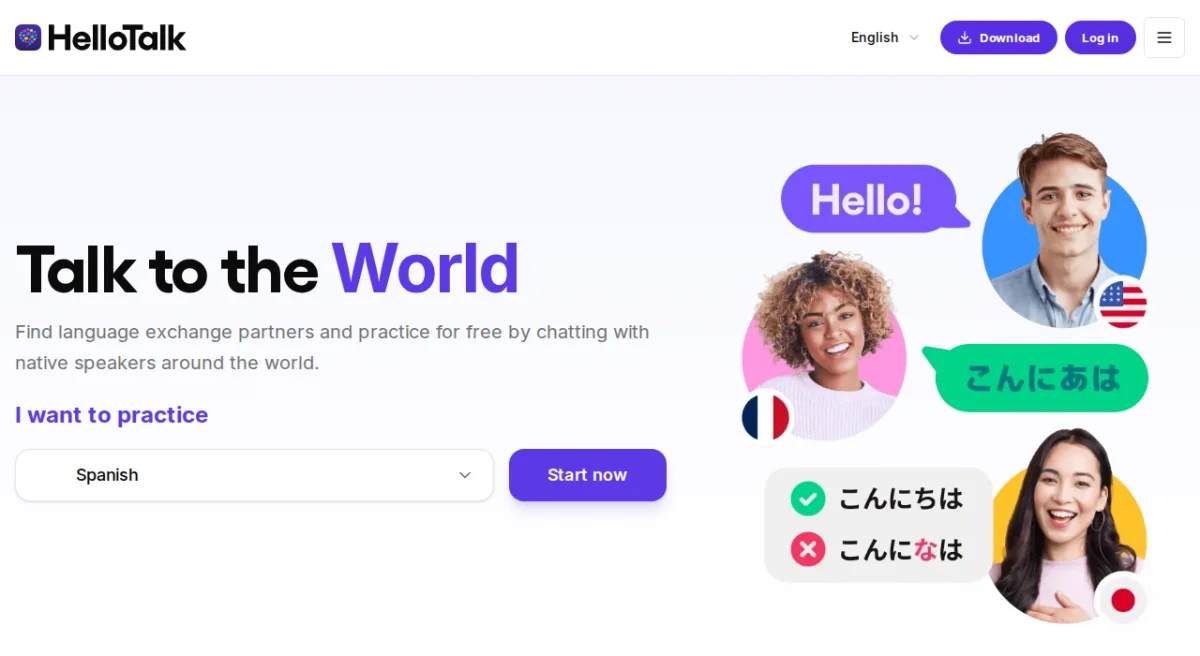
HelloTalk website preview. The website introduces language exchange and lets you choose a language to practice. Source: HelloTalk. Captured October 12, 2026. Enlarge screenshot.
Langclub: meet people in a scheduled English discussion
If arranging a one-to-one exchange keeps delaying your practice, a group session is another starting point. Langclub offers scheduled discussions with other English learners. It is a group conversation format, not a private partner-matching service, and you should not expect the same participants every time.
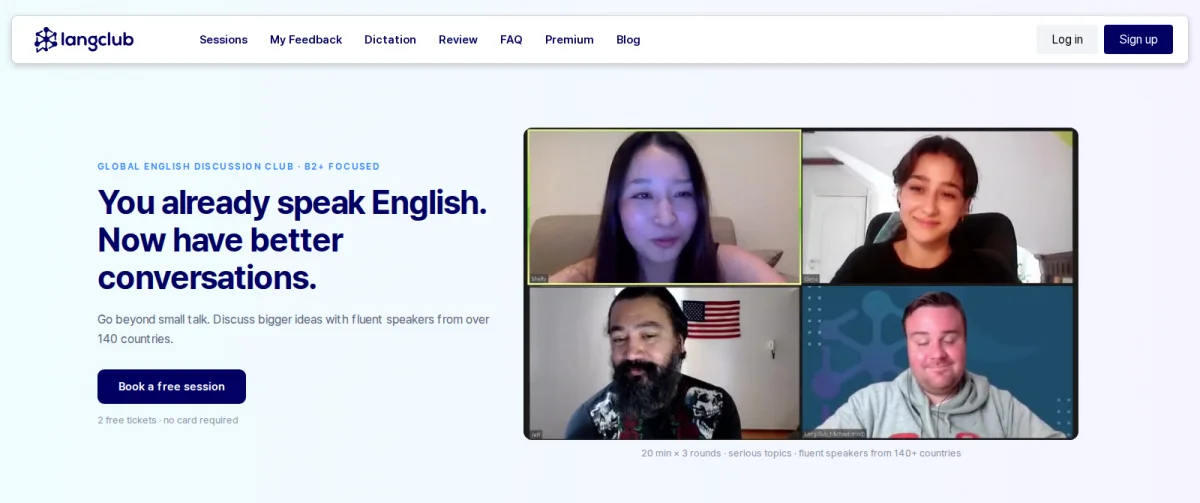
Langclub website preview. The homepage shows the group conversation format and how to start with two free introductory tickets. Source: Langclub. Captured October 12, 2026. Enlarge screenshot.
New Langclub members receive two free introductory regular-session tickets, with no credit card required. These tickets do not renew. Browse the available topics and times, choose a regular session, and use your tickets to try the discussions. The format is best suited to intermediate and advanced learners who can already take part in a conversation.
People who enjoy helping run discussions can also explore the Community Host Program, which offers free regular-session access in exchange for hosting responsibilities under the program’s requirements.
For a broader overview of the different formats, see our comparison of five sites for free English speaking practice.
3. Make it easy for the right partner to reply
A useful profile tells someone what practicing with you would look like. Include:
- Your goal: everyday conversation, giving longer answers, or discussing work and hobbies.
- Your current comfort level: describe what you can do, such as “I can have a conversation, but I need time to explain my opinions.”
- Your availability: two realistic time windows and your time zone.
- Your interests: two or three topics you would enjoy discussing.
- What you offer: the language you can help with, or your interest in practicing English together.
For example:
Hi! I’m learning English and would like to practice explaining my opinions. I can help you with Korean. I enjoy movies, cooking, and talking about everyday life. I’m usually available on Tuesdays or Thursdays from 8–9 p.m. Korea Standard Time (UTC+9). Would you like to try a short language exchange?
Use your real availability and interests. “Any time” sounds flexible, but two concrete options are easier to schedule.
4. Copy one of these three first-message templates
Personalize the bracketed details and send the message only when the person’s profile looks like a reasonable match.
Template 1: a mutual language exchange
Hi [name]! I saw that you’re learning [language]. I speak it and would be happy to practice with you. I’m working on my English, especially [goal]. Would you like to try a 20-minute call, with 10 minutes in each language? I’m free [option A] or [option B], in [time zone].
Template 2: practice with another English learner
Hi [name]! We both seem interested in [shared interest]. I’m looking for someone to practice English conversation with. Would you be interested in a 15-minute chat about [specific topic]? We could each bring two questions. Does [day and time, including time zone] work for you?
Template 3: move from messages to speaking
I’ve enjoyed chatting about [topic]. Would you be comfortable trying a short voice call? We could talk for 10–15 minutes and keep it casual. If you prefer, we can exchange a voice message first.
Give the other person room to decline. If there is no response, you can send one brief follow-up after a few days, then try someone else. Silence does not tell you anything reliable about your English ability.
5. Agree on four things before the call
- Time: confirm the date and both local times. Time differences can change when daylight saving time starts or ends.
- Length: begin with a short conversation rather than asking for a weekly commitment immediately.
- Language split: if it is an exchange, give both people time in their target language.
- Feedback: ask whether they want corrections during the conversation or one or two suggestions afterward.
A simple confirmation works: “Great—Thursday at 8 p.m. in Seoul, which is 11 a.m. UTC. Let’s do 10 minutes in English and 10 in Korean. Shall we save corrections for the end?”
Use the platform’s communication tools when available. You do not need to share your home address, workplace details, or personal contact information to arrange practice. If someone makes you uncomfortable, end the conversation and use the platform’s block or report feature.
6. Use this plan for your first 15 minutes
This is a suggested practice activity for two learners speaking English. For a two-language exchange, adapt it into shorter sections and give each language equal time. It is not the schedule of a Langclub session.
- Minutes 0–2: settle in. Introduce yourselves and ask, “What would you like to practice today?”
- Minutes 2–6: share something familiar. Each person describes a recent experience, such as a meal they made or a movie they watched.
- Minutes 6–11: explore one question. Try “What is something you changed your mind about recently?” Ask each other for reasons and examples.
- Minutes 11–13: revisit a difficult moment. Try explaining an idea again, or ask for one useful expression if you agreed to exchange feedback.
- Minutes 13–15: decide on a next step. If you both enjoyed it, suggest another topic and a specific time.
When you get a short answer, try “What made you choose that?”, “Can you give me an example?”, or “Has that always been true for you?” Share your own answer too, so the conversation does not feel like an interview.
Need a starting topic? Pick one from our 30 free talk questions for adults. If you lose track of an answer, these phrases for asking someone to clarify can help.
7. If finding a partner takes longer than expected
You may meet friendly people whose schedules simply do not match yours. Keep the first commitment small, and look for a pattern over a few conversations before depending on one person for all your practice.
If coordinating calls is the obstacle, try a scheduled group discussion alongside your partner search. You can choose a session that fits your calendar and arrive with a topic ready to discuss.
Explore upcoming Langclub discussions and choose your first topic →
While you wait for a reply, record a one-minute answer to the question you want to discuss. Listen once, choose one thing to improve, and say it again. Our 30-minute solo speaking routine gives you a longer practice option between conversations.
Frequently asked questions
Can I find an English speaking partner for free?
Yes. A mutual language exchange lets you contribute practice time in a language you know and receive help with English in return. Learners can also agree to practice English together. Langclub offers a different format: two free introductory regular-session tickets for new members to try group discussions.
Do I need a native English speaker?
No. Another learner can be a good partner for practicing explanations, listening, and asking follow-up questions. Choose someone you can communicate with and whose goals fit yours. If you want expert correction, a peer conversation alone may not meet that need.
What if my English is too basic for a long conversation?
Start with one familiar topic, a short voice message, or a five-minute exchange. Prepare a few useful phrases, but leave room for a real response. Langclub’s regular discussions are better suited to learners who can already hold a conversation.
Does Langclub assign me a private speaking partner?
No. Langclub offers scheduled group discussions. You join other learners attending the session rather than receiving a dedicated one-to-one partner.
What should I do after a good first conversation?
Suggest one specific next conversation: “I enjoyed hearing about your trip. Would you like to talk next Thursday about places we’d like to visit?” A clear topic and time make the next step easy to answer.
Service descriptions checked October 12, 2026, against the official pages linked above. Free-access conditions and features can change.