
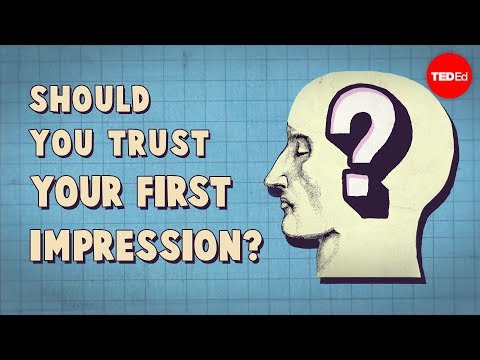
Can First Impressions Be Trusted?
Learn topic-related expressions and join the speaking club to practice them!
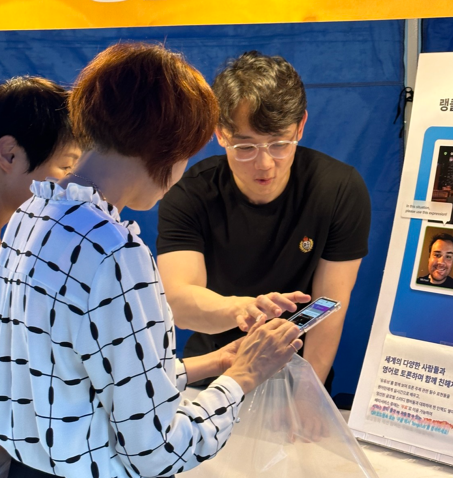

Hi there! I'm Jonah from Langclub. I'm interested in new technologies to help people learn languages and connecting people.

Topic guide Optional
A quick way to understand the topic and find useful language. Read as much or as little as you like.
1-minute overview
First impressions are rapid judgments we make from limited cues: appearance, voice, facial expression, body language, context, and sometimes a short online profile. Research suggests that people can form consistent impressions remarkably quickly, and these early judgments often influence how they interpret later behavior. This helps explain why a quiet person may be seen as cold, or why one confident moment can create a lasting positive image.
Yet speed is not the same as accuracy. Some quick judgments may capture visible social signals, but they can also reflect stereotypes, mood, cultural expectations, or missing information. Clothing can signal a role, group, or occasion, for example, but it rarely reveals character on its own. Online encounters add another complication: profiles and messages can be carefully selected, while face-to-face interaction provides more spontaneous cues. A useful approach is to treat first impressions as hypotheses: notice them, but stay open to new evidence and give people time to complicate the story.
Yet speed is not the same as accuracy. Some quick judgments may capture visible social signals, but they can also reflect stereotypes, mood, cultural expectations, or missing information. Clothing can signal a role, group, or occasion, for example, but it rarely reveals character on its own. Online encounters add another complication: profiles and messages can be carefully selected, while face-to-face interaction provides more spontaneous cues. A useful approach is to treat first impressions as hypotheses: notice them, but stay open to new evidence and give people time to complicate the story.
Useful vocabulary
Approx. CEFR · Topic relevance
primacy effect
The tendency for information received first to have extra influence on judgment.
The primacy effect may explain why it took me months to change my opinion of him.
thin slice
A very brief sample of someone’s behavior used to make a judgment.
A job interview begins with a thin slice of interaction before the serious conversation starts.
nonverbal cue
A signal communicated without words, such as posture, eye contact, or tone.
Her relaxed nonverbal cues made her seem approachable.
stereotype
/ˈsteriəˌtaɪp/A fixed and oversimplified belief about a group of people.
We should ask whether our reaction is based on the individual or on a stereotype.
confirmation bias
The tendency to notice evidence that supports an existing belief and overlook conflicting evidence.
Confirmation bias can make an early negative judgment feel more convincing over time.
authenticity
/ˌɔθenˈtɪsəti/The quality of being genuine rather than pretending to be someone else.
Trying to make a good impression should not require sacrificing authenticity.
Useful expressions
I would distinguish between an immediate reaction and a reliable judgment.
Use this to separate a feeling in the moment from a considered conclusion.
I would distinguish between an immediate reaction and a reliable judgment, especially in a stressful setting.
That may be a useful signal, but it is not decisive evidence.
Use this to recognize a clue while challenging an overconfident conclusion.
A person’s clothing may be a useful signal, but it is not decisive evidence about their values.
The context changes how we should interpret it.
Use this to show that the same behavior can mean different things in different situations.
If someone seems distant, the context changes how we should interpret it: they may simply be nervous.
There is a risk of reading too much into limited information.
Use this to question conclusions based on a small amount of evidence.
With social media profiles, there is a risk of reading too much into limited information.
My initial view would need to be tested against later behavior.
Use this to express openness to revising an opinion.
If someone seemed unfriendly at first, my initial view would need to be tested against later behavior.
Sources & further reading
Question list
- Ice breaking
- Main topic
- Free talk
| Q1. | What’s a dream or goal that feels deeply personal and meaningful to you? |
|---|---|
| Q2. | Do you listen to podcasts? |
| Q3. | What is a small luxury you would keep even if you lived simply? |
| Q4. | What's the most interesting cultural tradition you've witnessed or experienced, and what did you learn from it? |
| Q5. | What's the most precious thing you have gifted to someone? |
| Q6. | Where do you like to observe natural scenery? |
| Q7. | Do you believe in the law of attraction? |
| Q8. | Do you think complaining relieves stress? |
| Q1. | What do you notice first when meeting someone? |
|---|---|
| Q2. | Have you ever had a first impression that was completely wrong? |
| Q3. | How quickly do people usually form an opinion about someone? |
| Q4. | Can clothing give useful information about a person’s character? |
| Q5. | Why are first impressions difficult to change? |
| Q6. | Are online first impressions less reliable than face-to-face ones? |
| Q7. | How can someone make a positive first impression without pretending? |
| Q8. | Should we trust our feelings when someone seems unfriendly at first? |
| Q1. | What is the most spontaneous or adventurous thing you've ever done? |
|---|---|
| Q2. | What role do you think sustainable and ethical food practices play in shaping the future of food and culinary culture? |
| Q3. | How do you think your personal definition of success will continue to evolve and change throughout your life? |
| Q4. | What kinds of events or experiences can dramatically change someone’s outlook on life? |
| Q5. | Is morality objective or subjective? |
| Q6. | How do you navigate the balance between self-care and caring for others? |
| Q7. | What's your motivation for getting out of bed each day? |
| Q8. | If you could witness any event in history, what would it be and why? |
Rules


Please be kind and respectful.
Note: You can be banned for violating any of these rules
No flirting! Don't ask for other people's social network, number etc. if he/she refuses to give them.
Note: You can be banned for violating any of these rules
Give others an equal opportunity to speak.
Note: You can be banned for violating any of these rules
Avoid Smoking / Drinking while you are talking.
Note: You can be banned for violating any of these rules
Turning your camera on is mandatory.
Note: You can be banned for violating any of these rules
Ready to join the conversation?
Book your spot and bring your perspective to the discussion.