
Can Tolerance Go Too Far?
Learn topic-related expressions and join the speaking club to practice them!
I'm Teacher Michael, a licensed English teacher.
I'm originally from the United States, but I have been working as a full-time TEFL-certified high school English teacher in Thailand since 2013. I have a Bachelor's Degree in International Relations and I am currently studying for my Master's Degree in Liberal Arts.

Topic guide Optional
A quick way to understand the topic and find useful language. Read as much or as little as you like.
1-minute overview
Tolerance is often described as the willingness to permit beliefs or practices we dislike, rather than a demand for approval. In diverse societies, it can protect religious freedom, political dissent, and unconventional ways of life. Yet tolerance is never simply passive: institutions decide what speech, conduct, and risks they will allow.
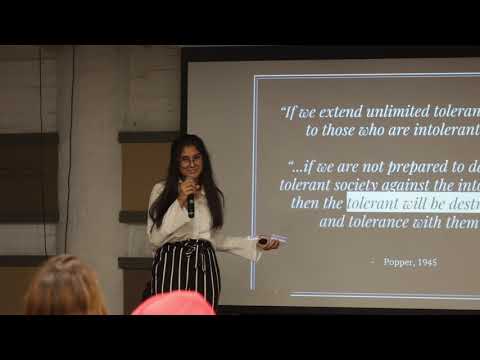
The central tension is between openness and protection. A society that punishes every offensive opinion may silence legitimate disagreement; one that ignores threats, coercion, or calls to exclude others may leave vulnerable people less free. This dilemma is often called the paradox of tolerance: must an open society defend itself against movements that would end openness?
The difficult questions concern both principle and power. Is harm the right boundary, and if so, who defines it? Should laws, platforms, employers, schools, or communities set different limits? Productive discussion distinguishes criticism from dehumanization, offensive ideas from incitement, and social consequences from state punishment. It also asks whether firm shared values can coexist with humility about one’s own convictions.
The central tension is between openness and protection. A society that punishes every offensive opinion may silence legitimate disagreement; one that ignores threats, coercion, or calls to exclude others may leave vulnerable people less free. This dilemma is often called the paradox of tolerance: must an open society defend itself against movements that would end openness?
The difficult questions concern both principle and power. Is harm the right boundary, and if so, who defines it? Should laws, platforms, employers, schools, or communities set different limits? Productive discussion distinguishes criticism from dehumanization, offensive ideas from incitement, and social consequences from state punishment. It also asks whether firm shared values can coexist with humility about one’s own convictions.
Useful vocabulary
Approx. CEFR · Topic relevance
toleration
The practice of allowing views or conduct one disapproves of without trying to suppress them.
Toleration becomes difficult when a belief is seen as threatening equal rights.
pluralism
The idea that people with different identities, values, and beliefs can live together in one society.
Pluralism requires more than diversity; it requires ways of managing disagreement.
incitement
Speech that actively encourages others to commit harmful or unlawful acts.
Some argue that incitement, unlike mere offence, can justify legal limits on speech.
dehumanization
Language or attitudes that portray a group as less human or less deserving of dignity.
The line may be crossed when political criticism turns into dehumanization.
harm principle
The view that personal freedom should be limited mainly to prevent harm to others.
The harm principle sounds simple, but people disagree about what counts as harm.
proportionality
The principle that a response or restriction should not be more severe than necessary.
Removing a post may be proportionate, while banning a speaker permanently may not be.
Useful expressions
The key distinction, in my view, is between … and …
Use it to separate two ideas that are often treated as the same.
The key distinction, in my view, is between expressing a view and encouraging harm.
That principle becomes harder to apply when …
Use it to show that a general rule faces a difficult case.
That principle becomes harder to apply when speech targets people with less social power.
I can see the case for that, but it assumes that …
Use it to acknowledge an argument before identifying an assumption.
I can see the case for that, but it assumes that everyone enters public debate on equal terms.
The risk of this approach is that …
Use it to examine possible unintended consequences.
The risk of this approach is that authorities may label ordinary dissent as dangerous.
We should ask whether the response is proportionate to the harm.
Use it to evaluate whether a restriction or punishment is justified.
We should ask whether the response is proportionate to the harm, rather than reacting only to how offensive the statement feels.
Question list
- Ice breaking
- Main topic
- Free talk
| Q1. | Do you have someone who you say you like but secretly hate? |
|---|---|
| Q2. | What is a goal you are currently working towards? |
| Q3. | What’s a historical event you wish you could have witnessed? |
| Q4. | Describe a time when your instincts guided you in the right direction. |
| Q5. | What moment this week made you feel peaceful? |
| Q6. | If you could bring back a positive habit from your past, which habit deserves a return? |
| Q7. | If you could experience any culture firsthand, which one would it be? |
| Q8. | What’s a discovery you’ve made about yourself through exploring unfamiliar places? |
| Q1. | What does tolerance mean to you? |
|---|---|
| Q2. | Are there beliefs or behaviors society should not tolerate? |
| Q3. | Can tolerating intolerance weaken an open society? |
| Q4. | Who should decide where tolerance ends? |
| Q5. | Is refusing to tolerate something always a form of intolerance? |
| Q6. | Should free speech protect deeply offensive views? |
| Q7. | Can a society be both tolerant and firm about its values? |
| Q8. | Where would you personally draw the line? |
| Q1. | If you were invisible what kind of things would you do? Why? |
|---|---|
| Q2. | What is one thing you have accomplished that you did not think was possible? |
| Q3. | How do you stay motivated when progress is invisible? |
| Q4. | Describe a turning point in your life that shaped your current values. |
| Q5. | How do you develop trust with new colleagues? |
| Q6. | What can be your greatest contribution to the world? |
| Q7. | Tell me about a relationship in your life that has changed the most over time. |
| Q8. | How important is it to have adventure in life? |
Rules


Please be kind and respectful.
Note: You can be banned for violating any of these rules
No flirting! Don't ask for other people's social network, number etc. if he/she refuses to give them.
Note: You can be banned for violating any of these rules
Give others an equal opportunity to speak.
Note: You can be banned for violating any of these rules
Avoid Smoking / Drinking while you are talking.
Note: You can be banned for violating any of these rules
Turning your camera on is mandatory.
Note: You can be banned for violating any of these rules
Ready to join the conversation?
Book your spot and bring your perspective to the discussion.