
Can Too Much Self-Awareness Make Us Less Happy?
Learn topic-related expressions and join the speaking club to practice them!

Hey, I’m Diana, living in Israel.
Curiosity is my thing—I’m always looking for new things to learn.
If you’re the same, come join me and let’s make learning exciting together.

Topic guide Optional
A quick way to understand the topic and find useful language. Read as much or as little as you like.
1-minute overview
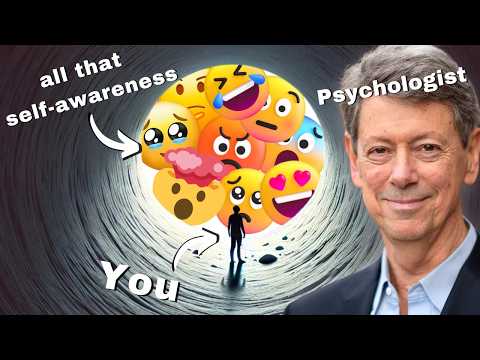
Self-awareness is the ability to notice our thoughts, emotions, habits, values, and impact on other people. At its best, it can improve decisions: someone who recognizes their stress, jealousy, or need for approval has more choice in how to respond. It can also support honest relationships, because we are less likely to blame others automatically. Yet self-knowledge is not the same as constantly monitoring oneself.
The difficulty begins when reflection stops producing insight or action and becomes repetitive mental replay. A person may analyze a conversation for hours, judge every emotion, or compare their real life with an ideal version online. Research often distinguishes constructive reflection from rumination, which is more circular, self-critical, and difficult to stop. The goal may not be to think less, but to think with a purpose: notice what matters, decide what can be changed, and then return attention to the present. This raises an interesting tension: can we understand ourselves deeply without turning the self into a permanent project?
The difficulty begins when reflection stops producing insight or action and becomes repetitive mental replay. A person may analyze a conversation for hours, judge every emotion, or compare their real life with an ideal version online. Research often distinguishes constructive reflection from rumination, which is more circular, self-critical, and difficult to stop. The goal may not be to think less, but to think with a purpose: notice what matters, decide what can be changed, and then return attention to the present. This raises an interesting tension: can we understand ourselves deeply without turning the self into a permanent project?
Useful vocabulary
Approx. CEFR · Topic relevance
self-awareness
Clear recognition of your own feelings, motives, behavior, and effect on others.
Self-awareness helped her see that she was reacting to criticism defensively.
introspection
The process of examining your own thoughts and feelings.
A little introspection after a conflict can be useful, but it should lead somewhere.
rumination
Repeatedly dwelling on upsetting thoughts without reaching a solution.
He called it problem-solving, but replaying the mistake all night was rumination.
self-criticism
The habit of judging yourself harshly for perceived faults or failures.
Self-criticism can make people overlook what they handled well.
emotional granularity
The ability to identify emotions precisely rather than describing everything as simply good or bad.
Emotional granularity might help someone distinguish disappointment from shame.
cognitive reappraisal
Changing the meaning you give to a situation in order to respond differently.
Through cognitive reappraisal, she saw the rejection as disappointing rather than proof of failure.
Useful expressions
A useful distinction is between ... and ...
Use it to separate two ideas that are often confused.
A useful distinction is between learning from an experience and repeatedly reliving it.
The question is not whether ..., but whether ...
Use it to shift the discussion away from an oversimplified choice.
The question is not whether we should reflect, but whether reflection helps us act wisely.
This can be beneficial up to a point.
Use it to acknowledge advantages while introducing limits.
Checking how others see us can be beneficial up to a point.
It may depend on what happens next.
Use it to show that an activity\'s effect is shaped by its consequences.
Thinking about a difficult emotion is not always harmful; it may depend on what happens next.
I would challenge the assumption that ...
Use it to question a claim respectfully and directly.
I would challenge the assumption that less self-aware people are automatically happier.
Sources & further reading
Question list
- Ice breaking
- Main topic
- Free talk
| Q1. | What are some of your bad habits? |
|---|---|
| Q2. | What is something you've always wanted to learn but haven't yet? |
| Q3. | Do you have any favorite quotes from movies? |
| Q4. | Would you rather be the boss or employee? |
| Q5. | Do you consider yourself to be easily distracted? |
| Q6. | Describe an activity that helps you feel grounded and centered. |
| Q7. | What is a place you've always wanted to visit but haven't yet? |
| Q8. | When did you first meet your best friend? |
| Q1. | What does it mean to be self-aware? |
|---|---|
| Q2. | How can self-awareness help us make better decisions? |
| Q3. | When does reflection turn into overthinking? |
| Q4. | Can analyzing every emotion make it harder to enjoy the moment? |
| Q5. | Does social media make people too conscious of themselves? |
| Q6. | How can someone become reflective without becoming self-critical? |
| Q7. | Are less self-aware people sometimes happier? |
| Q8. | What helps you stop overthinking your behavior? |
| Q1. | What languages do you find beautiful or interesting? |
|---|---|
| Q2. | Lighthouses are symbols of safety and solitude. Have you visited one, or what does it represent to you? |
| Q3. | What helps you reflect without overthinking? |
| Q4. | What is your biggest non-academic, non work-related accomplishment? |
| Q5. | What helps you regain clarity? |
| Q6. | If your house catches fire, what items would you save? Why? |
| Q7. | What is one accomplishment you're proud of? |
| Q8. | How do you define 'home'? |
Rules


Please be kind and respectful.
Note: You can be banned for violating any of these rules
No flirting! Don't ask for other people's social network, number etc. if he/she refuses to give them.
Note: You can be banned for violating any of these rules
Give others an equal opportunity to speak.
Note: You can be banned for violating any of these rules
Avoid Smoking / Drinking while you are talking.
Note: You can be banned for violating any of these rules
Turning your camera on is mandatory.
Note: You can be banned for violating any of these rules
Ready to join the conversation?
Book your spot and bring your perspective to the discussion.