
Could a City Function Without Private Cars?
Learn topic-related expressions and join the speaking club to practice them!

Albert, an engineer and explorer.
Hello everyone! My name is Albert and I am super happy to meet each person here! I love communicating in English and therefore I try to practice it as much as I can. I am an engineer by my background, and I like to know how everything works, as well as I like travelling, music, all sorts of activities and adventures.

Topic guide Optional
A quick way to understand the topic and find useful language. Read as much or as little as you like.
1-minute overview
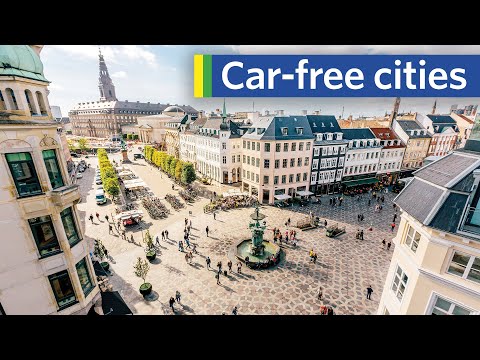
Removing private cars from a city does not necessarily mean banning every vehicle. Emergency services, deliveries, taxis, accessible transport and freight still need carefully designed access. The central idea is to shift everyday travel toward walking, cycling, public transport and shared mobility, while using street space for people, trees, housing-related services, and local business activity.
Supporters argue that fewer cars can reduce congestion, noise, crashes and emissions, while making neighbourhoods healthier and more sociable. Critics ask whether this works beyond dense, well-funded centres: residents in outer suburbs, disabled people, shift workers, families, and small businesses may face real barriers if alternatives are unreliable or expensive. Technology may help through real-time transit information, integrated ticketing, demand-responsive shuttles and smarter freight systems, but it cannot replace frequent, safe, affordable transport. A serious car-free strategy therefore raises a broader question: is success measured by fewer vehicles, or by whether everyone can reach work, education, care, shops and social life fairly and conveniently?
Supporters argue that fewer cars can reduce congestion, noise, crashes and emissions, while making neighbourhoods healthier and more sociable. Critics ask whether this works beyond dense, well-funded centres: residents in outer suburbs, disabled people, shift workers, families, and small businesses may face real barriers if alternatives are unreliable or expensive. Technology may help through real-time transit information, integrated ticketing, demand-responsive shuttles and smarter freight systems, but it cannot replace frequent, safe, affordable transport. A serious car-free strategy therefore raises a broader question: is success measured by fewer vehicles, or by whether everyone can reach work, education, care, shops and social life fairly and conveniently?
Useful vocabulary
Approx. CEFR · Topic relevance
modal shift
A change from one form of transport to another, especially from cars to public or active travel.
The policy will only work if it creates a genuine modal shift rather than simply moving traffic to nearby streets.
accessibility
How easily people can reach essential places and services.
A car-free centre may improve accessibility if buses and sidewalks are reliable and safe.
curb space
The edge of a street used for parking, loading, pick-ups, buses, or cycling facilities.
The city could redesign curb space for deliveries, disabled parking and bike lanes.
last-mile connection
The final part of a journey between a transport stop and a person’s destination.
Affordable bike-sharing could solve the last-mile connection from the train station.
induced demand
Extra traffic created when more road capacity makes driving easier or more attractive.
Building another highway may not reduce congestion because of induced demand.
demand-responsive transit
Public transport that changes its route or schedule according to passengers’ requests.
Demand-responsive transit may be more practical than a fixed bus route in low-density areas.
Useful expressions
The key distinction is between ___ and ___.
Use this to separate two ideas that are often treated as identical.
The key distinction is between reducing car ownership and reducing people’s ability to travel.
That benefit depends heavily on whether ___.
Use this to qualify a positive claim by identifying a necessary condition.
That benefit depends heavily on whether public transport is frequent outside rush hour.
We should assess this not only by ___, but also by ___.
Use this to introduce broader criteria for judging success.
We should assess this not only by traffic levels, but also by access to jobs and healthcare.
The policy may solve one problem while shifting the burden onto ___.
Use this to identify a possible unintended consequence or fairness issue.
The policy may solve one problem while shifting the burden onto delivery workers and outer-suburb residents.
A more proportionate approach might be to ___.
Use this to suggest a compromise rather than an all-or-nothing solution.
A more proportionate approach might be to restrict private cars gradually while improving alternatives first.
Question list
- Ice breaking
- Main topic
- Free talk
| Q1. | What role does gratitude play in your life, and how do you practice it? |
|---|---|
| Q2. | If you could change one thing about yourself, what would it be? |
| Q3. | What’s an activity that helps you feel completely present? |
| Q4. | How do you manage your time when everything feels equally important? |
| Q5. | If you could have any job in the world for a day, what would it be? |
| Q6. | What is your favorite snack or treat? |
| Q7. | How do you celebrate moments of quiet accomplishment? |
| Q8. | What topic do you enjoy learning about even when there is no reason to? |
| Q1. | How much do people in your city depend on private cars? |
|---|---|
| Q2. | Which transport options would need to improve before cars could disappear? |
| Q3. | Who would have the most difficulty in a city without private cars? |
| Q4. | How could shops, emergency services, and disabled residents still get access? |
| Q5. | Would car-free streets improve daily life enough to be worth the problems? |
| Q6. | What would encourage more people to choose public transport or cycling? |
| Q7. | Which vehicles, if any, should still be allowed in the city? |
| Q8. | Would you personally enjoy living in a city designed without private cars? |
| Q1. | What’s your definition of leaving a meaningful legacy? |
|---|---|
| Q2. | What was the hardest exam you ever had to take? |
| Q3. | Do you think competition brings out the best in people? Why or why not? |
| Q4. | How do you manage emotional disappointment? |
| Q5. | What word best describes you? |
| Q6. | What memory reminds you to stay hopeful? |
| Q7. | What makes you confident in your decisions? |
| Q8. | Do you believe privacy is more important than convenience in the digital age? |
Rules


Please be kind and respectful.
Note: You can be banned for violating any of these rules
No flirting! Don't ask for other people's social network, number etc. if he/she refuses to give them.
Note: You can be banned for violating any of these rules
Give others an equal opportunity to speak.
Note: You can be banned for violating any of these rules
Avoid Smoking / Drinking while you are talking.
Note: You can be banned for violating any of these rules
Turning your camera on is mandatory.
Note: You can be banned for violating any of these rules
Ready to join the conversation?
Book your spot and bring your perspective to the discussion.