
Could Floating Cities Become Normal Places to Live?
Learn topic-related expressions and join the speaking club to practice them!


Hello World! My name is Sultan, and I'm a traveler in the world of information.
I'm a person who will work and invest all of my efforts in the progress of humanity as long as I am alive. So let's create a place where we can grow together, learn, experiment, and open something new that can help us improve not only our English skills but also our lives, and level up every day!
(It may sound crazy, but I like crazy things) ^_*

Topic guide Optional
A quick way to understand the topic and find useful language. Read as much or as little as you like.
1-minute overview
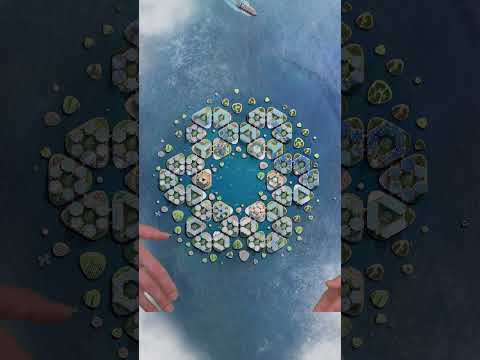
Floating cities are proposed communities built on buoyant platforms in sheltered coastal waters. Supporters see them as one response to land scarcity, crowded coastal cities, and sea-level rise: unlike fixed buildings, platforms can rise with changing water levels. Recent high-profile concepts, including a proposed prototype in Busan, South Korea, have imagined modular neighborhoods powered partly by renewable energy and linked to the mainland.
Yet living on water is not simply an engineering challenge. A normal city needs reliable fresh water, sanitation, health care, schools, transport, internet, food supplies, public spaces, and emergency services. Its costs could make it an exclusive development rather than a climate solution for people most at risk. Governance is equally difficult: residents need democratic rights and clear rules, while the city must still operate within a country’s laws and maritime regulations. Environmental questions also matter. Anchors, shading, construction noise, waste, and boat traffic can disturb marine habitats, so careful site selection, monitoring, and ecosystem protection would be essential. The central debate is whether floating cities offer genuine adaptation or a costly experiment for a small number of people.
Yet living on water is not simply an engineering challenge. A normal city needs reliable fresh water, sanitation, health care, schools, transport, internet, food supplies, public spaces, and emergency services. Its costs could make it an exclusive development rather than a climate solution for people most at risk. Governance is equally difficult: residents need democratic rights and clear rules, while the city must still operate within a country’s laws and maritime regulations. Environmental questions also matter. Anchors, shading, construction noise, waste, and boat traffic can disturb marine habitats, so careful site selection, monitoring, and ecosystem protection would be essential. The central debate is whether floating cities offer genuine adaptation or a costly experiment for a small number of people.
Useful vocabulary
Approx. CEFR · Topic relevance
buoyant
Able to float or remain on the surface of water.
The platforms must be buoyant enough to support homes, parks, and public facilities.
modular
Designed in separate units that can be added, removed, or rearranged.
A modular city could expand gradually as its population grows.
climate adaptation
Changes that help people and places cope with the effects of climate change.
Floating neighborhoods may be one form of climate adaptation for vulnerable coastal areas.
self-sufficient
Able to meet most of its own needs without outside help.
It may be unrealistic to expect a floating city to be completely self-sufficient in food.
maritime jurisdiction
Legal authority over activities and spaces at sea.
Maritime jurisdiction would determine which national laws apply to the community.
marine habitat
The natural ocean environment where particular plants and animals live.
Developers should show that the project will not damage a sensitive marine habitat.
Useful expressions
The key distinction is between … and …
Use this to separate two ideas that are often treated as the same.
The key distinction is between surviving a flood and creating a place where people can thrive.
That argument depends on the assumption that …
Use this to identify an unstated condition behind a claim.
That argument depends on the assumption that renewable energy will remain reliable during severe storms.
It may solve one problem while creating another.
Use this to recognize trade-offs without rejecting an idea completely.
It may solve one problem while creating another for coastal ecosystems.
The benefits would be unevenly distributed unless …
Use this to raise questions about access and fairness.
The benefits would be unevenly distributed unless housing were affordable to a wide range of residents.
We should judge it by whether … rather than whether …
Use this to propose a standard for evaluating a proposal.
We should judge it by whether it improves long-term resilience rather than whether it looks futuristic.
Question list
- Ice breaking
- Main topic
- Free talk
| Q1. | What is the best question someone asked you recently? |
|---|---|
| Q2. | What simple skill are you proud of? |
| Q3. | When do you feel most curious? |
| Q4. | What kind of environment helps you focus? |
| Q5. | What is one thing you enjoy learning about? |
| Q6. | How do you usually start a conversation with someone new? |
| Q7. | What recent experience surprised you? |
| Q8. | What makes a discussion memorable for you? |
| Q1. | Why might countries want to build floating cities? |
|---|---|
| Q2. | What services would a floating city need to feel normal? |
| Q3. | Who should be able to afford living there? |
| Q4. | How should a floating city be governed? |
| Q5. | Could construction damage the ocean environment? |
| Q6. | What would community life be like on the water? |
| Q7. | How could residents prepare for storms and rising seas? |
| Q8. | Would you choose a floating city over a crowded land city? |
| Q1. | Which argument did you find most convincing? |
|---|---|
| Q2. | What assumption did the discussion challenge? |
| Q3. | Where did the group find common ground? |
| Q4. | What important voice might be missing from this debate? |
| Q5. | What real-life experience connects with this topic? |
| Q6. | What consequence deserves more attention? |
| Q7. | What would be a reasonable compromise? |
| Q8. | How would you explain your view to a friend? |
Rules


Please be kind and respectful.
Note: You can be banned for violating any of these rules
No flirting! Don't ask for other people's social network, number etc. if he/she refuses to give them.
Note: You can be banned for violating any of these rules
Give others an equal opportunity to speak.
Note: You can be banned for violating any of these rules
Avoid Smoking / Drinking while you are talking.
Note: You can be banned for violating any of these rules
Turning your camera on is mandatory.
Note: You can be banned for violating any of these rules
Ready to join the conversation?
Book your spot and bring your perspective to the discussion.