
Debate: Is patriotism beneficial or dangerous to a country's development?
Learn topic-related expressions and join the speaking club to practice them!


I'm Teacher Michael, a licensed English teacher.
I'm originally from the United States, but I have been working as a full-time TEFL-certified high school English teacher in Thailand since 2013. I have a Bachelor's Degree in International Relations and I am currently studying for my Master's Degree in Liberal Arts.

Topic guide Optional
A quick way to understand the topic and find useful language. Read as much or as little as you like.
1-minute overview
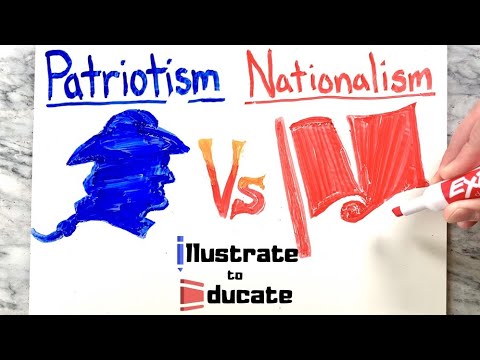
Patriotism is often understood as attachment to a country and concern for its future. It can encourage solidarity, public service, democratic participation, and a willingness to improve shared institutions. Yet it can also become harmful when loyalty is treated as more important than truth, equal rights, or criticism of government. A person may therefore love a country while strongly opposing its leaders or policies.
Nationalism is related but usually makes stronger claims: that a nation’s identity, interests, or independence should be politically central. It has helped some communities seek self-determination and build modern states, but it can also divide societies by ethnicity, religion, language, or ancestry. The debate becomes especially practical when discussing military service, the limits of just war, and citizenship rules. Should membership depend mainly on shared civic commitments, family descent, birthplace, or some combination? Underneath these questions lies a larger one: does a government primarily protect individual rights, express a national culture, or cultivate the common good?
Nationalism is related but usually makes stronger claims: that a nation’s identity, interests, or independence should be politically central. It has helped some communities seek self-determination and build modern states, but it can also divide societies by ethnicity, religion, language, or ancestry. The debate becomes especially practical when discussing military service, the limits of just war, and citizenship rules. Should membership depend mainly on shared civic commitments, family descent, birthplace, or some combination? Underneath these questions lies a larger one: does a government primarily protect individual rights, express a national culture, or cultivate the common good?
Useful vocabulary
Approx. CEFR · Topic relevance
patriotism
Loyalty to and care for one’s country, often connected to civic responsibility.
I see patriotism as wanting my country to solve its problems rather than pretending it has none.
nationalism
The belief that a nation’s identity and interests should have major political importance.
Nationalism can unite people during a crisis, but it can also make outsiders seem threatening.
civic nationalism
National belonging based mainly on shared laws, values, and political participation rather than ancestry.
Civic nationalism may offer an inclusive model for a diverse society.
just war theory
An ethical framework for judging when war may be justified and how it must be fought.
Just war theory asks whether force is necessary, proportionate, and directed at legitimate targets.
jus soli
A citizenship principle based on being born in a country’s territory.
Supporters of jus soli argue that birthplace can create a meaningful connection to a society.
jus sanguinis
A citizenship principle based on descent from a citizen parent or parents.
Jus sanguinis can preserve ties with citizens’ children who are born abroad.
Useful expressions
The crucial distinction, in my view, is between … and …
Use this to separate two ideas that are often treated as identical.
The crucial distinction, in my view, is between loyalty to a society and obedience to its government.
That argument is persuasive only if we assume that …
Use this to identify an unstated premise.
That argument is persuasive only if we assume that national unity requires cultural uniformity.
The benefits may be real, but they come with a risk of …
Use this to present a balanced evaluation.
The benefits may be real, but they come with a risk of excluding minorities.
We should distinguish the ideal from the way it is applied in practice.
Use this to challenge a theory without dismissing it completely.
We should distinguish the ideal from the way it is applied in practice during wartime.
Compared with the alternative, this approach places greater weight on …
Use this to compare political or legal models.
Compared with the alternative, this approach places greater weight on individual rights than on inherited identity.
Sources & further reading
Question list
- Ice breaking
- Main topic
- Free talk
| Q1. | What is something you're grateful for today? |
|---|---|
| Q2. | Why do some people fear the doctor or dentist? |
| Q3. | How do you maintain a mindset of continuous learning? |
| Q4. | Have you ever been caught off guard by your own emotions? |
| Q5. | Where do you feel most capable of expressing your ideas? |
| Q6. | Where would you like to build a meaningful tradition? |
| Q7. | If you could revisit a dream you once abandoned, which one calls you back? |
| Q8. | What are your best tips for acing an interview? |
| Q1. | What is the difference between patriotism and nationalism? |
|---|---|
| Q2. | Do you consider yourself to be patriotic? |
| Q3. | Is "just war" truly possible? |
| Q4. | How did nationalism affect the development of modern nation-states? |
| Q5. | How does political philosophy affect a nation's development? |
| Q6. | What is the ultimate role of a government in society? |
| Q7. | Should citizens be required to serve their country in some way? |
| Q8. | Should citizenship be granted based on blood (jus sanguinis) or on birthplace (jus soli)? |
| Q1. | How can we create safer online spaces for marginalized groups? |
|---|---|
| Q2. | What part of your personality surprises people? |
| Q3. | What makes you happy? |
| Q4. | What’s your favorite song/album/artist? |
| Q5. | How do you feel about helicopter parenting(parents who are too involved their kid's life)? |
| Q6. | If you owned a restaurant, what kinds of food would you serve? |
| Q7. | What did you do for Valentine’s Day this year? |
| Q8. | Think about a time you took a risk that completely changed your life. |
Rules


Please be kind and respectful.
Note: You can be banned for violating any of these rules
No flirting! Don't ask for other people's social network, number etc. if he/she refuses to give them.
Note: You can be banned for violating any of these rules
Give others an equal opportunity to speak.
Note: You can be banned for violating any of these rules
Avoid Smoking / Drinking while you are talking.
Note: You can be banned for violating any of these rules
Turning your camera on is mandatory.
Note: You can be banned for violating any of these rules
Ready to join the conversation?
Book your spot and bring your perspective to the discussion.