
Do We Have Responsibilities to People Who Have Not Been Born Yet?
Learn topic-related expressions and join the speaking club to practice them!
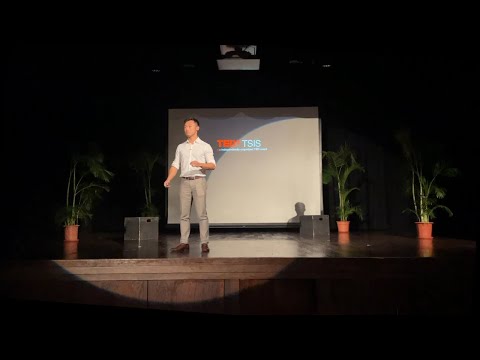

I’m Ken, a Kenyan accountant with a special love for languages. I enjoy cross-cultural conversations and love hearing different accents from around the world come together through one shared language. I especially enjoy easy, judgment-free conversations where there is no pressure for perfection—just people connecting over random topics.

Topic guide Optional
A quick way to understand the topic and find useful language. Read as much or as little as you like.
1-minute overview
Future generations cannot vote, protest, make contracts, or tell us what matters to them. Yet choices made today can shape their lives for decades or centuries: the climate they inherit, the public debt they repay, the biodiversity they can enjoy, and the institutions available to them. The central ethical idea is intergenerational equity: fairness between people living at different times.
One view says we should avoid imposing serious, predictable harm on people simply because they are not yet born. Another asks how far this duty can reasonably go when present communities face poverty, conflict, housing shortages, or urgent health needs. There is also a practical problem of representation: who can speak credibly for people whose preferences are unknown? Some institutions are experimenting with long-term thinking. Wales’s Well-being of Future Generations Act, for example, requires specified public bodies to consider long-term effects and created a commissioner for future generations. The discussion is not only about sacrifice; it is also about what we owe one another when the consequences of our decisions outlast us.
One view says we should avoid imposing serious, predictable harm on people simply because they are not yet born. Another asks how far this duty can reasonably go when present communities face poverty, conflict, housing shortages, or urgent health needs. There is also a practical problem of representation: who can speak credibly for people whose preferences are unknown? Some institutions are experimenting with long-term thinking. Wales’s Well-being of Future Generations Act, for example, requires specified public bodies to consider long-term effects and created a commissioner for future generations. The discussion is not only about sacrifice; it is also about what we owe one another when the consequences of our decisions outlast us.
Useful vocabulary
Approx. CEFR · Topic relevance
intergenerational equity
The principle that benefits and burdens should be shared fairly between present and future generations.
Intergenerational equity suggests that cheap energy today should not create overwhelming costs for people tomorrow.
stewardship
The responsible care and management of something held in trust for others.
We might see forests and oceans as objects of stewardship rather than resources to use without limits.
discount rate
A method for giving less weight to costs or benefits that will occur in the future.
A high discount rate can make long-term climate damage seem less important in a policy calculation.
irreversible
Impossible, or extremely difficult, to change back to an earlier condition.
Species extinction is often described as an irreversible loss.
representation
The act of speaking or making decisions on behalf of people whose views are not directly included.
A future-generations commissioner is one attempt to provide representation for people not yet born.
trade-off
A situation in which gaining one benefit requires accepting the loss of another.
Governments face a trade-off between funding immediate services and investing in long-term infrastructure.
Useful expressions
The moral case becomes stronger when the harm is foreseeable and avoidable.
Use this to assess when a responsibility to future people may be especially compelling.
The moral case becomes stronger when the harm is foreseeable and avoidable, rather than merely speculative.
That argument depends on how we value the distant future.
Use this to identify an assumption behind a proposal or disagreement.
That argument depends on how we value the distant future compared with urgent needs today.
We should distinguish between a duty to avoid harm and a duty to provide benefits.
Use this to separate minimal obligations from more demanding ones.
We should distinguish between a duty to avoid harm and a duty to provide every possible advantage.
The question is not only what is fair, but who has the authority to decide.
Use this to shift from ethics to democratic legitimacy and representation.
The question is not only what is fair, but who has the authority to decide on behalf of future citizens.
A short-term solution may simply transfer the problem across generations.
Use this to challenge policies that solve an immediate problem by creating later costs.
Borrowing heavily may help now, but a short-term solution may simply transfer the problem across generations.
Question list
- Ice breaking
- Main topic
- Free talk
| Q1. | Where do you think your confidence comes alive? |
|---|---|
| Q2. | How do you handle compliments you feel you don’t deserve? |
| Q3. | Where do you tend to feel the most grateful? |
| Q4. | If you could create a new holiday, what would it celebrate and how would people observe it? |
| Q5. | What’s a moment in your life when you felt pure joy? |
| Q6. | What names are most common in your hometown? |
| Q7. | How much of your dreams do you remember? Why? |
| Q8. | What’s something you’ve created or accomplished that once seemed impossible? |
| Q1. | Can we have responsibilities toward people who do not exist yet? |
|---|---|
| Q2. | Should future generations influence decisions governments make today? |
| Q3. | Is it fair to use natural resources that future people may need? |
| Q4. | How much should people today sacrifice for problems far in the future? |
| Q5. | Do parents have stronger duties to future generations than people without children? |
| Q6. | Should politicians be required to consider the next fifty or one hundred years? |
| Q7. | Can future generations have rights if they cannot speak for themselves? |
| Q8. | When today's needs conflict with the future, whose interests should come first? |
| Q1. | Imagine you could instantly master a new instrument or artistic skill. Which one would you pick? |
|---|---|
| Q2. | When is it okay to lie? |
| Q3. | Would you exchange your sorrows for someone else's? |
| Q4. | If you were God for a day, how would you change the world? |
| Q5. | Some countries have banned homework. What do you think? |
| Q6. | If you could switch careers instantly, what would you try? |
| Q7. | How do you stay connected to your cultural heritage or family traditions? |
| Q8. | What are you doing this weekend? |
Rules


Please be kind and respectful.
Note: You can be banned for violating any of these rules
No flirting! Don't ask for other people's social network, number etc. if he/she refuses to give them.
Note: You can be banned for violating any of these rules
Give others an equal opportunity to speak.
Note: You can be banned for violating any of these rules
Avoid Smoking / Drinking while you are talking.
Note: You can be banned for violating any of these rules
Turning your camera on is mandatory.
Note: You can be banned for violating any of these rules
Ready to join the conversation?
Book your spot and bring your perspective to the discussion.