
Do We Need More Silence in Everyday Life?
Learn topic-related expressions and join the speaking club to practice them!


Hello everyone! I'm Geetanjali Tiwari from New Delhi, India. I recently graduated in English and Political Science, and I'm looking forward to beginning my master's journey.I'm an avid reader, a curious learner, and someone who loves meaningful conversations. I believe that language is more than just words, it's a way to connect with people, exchange ideas, and understand different cultures.
That's what I enjoy most about LangClub, and I'm excited to create a welcoming space where we can all learn from one another.

Topic guide Optional
A quick way to understand the topic and find useful language. Read as much or as little as you like.
1-minute overview
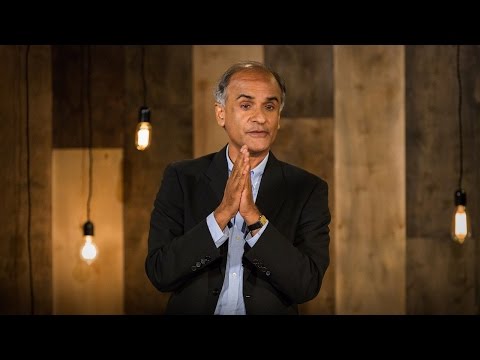
Silence is more than the absence of sound. It can mean a quiet room, a phone-free walk, or simply a period without new demands. In the related TED talk, writer Pico Iyer presents stillness as a way of stepping back from a fast, connected world. For some people, quiet creates space for reflection, creativity, prayer, or emotional recovery. For others, it can feel awkward because it brings boredom, loneliness, or worries to the surface.
Digital life complicates the issue. Notifications, podcasts, streaming, and background music can make every spare moment feel occupied, while also making silence seem unusually intense. Yet silence is not automatically peaceful: a noisy home, an unsafe neighbourhood, demanding care work, or a stressful mind can make it difficult to access. The central question may not be whether everyone needs the same amount of quiet, but whether people have enough control over their attention and surroundings to choose it.
Digital life complicates the issue. Notifications, podcasts, streaming, and background music can make every spare moment feel occupied, while also making silence seem unusually intense. Yet silence is not automatically peaceful: a noisy home, an unsafe neighbourhood, demanding care work, or a stressful mind can make it difficult to access. The central question may not be whether everyone needs the same amount of quiet, but whether people have enough control over their attention and surroundings to choose it.
Useful vocabulary
Approx. CEFR · Topic relevance
overstimulation
A state in which there is too much sensory or mental input to process comfortably.
After a day of meetings, messages, and traffic, I feel overstimulation rather than simple tiredness.
intentional silence
Quiet time that a person deliberately creates rather than happens to experience.
Intentional silence might be easier to maintain if it becomes part of a daily routine.
ambient noise
The continuous background sounds in a place.
I can work with ambient noise from a café, but I cannot relax with it.
attention residue
Part of your attention that remains focused on a previous task after you switch activities.
Checking one message during a break can leave attention residue when I return to reading.
solitude
The state of being alone, often by choice.
Solitude gives me energy, whereas isolation usually drains it.
restorative
Helping someone recover energy, calm, or mental clarity.
A silent walk can be more restorative than watching another short video.
Useful expressions
There is a trade-off between ... and ...
Use this to describe two benefits or priorities that may conflict.
There is a trade-off between staying available to others and protecting quiet time.
That depends heavily on ...
Use this to show that a general claim needs context.
That depends heavily on whether silence is chosen or imposed.
I would distinguish between ... and ...
Use this to separate ideas that are often treated as the same.
I would distinguish between peaceful silence and the silence of social isolation.
The issue is not necessarily ..., but rather ...
Use this to reframe an argument more precisely.
The issue is not necessarily technology itself, but rather constant interruption.
We should be cautious about assuming that ...
Use this to challenge an oversimplified conclusion politely.
We should be cautious about assuming that more silence benefits everyone in the same way.
Question list
- Ice breaking
- Main topic
- Free talk
| Q1. | What sorts of food do you like eating most? [Why?] |
|---|---|
| Q2. | Who do you admire? |
| Q3. | What food reminds you most of home? |
| Q4. | How do you approach new beginnings or major life changes? |
| Q5. | What is the best way to live one's life? |
| Q6. | How do you handle situations where your values conflict with others? |
| Q7. | Where would you build a place that reflects your passions? |
| Q8. | Do you like what you are doing in life right now? |
| Q1. | How much quiet time do you normally have in a day? |
|---|---|
| Q2. | Why do many people feel uncomfortable when nothing is happening? |
| Q3. | Can silence help people think more clearly? |
| Q4. | Do phones and constant entertainment make quiet moments harder to enjoy? |
| Q5. | Should people deliberately spend some time every day without music, videos, or messages? |
| Q6. | Can doing nothing sometimes be more valuable than being productive? |
| Q7. | Would living in a quieter environment improve your quality of life? |
| Q8. | What would change if you spent thirty minutes in complete silence every day? |
| Q1. | What's a recent hobby that you've picked up? |
|---|---|
| Q2. | Why do moments of clarity often appear during chaos? |
| Q3. | What qualities do you appreciate in your friends? |
| Q4. | Do you think shame is a natural human emotion or something that society drills into us? |
| Q5. | How do you stay adaptable during transitions? |
| Q6. | Are there any disadvantages to being beautiful? |
| Q7. | What are some of the most interesting or unique local customs or traditions you've encountered during your travels? |
| Q8. | What makes you appreciate reciprocity in relationships? |
Rules


Please be kind and respectful.
Note: You can be banned for violating any of these rules
No flirting! Don't ask for other people's social network, number etc. if he/she refuses to give them.
Note: You can be banned for violating any of these rules
Give others an equal opportunity to speak.
Note: You can be banned for violating any of these rules
Avoid Smoking / Drinking while you are talking.
Note: You can be banned for violating any of these rules
Turning your camera on is mandatory.
Note: You can be banned for violating any of these rules
Ready to join the conversation?
Book your spot and bring your perspective to the discussion.