Do you believe in ghosts? (Happy Halloween!)
Learn topic-related expressions and join the speaking club to practice them!

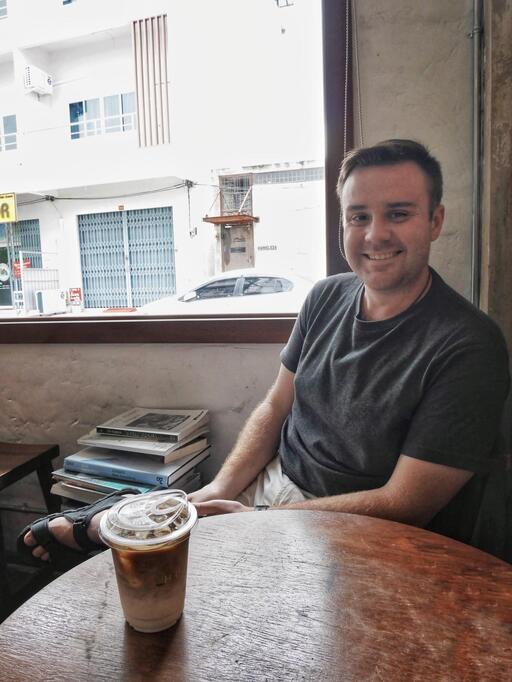

I'm Teacher Michael, a licensed English teacher.
I'm originally from the United States, but I have been working as a full-time TEFL-certified high school English teacher in Thailand since 2013. I have a Bachelor's Degree in International Relations and I am currently studying for my Master's Degree in Liberal Arts.
 2 Gold Tickets

Topic guide Optional
A quick way to understand the topic and find useful language. Read as much or as little as you like.
1-minute overview
Ghost stories sit at the meeting point of personal experience, cultural tradition, and uncertainty. Halloween, observed on October 31, developed through a mixture of Christian calendar customs and traditions associated with Samhain, a Gaelic seasonal festival. Its modern form is often playful—costumes, candy, and horror films—yet it also invites serious questions about death, memory, and the limits of what we can know.
Belief in ghosts does not always mean accepting a simple supernatural explanation. A strange sound, a vivid dream, grief, suggestion, or an unfamiliar place can feel deeply convincing, while skeptics ask whether memory and perception can mislead us. Cultures also commemorate the dead in very different ways; Mexico’s Day of the Dead, for example, centers on remembering loved ones rather than frightening visitors. Legends may preserve local history or moral warnings, even when their literal details are doubtful. In conversation, the interesting question is not only whether ghosts are real, but why certain experiences and stories continue to matter.
Belief in ghosts does not always mean accepting a simple supernatural explanation. A strange sound, a vivid dream, grief, suggestion, or an unfamiliar place can feel deeply convincing, while skeptics ask whether memory and perception can mislead us. Cultures also commemorate the dead in very different ways; Mexico’s Day of the Dead, for example, centers on remembering loved ones rather than frightening visitors. Legends may preserve local history or moral warnings, even when their literal details are doubtful. In conversation, the interesting question is not only whether ghosts are real, but why certain experiences and stories continue to matter.
Useful vocabulary
Approx. CEFR · Topic relevance
supernatural
/ˌsuːpərˈnætʃərəl/Connected with forces or beings believed to exist beyond nature and science.
I do not believe in supernatural events, but I enjoy hearing ghost stories.
skepticism
/ˈskɛptɪˌsɪzəm/A tendency to question claims until there is convincing evidence.
Her skepticism increased after she learned how easily photographs can be edited.
anecdotal evidence
Personal stories or individual examples rather than systematic proof.
One friend’s experience is interesting, but it is still anecdotal evidence.
folklore
/ˈfoʊkˌlɔr/Traditional stories, beliefs, and customs passed through a community.
Local folklore says that a woman in white appears near the old bridge.
confirmation bias
The tendency to notice information that supports an existing belief and ignore conflicting information.
Confirmation bias may make a person interpret every unusual noise as proof of a ghost.
commemorate
/kəˈmɛmɚˌreɪt/To honor and remember a person or event publicly or privately.
Many families commemorate relatives who have died by sharing food and stories.
Useful expressions
I can see why that interpretation is appealing, but it does not rule out other explanations.
Use this to acknowledge an idea while introducing doubt or alternatives.
I can see why that interpretation is appealing, but it does not rule out coincidence.
The strength of that claim depends on how we define evidence.
Use this to move a discussion from opinion to standards of proof.
The strength of that claim depends on how we define evidence: personal experience or repeatable results?
There may be a difference between emotional truth and literal truth.
Use this to discuss the meaning of a story without insisting that it happened exactly as told.
The legend may not be historically accurate, but there may be a difference between emotional truth and literal truth.
That explanation accounts for part of the experience, though perhaps not all of it.
Use this to qualify a skeptical or psychological explanation.
Grief may explain the dream, though perhaps not all of the feelings it created.
I would be cautious about generalizing from a single unusual event.
Use this to challenge a broad conclusion based on one story.
I would be cautious about generalizing from a single unusual event, however memorable it was.
Sources & further reading
Question list
- Ice breaking
- Main topic
- Free talk
| Q1. | What’s a societal change you’ve witnessed in your lifetime that surprised you? |
|---|---|
| Q2. | What random object would you put in a time capsule? |
| Q3. | Where did your most memorable conversation happen? |
| Q4. | Imagine you’ve been invited to share your life’s greatest joy on stage. What would you say? |
| Q5. | What's the most inspiring TED talk you've watched, and why? |
| Q6. | How well do you think the mind can understand itself? |
| Q7. | Where do your meaningful connections usually begin? |
| Q8. | What’s your favorite quote or saying that helps to motivate or inspire you in some way? |
| Q1. | Do you believe in ghosts? |
|---|---|
| Q2. | Is Halloween celebrated in your country? |
| Q3. | Does your culture have any holiday or festival honoring the dead? |
| Q4. | If one of your friends told you they had seen a ghost, would you believe him/her? Why/Why not? |
| Q5. | Has anything ever happened to you that you cannot explain? |
| Q6. | Are there any places in your country associated with a myth or legend? |
| Q7. | Do all legends have a grain of truth? |
| Q8. | Why do you think people enjoy watching scary movies? |
| Q1. | How do you define 'home'? |
|---|---|
| Q2. | What’s a hidden talent you’re proud of? |
| Q3. | Who is the funniest comedian or actor from your country? |
| Q4. | If you had a personal motto or slogan, what would it be? |
| Q5. | Is creativity more essential than discipline in solving today’s problems? |
| Q6. | If you were told you would live forever, what would you change about your life? |
| Q7. | Have you ever felt a sense of belonging in a completely unfamiliar place? Where and why? |
| Q8. | If you could redesign your country’s education system from scratch, what would be your first change? |
Rules


Please be kind and respectful.
Note: You can be banned for violating any of these rules
No flirting! Don't ask for other people's social network, number etc. if he/she refuses to give them.
Note: You can be banned for violating any of these rules
Give others an equal opportunity to speak.
Note: You can be banned for violating any of these rules
Avoid Smoking / Drinking while you are talking.
Note: You can be banned for violating any of these rules
Turning your camera on is mandatory.
Note: You can be banned for violating any of these rules
Ready to join the conversation?
Book your spot and bring your perspective to the discussion.