
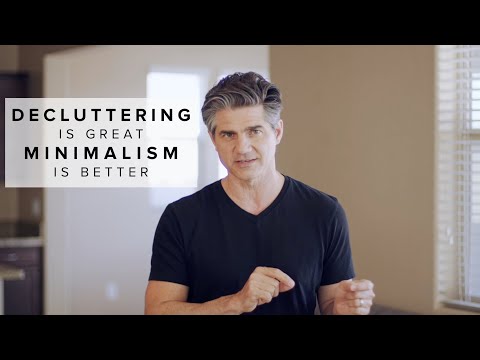
Does Decluttering Actually Make Life Better?
Learn topic-related expressions and join the speaking club to practice them!


Hello everyone! I'm Geetanjali Tiwari from New Delhi, India. I recently graduated in English and Political Science, and I'm looking forward to beginning my master's journey.I'm an avid reader, a curious learner, and someone who loves meaningful conversations. I believe that language is more than just words, it's a way to connect with people, exchange ideas, and understand different cultures.
That's what I enjoy most about LangClub, and I'm excited to create a welcoming space where we can all learn from one another.

Topic guide Optional
A quick way to understand the topic and find useful language. Read as much or as little as you like.
1-minute overview
Decluttering is often presented as a route to a calmer, freer life: fewer decisions, less visual distraction, and less time spent cleaning, storing, or searching for things. Research has linked cluttered homes with lower well-being and greater stress, but the relationship is not necessarily simple. A crowded space may create stress, yet stress, limited time, financial insecurity, or family responsibilities can also make it harder to keep a home orderly.
The discussion is not only about tidiness. Objects can represent identity, achievement, relationships, hopes for the future, or a particular period of life. Throwing something away may therefore feel like losing a memory or admitting that a plan will never happen. Minimalism can be useful when it helps people focus on what they value, but it can become restrictive if it turns into a competition to own as little as possible. The key question may be whether our possessions serve our lives, rather than how many we have.
The discussion is not only about tidiness. Objects can represent identity, achievement, relationships, hopes for the future, or a particular period of life. Throwing something away may therefore feel like losing a memory or admitting that a plan will never happen. Minimalism can be useful when it helps people focus on what they value, but it can become restrictive if it turns into a competition to own as little as possible. The key question may be whether our possessions serve our lives, rather than how many we have.
Useful vocabulary
Approx. CEFR · Topic relevance
clutter
A collection of things that makes a space untidy, crowded, or hard to use.
Visual clutter makes it difficult for me to relax at home.
sentimental value
Personal emotional importance connected to an object.
The old postcards have little financial value, but enormous sentimental value.
emotional attachment
A strong feeling of connection to a person, place, or object.
We can develop an emotional attachment to items that remind us of childhood.
voluntary simplicity
A lifestyle choice to consume less and focus on non-material priorities.
Voluntary simplicity may mean buying fewer items, not living without comfort.
aspirational purchase
Something bought for the person we hope to become rather than our present needs.
That expensive guitar was an aspirational purchase, because I rarely play it.
curate
To select and arrange things carefully for a particular effect or purpose.
Instead of displaying everything, she curates the objects that matter most.
Useful expressions
I would distinguish between ... and ...
Use this to separate two ideas that are often treated as the same.
I would distinguish between owning less and feeling deprived.
The benefits may depend on ...
Use this to show that an outcome varies by person or situation.
The benefits may depend on whether someone chooses simplicity freely.
That seems persuasive in theory, but ...
Use this to introduce a respectful challenge.
That seems persuasive in theory, but families with children may need more practical items.
We should not overlook the role of ...
Use this to add an important factor to the discussion.
We should not overlook the role of memory in deciding what to keep.
The real issue is not necessarily ..., but rather ...
Use this to reframe a debate.
The real issue is not necessarily the number of possessions, but rather whether they create value or burden.
Question list
- Ice breaking
- Main topic
- Free talk
| Q1. | What does beauty mean to you, and how do you define it? |
|---|---|
| Q2. | If you won the lottery, what's the first thing you would do with the money? |
| Q3. | What is something that you are afraid of? |
| Q4. | Are you an agreeable person or disagreeable? |
| Q5. | What kind of view would your dream window show? |
| Q6. | How do you incorporate mindfulness into your day-to-day routine? |
| Q7. | If you discovered an unexpected strength within yourself, what would you hope it is? |
| Q8. | If you had to choose one guiding word for next month, what word feels right? |
| Q1. | Do you find it easy or difficult to throw things away? |
|---|---|
| Q2. | Why do people become emotionally attached to objects they rarely use? |
| Q3. | Can having fewer possessions reduce stress? |
| Q4. | Is decluttering useful if people eventually buy more things again? |
| Q5. | Should we keep objects because they contain important memories? |
| Q6. | Can a very minimalist home feel uncomfortable or empty? |
| Q7. | Does owning less actually give people more freedom? |
| Q8. | What is one thing you own that you probably do not need? |
| Q1. | How would you describe your personal growth journey? |
|---|---|
| Q2. | What steps help you break bad habits? |
| Q3. | Who has taught you to appreciate every small moment? |
| Q4. | How do you perceive the concept of 'silence'? |
| Q5. | How can governments ensure affordable housing remains available in growing cities? |
| Q6. | How do you interpret people's emotional boundaries? |
| Q7. | How do you define success? |
| Q8. | What habit makes your mornings meaningful? |
Rules


Please be kind and respectful.
Note: You can be banned for violating any of these rules
No flirting! Don't ask for other people's social network, number etc. if he/she refuses to give them.
Note: You can be banned for violating any of these rules
Give others an equal opportunity to speak.
Note: You can be banned for violating any of these rules
Avoid Smoking / Drinking while you are talking.
Note: You can be banned for violating any of these rules
Turning your camera on is mandatory.
Note: You can be banned for violating any of these rules
Ready to join the conversation?
Book your spot and bring your perspective to the discussion.