
Have you ever experienced a natural disaster?
Learn topic-related expressions and join the speaking club to practice them!
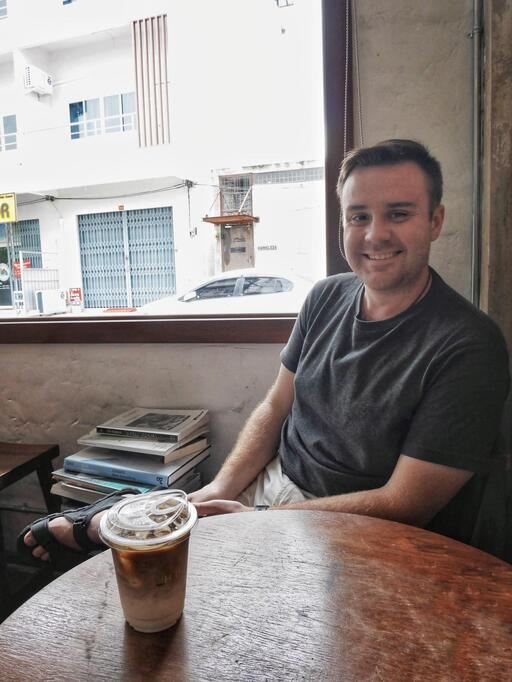

I'm Teacher Michael, a licensed English teacher.
I'm originally from the United States, but I have been working as a full-time TEFL-certified high school English teacher in Thailand since 2013. I have a Bachelor's Degree in International Relations and I am currently studying for my Master's Degree in Liberal Arts.

Topic guide Optional
A quick way to understand the topic and find useful language. Read as much or as little as you like.
1-minute overview
Natural disasters include earthquakes, floods, hurricanes, wildfires, volcanic eruptions, and droughts. A hazard becomes a disaster when it seriously disrupts a community and overwhelms its ability to cope. Personal experiences can range from a frightening evacuation or power outage to losing a home, livelihood, or familiar landscape. They often reveal how unevenly risk is shared: older people, low-income households, and people living in exposed areas may face fewer choices and slower recovery.
The larger debate is not simply whether disasters can be prevented. Many hazards cannot, but their human consequences can often be reduced through safer buildings, land-use rules, early warnings, public education, and reliable emergency services. These measures raise difficult questions about cost and responsibility. Should taxpayers subsidize rebuilding in repeatedly damaged areas? What duties do wealthy countries have after disasters abroad? Technology can improve forecasts and communication, but it cannot replace trust, infrastructure, local knowledge, or individual preparedness. Rebuilding cultural sites also involves a tension between preserving collective memory and accepting irreversible loss.
The larger debate is not simply whether disasters can be prevented. Many hazards cannot, but their human consequences can often be reduced through safer buildings, land-use rules, early warnings, public education, and reliable emergency services. These measures raise difficult questions about cost and responsibility. Should taxpayers subsidize rebuilding in repeatedly damaged areas? What duties do wealthy countries have after disasters abroad? Technology can improve forecasts and communication, but it cannot replace trust, infrastructure, local knowledge, or individual preparedness. Rebuilding cultural sites also involves a tension between preserving collective memory and accepting irreversible loss.
Useful vocabulary
Approx. CEFR · Topic relevance
natural hazard
A natural event or process that has the potential to cause harm.
A flood is a natural hazard, but it becomes a disaster when homes and services are badly affected.
disaster preparedness
Actions taken before an emergency to reduce harm and respond effectively.
Disaster preparedness includes storing water, making a family plan, and knowing evacuation routes.
mitigation
/ˌmɪtəˈɡeɪʃən/Efforts to reduce the likely damage or severity of a risk.
Stronger building codes are a form of mitigation in earthquake-prone regions.
resilience
/rɪˈzɪliəns/The ability to withstand a shock and recover from it.
A community’s resilience depends on social networks as well as roads and hospitals.
risk pooling
Sharing financial risk across many people or places, often through insurance.
Risk pooling can make post-disaster support more affordable for vulnerable households.
cultural heritage
Historic places, objects, traditions, and knowledge valued by a community.
Rebuilding cultural heritage can help survivors restore a sense of identity after a disaster.
Useful expressions
The key distinction is between the hazard itself and the vulnerability of the people exposed to it.
Use this to shift attention from nature alone to social and economic conditions.
The key distinction is between the hazard itself and the vulnerability of the people exposed to it; the same storm does not affect every neighborhood equally.
That approach may reduce losses in the short term, but it could create a longer-term problem.
Use this to assess an apparent solution critically.
That approach may reduce losses in the short term, but it could create a longer-term problem if people rebuild in the same dangerous location.
We should be careful not to treat prevention and response as mutually exclusive.
Use this to challenge an either-or argument.
We should be careful not to treat prevention and response as mutually exclusive; communities need both safer infrastructure and effective rescue services.
The benefits are unevenly distributed, while the costs are shared more widely.
Use this to discuss fairness, taxation, aid, or insurance.
The benefits are unevenly distributed, while the costs are shared more widely when public funds pay to rebuild private homes.
The real test is whether this works for people with the fewest resources.
Use this to evaluate a policy through equity and practical access.
The real test is whether this works for people with the fewest resources, not only for residents who can afford insurance and evacuation.
Question list
- Ice breaking
- Main topic
- Free talk
| Q1. | If you could create a law that everyone must follow for one week, what would it be? |
|---|---|
| Q2. | Do you like when you have problems in life? |
| Q3. | If you could have dinner with any three people, living or dead, who would you choose and why? |
| Q4. | If you could have any job in the world, what would it be and why? |
| Q5. | What is your favorite way to unwind after a long travel day? |
| Q6. | How do you practice being present? |
| Q7. | Where would you place your personal time capsule? |
| Q8. | Where do you go when you crave emotional clarity? |
| Q1. | Have you ever experienced a natural disaster? |
|---|---|
| Q2. | How prepared are you personally for a disaster? |
| Q3. | Should governments be legally responsible for protecting citizens from natural disasters? |
| Q4. | Is it fair to expect wealthy countries to provide financial assistance to poorer countries after disasters? |
| Q5. | Should governments prioritize preventing natural-disaster damage or improving emergency response? |
| Q6. | Should insurance companies be allowed to refuse coverage for homes in high-risk areas? |
| Q7. | Do modern technologies give humanity a false sense of security about natural disasters? |
| Q8. | When a natural disaster destroys a historic city or cultural site, should governments spend large amounts of money rebuilding it? |
| Q1. | What helps you remain confident in unfamiliar situations? |
|---|---|
| Q2. | What makes you feel personally fulfilled? |
| Q3. | Rivers shape landscapes and societies alike. Is there a river you feel connected to in any way? |
| Q4. | Some people thrive under pressure while others prefer calm environments. Where do you perform best? |
| Q5. | How can governments support aging populations with accessible services? |
| Q6. | Would you rather have no homework or no tests? |
| Q7. | What social factors drive demand for flexible work arrangements? |
| Q8. | How do you deal with disappointments caused by others? |
Rules


Please be kind and respectful.
Note: You can be banned for violating any of these rules
No flirting! Don't ask for other people's social network, number etc. if he/she refuses to give them.
Note: You can be banned for violating any of these rules
Give others an equal opportunity to speak.
Note: You can be banned for violating any of these rules
Avoid Smoking / Drinking while you are talking.
Note: You can be banned for violating any of these rules
Turning your camera on is mandatory.
Note: You can be banned for violating any of these rules
Ready to join the conversation?
Book your spot and bring your perspective to the discussion.