Have you ever wondered what your life would be like if you had made a different decision?
Learn topic-related expressions and join the speaking club to practice them!
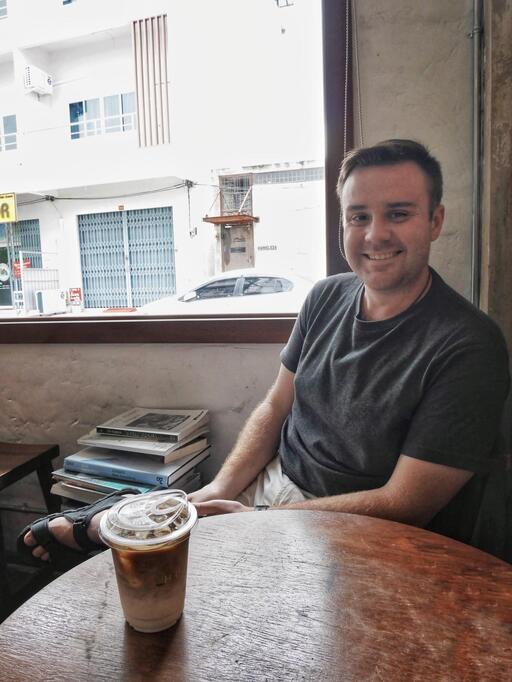

I'm Teacher Michael, a licensed English teacher.
I'm originally from the United States, but I have been working as a full-time TEFL-certified high school English teacher in Thailand since 2013. I have a Bachelor's Degree in International Relations and I am currently studying for my Master's Degree in Liberal Arts.
 2 Gold Tickets

Topic guide Optional
A quick way to understand the topic and find useful language. Read as much or as little as you like.
1-minute overview
Wondering how life might have unfolded after a different choice is a common human habit. Psychologists call it counterfactual thinking: imagining alternatives to what actually happened. It can be painful, but it can also help us learn, make sense of our past and plan ahead.
Research on regret offers a useful starting point. Studies by Thomas Gilovich and Victoria Medvec found that in the short term people often regret actions that went badly. Over a lifetime, however, they more often regret what they never did, such as the course not taken or the words left unsaid. Not everyone agrees on how far this pattern holds across cultures and circumstances.
The topic also raises deeper tensions. Small choices can ripple outward unpredictably, yet we tend to tell tidy stories that make events seem inevitable. Is meaning discovered or constructed afterwards? And how far do upbringing, family and place shape who we are, compared with the decisions we make? Imagined lives are always simplified, since we cannot know what else would have changed.
Useful vocabulary
Approx. CEFR · Topic relevance
counterfactual
/ˌkaʊntərˈfæktʃuəl/Describing an imagined alternative to what really happened.
Her counterfactual daydreams about studying abroad made her current job feel less certain.
hindsight
/ˈhaɪndsaɪt/Understanding of an event only after it has happened.
With hindsight, the move looks obviously wise, but it felt risky at the time.
serendipity
/ˌserənˈdɪpəti/Fortunate discoveries or outcomes that come by chance.
Meeting my business partner was pure serendipity; I only went to that event to avoid the rain.
path dependence
The idea that earlier choices or events limit and shape later options.
Path dependence explains why one early career choice can define decades of work.
rumination
/ˌruːməˈneɪʃən/Repetitive, unproductive dwelling on past events or mistakes.
Rumination about the job I turned down kept me awake for weeks.
formative
/ˈfɔːrmətɪv/Having a lasting influence on someone\'s character or development.
Moving cities at age ten was a formative experience that made me adaptable.
Useful expressions
That\'s partly a matter of framing
Suggests that how something is described changes how it is judged, to challenge a claim.
Calling it a failure is partly a matter of framing; it also redirected my whole career.
It cuts both ways
Notes that an idea has both advantages and disadvantages.
Imagining alternatives cuts both ways: it inspires change but can feed regret.
To what extent is that down to...
Asks how much of an outcome is explained by one factor.
To what extent is our confidence down to upbringing rather than personal choices?
That only holds if...
Qualifies a claim by stating the condition it depends on.
That only holds if we assume the alternative path would have gone smoothly.
By the same token
Introduces a parallel point that follows from the same logic.
By the same token, a lucky break may owe more to timing than talent.
Question list
- Ice breaking
- Main topic
- Free talk
| Q1. | Where does your imagination travel at night? |
|---|---|
| Q2. | If you had a child, what leisure places would you go to with your child? |
| Q3. | What's your favorite hobby or pastime that helps you relax or de-stress? |
| Q4. | Where do you think you show the most courage? |
| Q5. | What object sparks your creativity? |
| Q6. | What is your favorite way to explore new cultures? |
| Q7. | What memory always makes you laugh no matter how many times you think about it? |
| Q8. | How important is the pursuit of truth in your life? |
| Q1. | Have you ever wondered what your life would be like if you had made a different decision? |
|---|---|
| Q2. | What is one small decision that had a surprisingly big impact on your life? |
| Q3. | If you could experience one alternative version of your life for a day, what would you choose |
| Q4. | Do you think people regret the things they did or the things they didn't do more? |
| Q5. | How much of our personality is shaped by the environment we grow up in? |
| Q6. | Can a bad decision sometimes lead to a better outcome? |
| Q7. | Do you believe everything happens for a reason, or do we create meaning afterward? |
| Q8. | If you could give your younger self one piece of advice, what would it be? |
| Q1. | What’s one habit you want to get rid of and one habit you want to keep? |
|---|---|
| Q2. | Do you think shame is natural or taught by society? |
| Q3. | How would you redesign mental health support systems if given the chance? |
| Q4. | Why do stories shape how we see ourselves? |
| Q5. | What makes you value a person's presence in your life? |
| Q6. | What flaws in human nature hold humanity back? |
| Q7. | What do you think about the existence of parallel universes? |
| Q8. | Why do we feel more confident after organizing our space? |
Rules


Please be kind and respectful.
Note: You can be banned for violating any of these rules
No flirting! Don't ask for other people's social network, number etc. if he/she refuses to give them.
Note: You can be banned for violating any of these rules
Give others an equal opportunity to speak.
Note: You can be banned for violating any of these rules
Avoid Smoking / Drinking while you are talking.
Note: You can be banned for violating any of these rules
Turning your camera on is mandatory.
Note: You can be banned for violating any of these rules
Make sure there is good light on your face, so others can see you clearly.
Note: You can be banned for violating any of these rules
Don't join while driving.
Note: You can be banned for violating any of these rules
Ready to join the conversation?
Book your spot and bring your perspective to the discussion.