
How Would Daily Life Change If Gravity Became Half as Strong?
Learn topic-related expressions and join the speaking club to practice them!
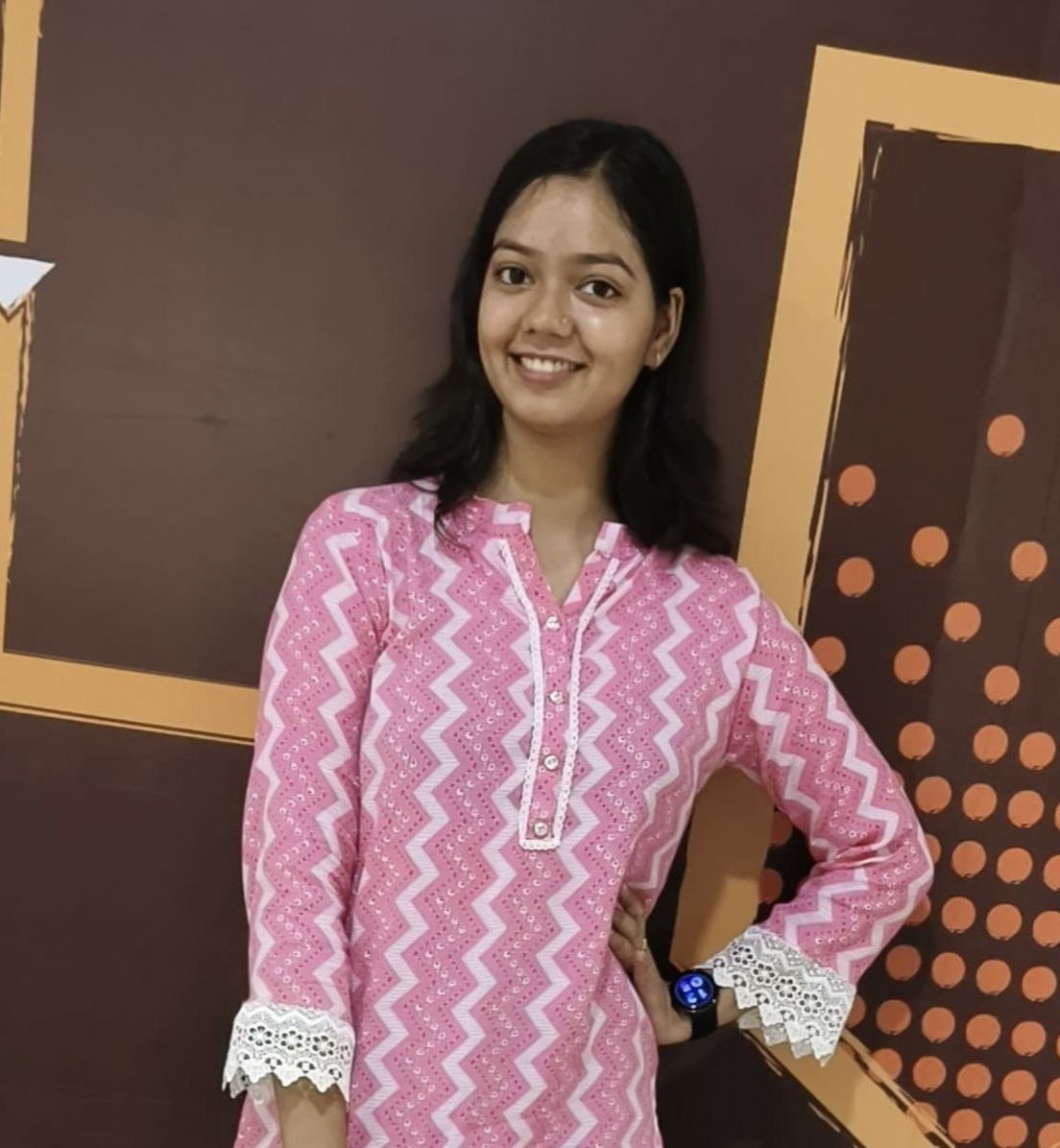

Hello everyone! I'm Geetanjali Tiwari from New Delhi, India. I recently graduated in English and Political Science, and I'm looking forward to beginning my master's journey.I'm an avid reader, a curious learner, and someone who loves meaningful conversations. I believe that language is more than just words, it's a way to connect with people, exchange ideas, and understand different cultures.
That's what I enjoy most about LangClub, and I'm excited to create a welcoming space where we can all learn from one another.

Topic guide Optional
A quick way to understand the topic and find useful language. Read as much or as little as you like.
1-minute overview
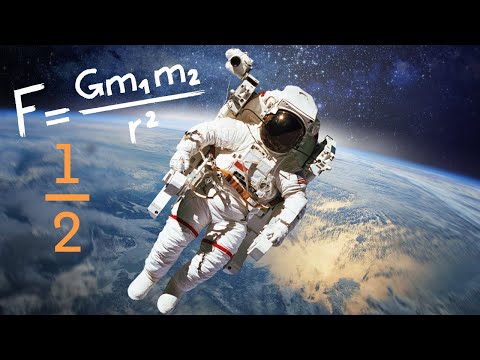
Imagine that surface gravity suddenly became half as strong, while Earth’s atmosphere, rotation, and material properties somehow stayed the same. This assumption matters: changing Earth’s gravity in reality would also disrupt orbits, tides, and probably the atmosphere. Under the simplified scenario, your mass and inertia would not halve, but your weight would. You could jump higher, thrown objects would stay airborne longer, and falling objects would accelerate more slowly.
Yet daily life might become less stable, not simply easier. With less downward force, shoes, tyres, furniture, ladders, and cargo would have less grip; quick turns and braking could become riskier. Buildings would carry lighter loads, but elevators, sports equipment, transport rules, and workplace safety would all need redesign. The central policy question is whether society should rely on education and voluntary adaptation or set shared standards, while avoiding rules that burden children, older people, or workers differently. The scenario also raises a deeper issue: should changes be managed locally, or must every region follow compatible rules for travel and trade?
Yet daily life might become less stable, not simply easier. With less downward force, shoes, tyres, furniture, ladders, and cargo would have less grip; quick turns and braking could become riskier. Buildings would carry lighter loads, but elevators, sports equipment, transport rules, and workplace safety would all need redesign. The central policy question is whether society should rely on education and voluntary adaptation or set shared standards, while avoiding rules that burden children, older people, or workers differently. The scenario also raises a deeper issue: should changes be managed locally, or must every region follow compatible rules for travel and trade?
Useful vocabulary
Approx. CEFR · Topic relevance
inertia
The tendency of an object to resist a change in its motion.
Even at half gravity, inertia would make a heavy shopping cart difficult to stop quickly.
weight
The force produced when gravity pulls on an object’s mass.
Your weight would be lower, although your mass would remain the same.
traction
The grip between a surface and something moving across it, such as a tyre or shoe.
Reduced traction could make cycling and emergency braking more dangerous.
counterfactual
An imagined situation that differs from reality and is used to explore consequences.
This is a counterfactual scenario, so we need to state clearly what stays unchanged.
load-bearing
Able to support the weight or force placed on a structure.
Some load-bearing structures could be lighter, but they would still need to withstand wind and impacts.
adaptation
A change in behaviour, design, or systems made in response to new conditions.
Schools might teach safe movement as an adaptation to lower gravity.
Useful expressions
That outcome depends heavily on what we assume remains constant.
Use this to identify an important assumption in a hypothetical scenario.
That outcome depends heavily on what we assume remains constant, especially the atmosphere and Earth’s rotation.
The immediate benefit may conceal a longer-term cost.
Use this to introduce an unintended consequence or trade-off.
The immediate benefit may conceal a longer-term cost, such as weaker bones or less stable transport.
It is useful to distinguish between physical possibility and social practicality.
Use this to separate scientific questions from policy or lifestyle questions.
It is useful to distinguish between physical possibility and social practicality when discussing new safety rules.
A universal rule could create unequal effects across different groups.
Use this to challenge one-size-fits-all policies.
A universal rule could create unequal effects across different groups, particularly workers who carry equipment.
The fairest approach may be to reduce risk without removing personal choice.
Use this to propose a balanced policy position.
The fairest approach may be to reduce risk without removing personal choice through clear standards and training.
Question list
- Ice breaking
- Main topic
- Free talk
| Q1. | Is your hometown famous for anything? |
|---|---|
| Q2. | Does work usually make you feel stressed? |
| Q3. | If you had to choose a new direction for your growth, what direction would you take? |
| Q4. | If you could design your own board game, what would it be about? |
| Q5. | What random moment made you smile today? |
| Q6. | Where do you sense the potential for new beginnings? |
| Q7. | What is the best vacation you have ever been on? |
| Q8. | Have you ever found yourself lost in thought during a long walk or drive? |
| Q1. | How would walking, running, and carrying things feel with weaker gravity? |
|---|---|
| Q2. | Which sports would become more exciting, and which might become dangerous? |
| Q3. | How would homes and public buildings need to change for weaker gravity? |
| Q4. | What new forms of transport could become practical? |
| Q5. | Which everyday tasks would become easier, and which would become harder? |
| Q6. | What unexpected safety problems could half-strength gravity create? |
| Q7. | How might animals and plants adapt to the new conditions? |
| Q8. | Would the benefits of weaker gravity be greater than the problems it caused? |
| Q1. | If you had to live in another time period, which would you pick and why? |
|---|---|
| Q2. | How do you define consciousness, and do you believe it can exist outside of the human brain? |
| Q3. | Describe what an ‘authentic life’ looks like to you. |
| Q4. | Where would you love to visit for a cultural exchange? |
| Q5. | Why does stepping outside comfort zones expand our world? |
| Q6. | What advice would you give to men? |
| Q7. | What makes you feel really alive? |
| Q8. | What is your favorite type of music and why? |
Rules


Please be kind and respectful.
Note: You can be banned for violating any of these rules
No flirting! Don't ask for other people's social network, number etc. if he/she refuses to give them.
Note: You can be banned for violating any of these rules
Give others an equal opportunity to speak.
Note: You can be banned for violating any of these rules
Avoid Smoking / Drinking while you are talking.
Note: You can be banned for violating any of these rules
Turning your camera on is mandatory.
Note: You can be banned for violating any of these rules
Ready to join the conversation?
Book your spot and bring your perspective to the discussion.