
If you had the power to change one aspect of human nature, what would it be and why?
Learn topic-related expressions and join the speaking club to practice them!
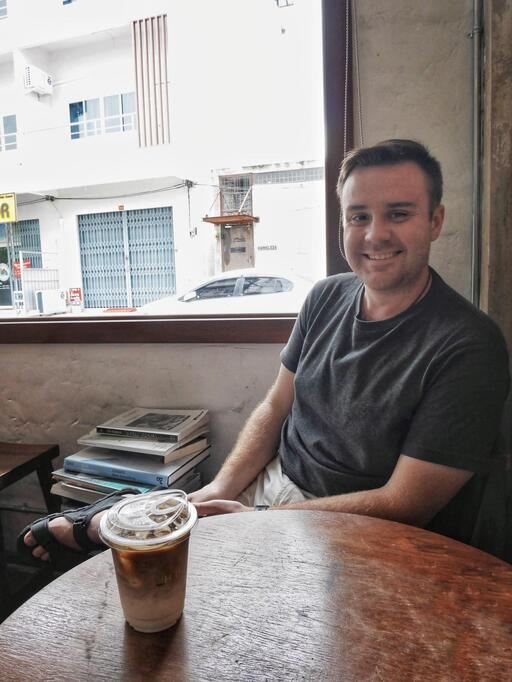

I'm Teacher Michael, a licensed English teacher.
I'm originally from the United States, but I have been working as a full-time TEFL-certified high school English teacher in Thailand since 2013. I have a Bachelor's Degree in International Relations and I am currently studying for my Master's Degree in Liberal Arts.

Topic guide Optional
A quick way to understand the topic and find useful language. Read as much or as little as you like.
1-minute overview
Imagining a change to human nature invites a question about both ethics and realism. Would it be wiser to reduce cruelty, envy, fear, or the desire for dominance? Every appealing change may have a cost: less fear could mean more courage but also less caution, while complete honesty might strengthen trust yet remove privacy, tact, and the ability to protect vulnerable people.
Humanity is difficult to describe in one sentence. Humans create families, institutions, art, science, and large-scale cooperation, but they also compete for status, resources, and power. Research on cooperation suggests that people can be remarkably generous, especially when trust, reciprocity, and shared norms are present; these tendencies can weaken when groups feel threatened or divided. This makes “human nature” less like a fixed personality and more like a range of capacities shaped by circumstances. The discussion can move from individual character to larger forces such as technology, inequality, education, migration, and political institutions.
Humanity is difficult to describe in one sentence. Humans create families, institutions, art, science, and large-scale cooperation, but they also compete for status, resources, and power. Research on cooperation suggests that people can be remarkably generous, especially when trust, reciprocity, and shared norms are present; these tendencies can weaken when groups feel threatened or divided. This makes “human nature” less like a fixed personality and more like a range of capacities shaped by circumstances. The discussion can move from individual character to larger forces such as technology, inequality, education, migration, and political institutions.
Useful vocabulary
Approx. CEFR · Topic relevance
prosociality
/ˌproʊsoʊʃiˈælɪti/the tendency to act in ways that benefit other people or society
I would strengthen prosociality, because societies depend on strangers helping one another.
zero-sum thinking
the belief that one person’s gain must mean another person’s loss
Zero-sum thinking can turn a solvable disagreement into a bitter conflict.
reciprocity
/ˌrɛsɪˈprɑːsəti/the practice of responding to help or fairness with help or fairness in return
Reciprocity makes cooperation more likely when people expect to meet again.
moral trade-off
a choice in which improving one value may weaken another
A world without lying could involve a moral trade-off between honesty and compassion.
institutional design
the way rules and organizations are structured to influence behavior
Good institutional design can reward cooperation without assuming people are naturally selfless.
unintended consequences
results that were not planned or expected
Changing the desire for power might have unintended consequences for ambition and innovation.
Useful expressions
I would distinguish between the capacity for something and the tendency to do it.
Use this to separate what humans can do from what they usually do.
I would distinguish between the capacity for violence and the tendency to choose it in ordinary life.
That conclusion depends heavily on the conditions we assume.
Use this to qualify a claim by focusing on context.
That conclusion depends heavily on the conditions we assume, such as scarcity or social trust.
The strongest case for that view is that...
Use this to present an argument fairly before agreeing or disagreeing.
The strongest case for that view is that competition can motivate people to improve.
We should be careful not to treat a social pattern as a biological destiny.
Use this to challenge overly fixed explanations of behavior.
We should be careful not to treat a social pattern as a biological destiny when institutions can change incentives.
The issue is not simply whether it is good or bad, but what it replaces.
Use this to examine the costs of a proposed change.
The issue is not simply whether ambition is good or bad, but what it replaces when it becomes extreme.
Sources & further reading
Question list
- Ice breaking
- Main topic
- Free talk
| Q1. | Describe an ordinary moment that turned into an unexpected adventure. |
|---|---|
| Q2. | Have you ever realized you were stronger or more capable than you believed? |
| Q3. | What’s a part of your daily life that you now see as a form of self-care? |
| Q4. | What object represents comfort for you? |
| Q5. | Describe an everyday habit that has a surprisingly positive effect on your life. |
| Q6. | What’s something you’ve experienced that reminds you of life’s unpredictability? |
| Q7. | What little purchase made a big difference in your life? |
| Q8. | If you could visit any UNESCO World Heritage site, which one would it be? |
| Q1. | If you had the power to change one aspect of human nature, what would it be and why? |
|---|---|
| Q2. | If you had to describe humanity to an alien, how would you do it? |
| Q3. | Is selfishness an inherent part of human nature or something society teaches us? |
| Q4. | Would the world be better if humans were incapable of lying? |
| Q5. | Is humanity naturally more inclined toward cooperation or competition? |
| Q6. | Is the human desire for power responsible for more progress or more suffering? |
| Q7. | What forces cause society to change and develop? |
| Q8. | How do you think global society will change in the next 100 years? |
| Q1. | Why do you believe in the power of simple moments? |
|---|---|
| Q2. | What does “inner beauty” mean to you? |
| Q3. | Why do some questions stay with us for years without answers? |
| Q4. | Do you enjoy learning about other cultures? Why or why not? |
| Q5. | What helps you avoid becoming defensive during discussions? |
| Q6. | What helps you maintain mutual respect? |
| Q7. | What is the most meaningful gift you've ever given someone? |
| Q8. | Virtual reality is evolving rapidly. How do you feel about the idea of spending significant time in digital worlds? |
Rules


Please be kind and respectful.
Note: You can be banned for violating any of these rules
No flirting! Don't ask for other people's social network, number etc. if he/she refuses to give them.
Note: You can be banned for violating any of these rules
Give others an equal opportunity to speak.
Note: You can be banned for violating any of these rules
Avoid Smoking / Drinking while you are talking.
Note: You can be banned for violating any of these rules
Turning your camera on is mandatory.
Note: You can be banned for violating any of these rules
Ready to join the conversation?
Book your spot and bring your perspective to the discussion.