
Is It Better to Have a Few Close Friends or a Large Social Circle?
Learn topic-related expressions and join the speaking club to practice them!


Hello everyone! I'm Geetanjali Tiwari from New Delhi, India. I recently graduated in English and Political Science, and I'm looking forward to beginning my master's journey.I'm an avid reader, a curious learner, and someone who loves meaningful conversations. I believe that language is more than just words, it's a way to connect with people, exchange ideas, and understand different cultures.
That's what I enjoy most about LangClub, and I'm excited to create a welcoming space where we can all learn from one another.

Topic guide Optional
A quick way to understand the topic and find useful language. Read as much or as little as you like.
1-minute overview
Friendship is often discussed as a choice between depth and breadth: a few people who know us extremely well, or a wider circle that brings variety, opportunity, and a sense of belonging. In reality, the two can serve different purposes. Close friends may offer trust, emotional support, and honest feedback, while acquaintances and casual friends can introduce new ideas, activities, and communities. Research on well-being consistently points to the importance of meaningful social connection, but it does not establish one ideal number of friends for everyone.
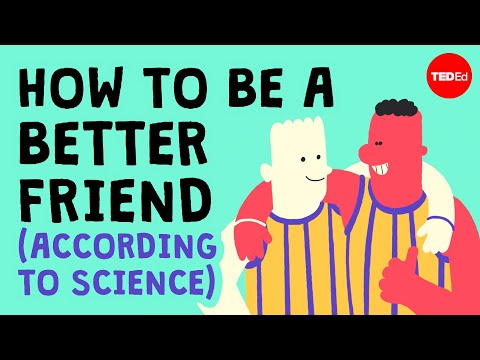
The balance can change with age, work patterns, culture, personality, and life circumstances. A large circle can be energising but difficult to maintain; a small one can feel secure but may become fragile if one relationship changes. The related video considers why friendships endure or fade, which raises another issue: friendship is not only about how many people we know, but also about time, reciprocity, expectations, and the ability to reconnect after distance. The central question may be less about choosing one model and more about recognising what kind of connection we need at a particular stage of life.
The balance can change with age, work patterns, culture, personality, and life circumstances. A large circle can be energising but difficult to maintain; a small one can feel secure but may become fragile if one relationship changes. The related video considers why friendships endure or fade, which raises another issue: friendship is not only about how many people we know, but also about time, reciprocity, expectations, and the ability to reconnect after distance. The central question may be less about choosing one model and more about recognising what kind of connection we need at a particular stage of life.
Useful vocabulary
Approx. CEFR · Topic relevance
close-knit
Having strong, loyal relationships within a small group.
My family is close-knit, but my friendship circle is quite broad.
acquaintance
Someone you know casually but do not know well.
I have many acquaintances through work, but only two people I would call in a crisis.
reciprocity
A mutual exchange of care, effort, or support in a relationship.
Friendships usually last longer when there is reciprocity rather than one person doing all the work.
social capital
Benefits gained through social relationships, such as information, trust, or opportunities.
A wide network can create social capital by connecting people to jobs and new communities.
emotional bandwidth
The limited time and mental energy available for emotional support and relationships.
During a stressful period, I simply do not have the emotional bandwidth to see everyone regularly.
insularity
A tendency to have limited contact with different people or ideas.
A very small circle can provide comfort, but it may also lead to insularity.
Useful expressions
It depends on what we mean by a good friendship.
Use this to question an assumption or clarify the standard being used.
It depends on what we mean by a good friendship: emotional intimacy, reliability, or simply having fun together.
The trade-off is between depth and diversity.
Use this to compare the advantages that may be lost when choosing one option.
The trade-off is between depth and diversity: fewer close friends may mean less access to different perspectives.
Quantity is not necessarily a proxy for quality.
Use this to challenge the idea that more relationships automatically mean better relationships.
Quantity is not necessarily a proxy for quality, especially if contact is superficial.
That may be true in the short term, but the longer-term effect could be different.
Use this to qualify a claim by considering time and change.
That may be true in the short term, but the longer-term effect could be different if a small network becomes unavailable.
I would distinguish between feeling socially busy and feeling genuinely connected.
Use this to make a careful conceptual distinction.
I would distinguish between feeling socially busy and feeling genuinely connected; they are not always the same experience.
Question list
- Ice breaking
- Main topic
- Free talk
| Q1. | What tiny gift would you give your future self? |
|---|---|
| Q2. | Describe a seemingly ordinary day that ended up being unforgettable. |
| Q3. | When was the last time you did something nice for someone completely unprompted? |
| Q4. | If you could remove one expectation society places on people, which one would it be? |
| Q5. | How do you stay open-minded in conversations about differing views? |
| Q6. | What moment taught you joy in simplicity? |
| Q7. | If you could live in any city, which one would it be and why? |
| Q8. | What kind of sports would you like to try in the future? |
| Q1. | Do you feel happier with a few close friends or a wider social circle? |
|---|---|
| Q2. | What experiences usually turn an ordinary friendship into a close one? |
| Q3. | How much time and effort does a strong friendship need? |
| Q4. | Can an online friendship offer the same support as an in-person friendship? |
| Q5. | What becomes difficult when someone tries to maintain too many friendships? |
| Q6. | How do friendships usually change when people enter a new stage of life? |
| Q7. | Can different friends support different parts of your life? |
| Q8. | What balance between close friends and casual friends works best for you? |
| Q1. | Think about a goal that took you far longer to achieve than expected. How did you stay motivated? |
|---|---|
| Q2. | What’s a new skill or hobby you’ve been meaning to start? |
| Q3. | How do you decide which goals to pursue first? |
| Q4. | Why has there been a surge in popularity for meditation and mindfulness practices? |
| Q5. | Are there any disadvantages to being beautiful? |
| Q6. | How often do you tell someone you miss them? |
| Q7. | What goals have you set and achieved in the past? |
| Q8. | What is one thing you have done that has made a positive impact on someone else's life? |
Rules


Please be kind and respectful.
Note: You can be banned for violating any of these rules
No flirting! Don't ask for other people's social network, number etc. if he/she refuses to give them.
Note: You can be banned for violating any of these rules
Give others an equal opportunity to speak.
Note: You can be banned for violating any of these rules
Avoid Smoking / Drinking while you are talking.
Note: You can be banned for violating any of these rules
Turning your camera on is mandatory.
Note: You can be banned for violating any of these rules
Ready to join the conversation?
Book your spot and bring your perspective to the discussion.