
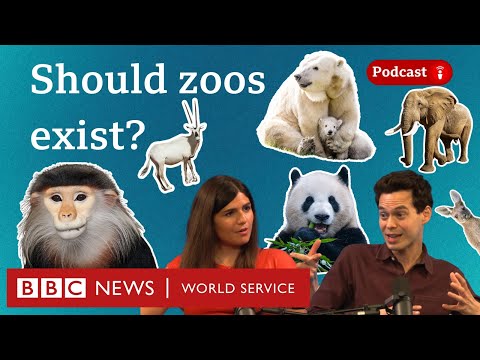
Is it ethical to keep wild animals in zoos?
Learn topic-related expressions and join the speaking club to practice them!


I am a certified TEFL instructor and native English teacher with hands-on experience delivering English due to my experience abroad in Hong Kong. I specialize in creating inclusive, judgment-free classrooms that adapt to diverse learners, including SEN students, using CLT and task-based methods, and I am currently pursuing IELTS certification to further strengthen my qualifications. I enjoy connecting with students from all backgrounds and am committed to helping them build confidence and skills through engaging, supportive instruction.

Topic guide Optional
A quick way to understand the topic and find useful language. Read as much or as little as you like.
1-minute overview
Zoos raise a difficult ethical question because they can protect animals while also limiting their freedom. Supporters argue that well-run zoos provide veterinary care, support research, fund habitat protection, and maintain carefully managed breeding populations for species at serious risk. They may also give people a close encounter with wildlife that encourages concern for nature.
Critics respond that a long, healthy life is not automatically a good life. Many wild animals travel widely, choose complex social relationships, or need environments that captivity cannot fully reproduce. This concern is especially strong for elephants, great apes, and other highly social or cognitively complex species. Breeding animals in captivity can be valuable, but release is not always safe or realistic: suitable habitat, disease risks, learned behaviour, and local community support all matter. An ethical zoo, then, may need to show more than clean enclosures and popular animal exhibits. It should demonstrate measurable animal welfare, meaningful conservation outcomes, honest public education, and a willingness to stop keeping species whose needs it cannot meet.
Critics respond that a long, healthy life is not automatically a good life. Many wild animals travel widely, choose complex social relationships, or need environments that captivity cannot fully reproduce. This concern is especially strong for elephants, great apes, and other highly social or cognitively complex species. Breeding animals in captivity can be valuable, but release is not always safe or realistic: suitable habitat, disease risks, learned behaviour, and local community support all matter. An ethical zoo, then, may need to show more than clean enclosures and popular animal exhibits. It should demonstrate measurable animal welfare, meaningful conservation outcomes, honest public education, and a willingness to stop keeping species whose needs it cannot meet.
Useful vocabulary
Approx. CEFR · Topic relevance
animal welfare
An animal’s overall physical and mental quality of life.
Good animal welfare includes health, choice, social contact, and opportunities for natural behaviour.
captivity
/kæpˈtɪvəti/The condition of being kept in a limited space under human control.
The central issue is whether captivity can meet the needs of a wide-ranging animal.
enrichment
/ɪnˈrɪtʃmənt/Activities or features designed to stimulate an animal’s body and mind.
Food puzzles and changing environments are forms of enrichment, but are they enough?
conservation breeding
Breeding animals in human care to support the survival of a threatened species.
Conservation breeding seems most defensible when it is connected to a realistic recovery plan in the wild.
reintroduction
/ˌriɪntrəˈdʌkʃən/The planned release of a species into an area where it previously lived.
Reintroduction can fail if the original threats, such as habitat loss, have not been removed.
sentience
/ˈsɛnʃəns/The capacity to have feelings and subjective experiences, including pleasure and distress.
If animals are sentient, their emotional experience should carry serious ethical weight.
Useful expressions
The ethical case depends heavily on whether...
Use this to identify a condition that could change your conclusion.
The ethical case depends heavily on whether the zoo can meet the species’ social and behavioural needs.
We should distinguish between... and...
Use this to separate related ideas that are often treated as identical.
We should distinguish between keeping a species alive in captivity and helping it recover in the wild.
That benefit has to be weighed against...
Use this to compare a possible advantage with a moral cost.
That educational benefit has to be weighed against the animal’s loss of freedom and choice.
The strongest objection is that...
Use this to present a serious counterargument fairly.
The strongest objection is that even excellent facilities cannot reproduce a wild animal’s natural life.
In principle, I agree; in practice, however,...
Use this to qualify support for an idea because implementation may be difficult.
In principle, I agree with breeding programs; in practice, however, they need clear conservation goals and independent oversight.
Sources & further reading
Question list
- Ice breaking
- Main topic
- Free talk
| Q1. | What challenge would you create for yourself this month? |
|---|---|
| Q2. | Where does your courage appear during challenges? |
| Q3. | How do you navigate language barriers or cultural differences when traveling in foreign countries? |
| Q4. | What is your perspective on the concept of 'equality'? |
| Q5. | What things are you good/bad at learning? Why? |
| Q6. | What’s a story you often tell because it captures an important lesson you learned? |
| Q7. | What’s an object or item you’ve kept for years, and why is it special to you? |
| Q8. | What makes a book a "classic"? |
| Q1. | Is it ethical to keep wild animals in zoos? |
|---|---|
| Q2. | Should zoos be allowed to keep endangered animals for breeding programs? |
| Q3. | Do zoos actually help protect endangered species from extinction? |
| Q4. | Is seeing wild animals in zoos an effective way to educate people about nature? |
| Q5. | Should animals that are born in captivity ever be released into the wild? |
| Q6. | Is it acceptable to keep highly intelligent animals, such as elephants and great apes, in captivity? |
| Q7. | What makes a zoo ethical? |
| Q8. | What is the best way to protect threatened and endangered animals? |
| Q1. | Why do people avoid conflict but desire honesty? |
|---|---|
| Q2. | What television programs are popular in your country? |
| Q3. | How much should people spend on weddings, in your opinion? |
| Q4. | How do you think we can address the issue of elder abuse? |
| Q5. | What is the value of humility? |
| Q6. | What is one thing you regret doing or not doing? |
| Q7. | What helps you recognize when you're being stubborn? |
| Q8. | How do you stay grounded when life feels unpredictable? |
Rules


Please be kind and respectful.
Note: You can be banned for violating any of these rules
No flirting! Don't ask for other people's social network, number etc. if he/she refuses to give them.
Note: You can be banned for violating any of these rules
Give others an equal opportunity to speak.
Note: You can be banned for violating any of these rules
Avoid Smoking / Drinking while you are talking.
Note: You can be banned for violating any of these rules
Turning your camera on is mandatory.
Note: You can be banned for violating any of these rules
Ready to join the conversation?
Book your spot and bring your perspective to the discussion.