Is It Fair for Grandparents to Expect Regular Visits?
Learn topic-related expressions and join the speaking club to practice them!


Marhaban everyone! my name is Bilel and I'm from Tunisia . I have a bachelor's degree in English (International Relations). I have worked as a translator, International Business Developer and a director in a teaching center. After COVID, I started my carrier as a part-time English teacher in Tunis, the capital city of Tunisia. I'm an ambitious person, and never give up my dream of working for the Ministry of Foreign Affairs of Tunisia, and why not be an ambassador someday!?
I'm thrilled to see you all in the Langclub sessions.

Topic guide Optional
A quick way to understand the topic and find useful language. Read as much or as little as you like.
1-minute overview
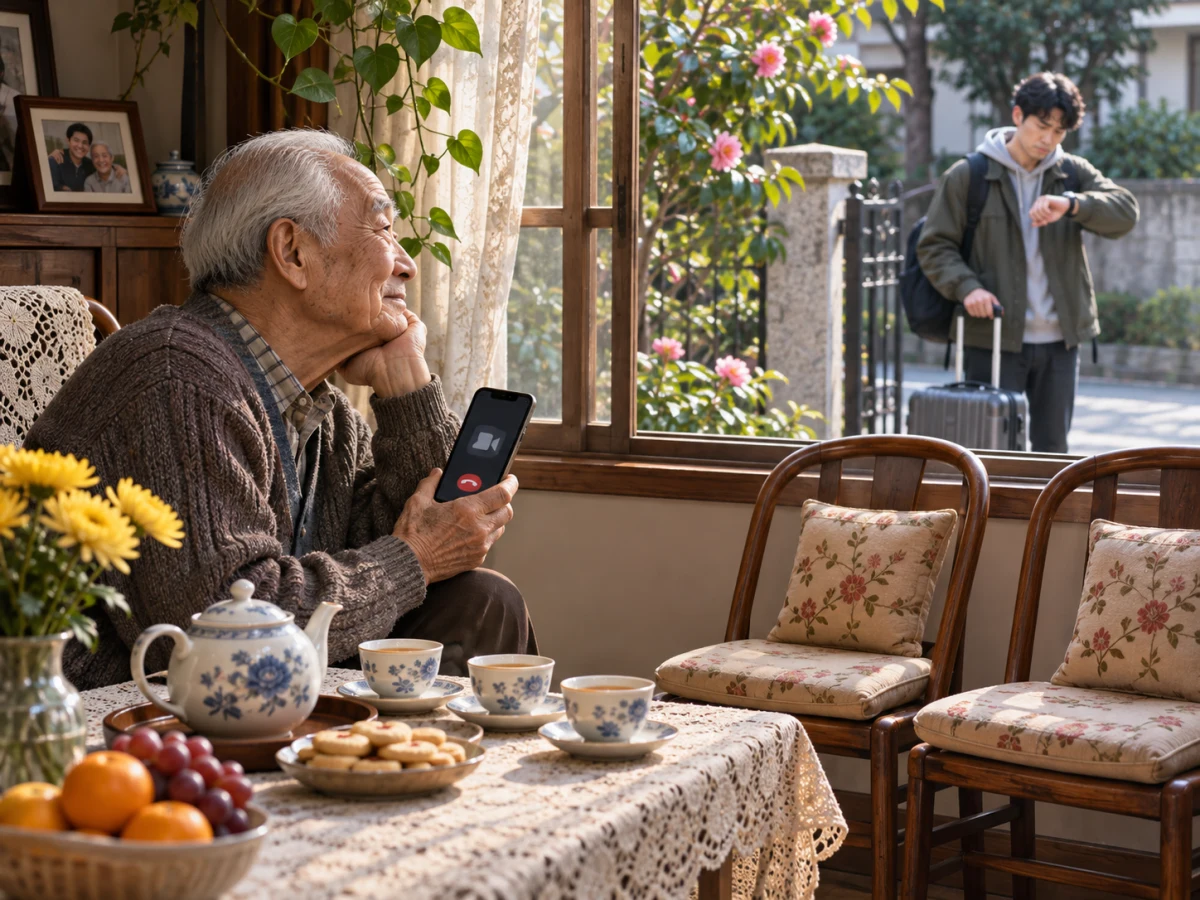
Many families quietly carry an expectation that grandchildren will visit, and it often goes unspoken until someone feels hurt. For grandparents, visits can signal love, keep family traditions alive, and ease isolation, especially for those who live alone. For young adults, study, work, money and distance make frequent travel hard. They may also need time to rest and keep a life of their own.
Research suggests the picture is more complicated than "more contact means less loneliness." One Swedish study of people aged 78 and older found that more contact with grandchildren, in person or remote, did not predict later loneliness. That points to quality, not frequency, as what may matter. Still, a study of one country cannot settle what is fair in every family.
The key tensions are duty against choice, quantity against quality, and in-person presence against digital contact. Cultural norms, health, cost and who has the most flexibility can all change what counts as reasonable.
Useful vocabulary
Approx. CEFR · Topic relevance
obligation
A duty you feel you must fulfil, because of morality, law or social pressure.
Some young adults visit out of obligation, while others go because they enjoy the time.
reciprocity
/ˌrɛsɪˈprɑsəti/A mutual exchange in which each side gives something back to the other.
Reciprocity matters: grandparents who also call or travel may feel less like they are only waiting.
guilt-tripping
Making someone feel guilty so that they will do what you want.
Saying I might not be here next year felt like guilt-tripping, even if she meant it sincerely.
intergenerational
/ˌɪntərdʒɛnəˈreɪʃənəl/Involving or affecting people of different generations.
Intergenerational bonds often depend on small routines more than on grand gestures.
strain
Pressure or tension that makes a situation or relationship harder to sustain.
Constant travel put a strain on both his budget and his weekends.
stay in touch
To keep communicating with someone regularly, even when you are not together.
We stay in touch through weekly video calls, which suits our different schedules.
Useful expressions
That depends on what we mean by
Use it to clarify a key term before agreeing or disagreeing.
That depends on what we mean by regular; monthly may feel rare to one person and generous to another.
To be fair to both sides
Use it to acknowledge competing interests when judging a dilemma.
To be fair to both sides, grandparents have emotional needs and students have real limits.
It comes down to
Use it to identify the deciding factor in a complex issue.
It comes down to whether the visit feels freely given or demanded.
That may hold true in some cases, but
Use it to qualify a generalisation politely before offering a counterpoint.
That may hold true in some cases, but not when a grandparent has limited mobility.
On the one hand, but on the other
Use it to compare two valid perspectives in one balanced statement.
On the one hand, calls are convenient, but on the other, they cannot replace shared meals.
Question list
- Ice breaking
- Main topic
- Free talk
| Q1. | How do you learn to enjoy your own company? |
|---|---|
| Q2. | Who do you admire? |
| Q3. | What's the bravest thing you have ever done? |
| Q4. | What’s a cultural tradition from your heritage that you find especially meaningful? |
| Q5. | What’s a piece of music that always seems to calm your nerves? |
| Q6. | Do you prefer the beach or the mountains? Why? |
| Q7. | What is your favorite family recipe? |
| Q8. | What is something that makes you happy? |
| Q1. | How often do families usually visit grandparents where you live? |
|---|---|
| Q2. | What makes a visit meaningful beyond how long it lasts? |
| Q3. | Should grandparents expect visits when adult grandchildren live far away? |
| Q4. | Can regular video calls replace some visits in person? |
| Q5. | How can a young adult explain that they need a weekend alone? |
| Q6. | Who should make more effort when travel is expensive? |
| Q7. | Would you feel differently if a grandparent lived alone? |
| Q8. | What visiting arrangement would feel fair to everyone in a busy family? |
| Q1. | How do you balance being direct and being sensitive? |
|---|---|
| Q2. | Technology often promises convenience. Do you think we’ve become too reliant on it? |
| Q3. | Have you ever been on stage? |
| Q4. | How do you determine the right time to open up? |
| Q5. | What small behavior instantly makes you trust someone? |
| Q6. | If you could have any job in the world, what would it be? |
| Q7. | Do you believe that "the end justifies the means"? |
| Q8. | What helps you avoid taking things personally? |
Rules


Please be kind and respectful.
Note: You can be banned for violating any of these rules
No flirting! Don't ask for other people's social network, number etc. if he/she refuses to give them.
Note: You can be banned for violating any of these rules
Give others an equal opportunity to speak.
Note: You can be banned for violating any of these rules
Avoid Smoking / Drinking while you are talking.
Note: You can be banned for violating any of these rules
Turning your camera on is mandatory.
Note: You can be banned for violating any of these rules
Ready to join the conversation?
Book your spot and bring your perspective to the discussion.