
Is national sovereignty more important than international cooperation?
Learn topic-related expressions and join the speaking club to practice them!
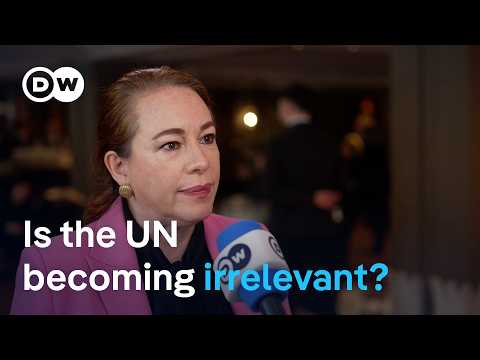

I'm Teacher Michael, a licensed English teacher.
I'm originally from the United States, but I have been working as a full-time TEFL-certified high school English teacher in Thailand since 2013. I have a Bachelor's Degree in International Relations and I am currently studying for my Master's Degree in Liberal Arts.

Topic guide Optional
A quick way to understand the topic and find useful language. Read as much or as little as you like.
1-minute overview
National sovereignty means that a country has the authority to govern its territory, make its own laws, and pursue policies chosen by its people. It is closely connected to democracy, self-determination, and protection against foreign interference. The United Nations system is built on the idea that states are sovereign equals, even though their size and power differ greatly.
At the same time, climate change, pandemics, financial shocks, war, migration, and artificial intelligence can cross borders faster than any one government can respond. International agreements may coordinate action and spread costs more fairly, but they can also feel distant from voters and difficult to enforce. The central tension is not simply independence versus global government. It is about consent, accountability, and fairness: when states accept shared rules, who writes them, who benefits, who pays, and what happens when a government believes that compliance harms its citizens? A strong discussion can distinguish voluntary cooperation from legally binding obligations, and temporary emergency powers from permanent limits on national decision-making.
At the same time, climate change, pandemics, financial shocks, war, migration, and artificial intelligence can cross borders faster than any one government can respond. International agreements may coordinate action and spread costs more fairly, but they can also feel distant from voters and difficult to enforce. The central tension is not simply independence versus global government. It is about consent, accountability, and fairness: when states accept shared rules, who writes them, who benefits, who pays, and what happens when a government believes that compliance harms its citizens? A strong discussion can distinguish voluntary cooperation from legally binding obligations, and temporary emergency powers from permanent limits on national decision-making.
Useful vocabulary
Approx. CEFR · Topic relevance
national sovereignty
A state’s authority to govern itself without external control.
National sovereignty matters, but it should not become an excuse for ignoring cross-border harm.
multilateralism
Cooperation among several countries through shared rules or institutions.
Multilateralism can be slow, yet it may produce more legitimate solutions than unilateral action.
binding agreement
An agreement that creates legal duties for the parties that accept it.
A binding agreement is only credible if there is a fair way to monitor compliance.
collective action problem
A problem in which everyone benefits from cooperation but individuals may prefer not to contribute.
Climate policy is often described as a collective action problem because free-riding is tempting.
subsidiarity
The principle that decisions should be made at the most local level able to handle them effectively.
Subsidiarity suggests that global institutions should act only when national solutions are insufficient.
disproportionate burden
An unfairly large share of costs or responsibilities.
Lower-income countries may argue that a global policy places a disproportionate burden on them.
Useful expressions
The key distinction is between … and …
Use it to separate two ideas that are often treated as identical.
The key distinction is between coordinating policy and transferring decision-making power.
That argument depends on the assumption that …
Use it to identify an unstated belief behind a claim.
That argument depends on the assumption that international institutions are more accountable than national governments.
The benefits may be shared, but the costs are unevenly distributed.
Use it to discuss fairness in global agreements.
The benefits may be shared, but the costs are unevenly distributed between wealthy and poorer states.
A reasonable safeguard would be …
Use it to propose a condition that makes a policy more acceptable.
A reasonable safeguard would be a time limit and independent review of emergency powers.
I would challenge the idea that …
Use it to disagree clearly while keeping the discussion constructive.
I would challenge the idea that national interest and global responsibility must always conflict.
Sources & further reading
Question list
- Ice breaking
- Main topic
- Free talk
| Q1. | Describe an unexpected friendship that became very meaningful to you. |
|---|---|
| Q2. | What is your definition of evil? |
| Q3. | Where would you take someone to show them joy? |
| Q4. | Where would you go to start a meaningful chapter? |
| Q5. | Ever looked at a past version of yourself with unexpected admiration? What prompted it? |
| Q6. | What's the biggest risk you've ever taken in your life? |
| Q7. | Think of a habit you’ve picked up from someone else that became part of your routine—what is it? |
| Q8. | How do you usually react to surprises—both good and bad? |
| Q1. | Should countries give international organizations more power to solve global problems? |
|---|---|
| Q2. | Is national sovereignty more important than international cooperation? |
| Q3. | Should countries be legally required to follow international agreements during global crises? |
| Q4. | Who should decide when a global problem justifies limiting national sovereignty? |
| Q5. | Should wealthy countries have greater responsibility to sacrifice sovereignty for global cooperation? |
| Q6. | Can international cooperation effectively address problems if countries remain completely sovereign? |
| Q7. | Should countries be able to reject international policies that conflict with their national interests? |
| Q8. | Should countries accept economic disadvantages if doing so benefits the global community? |
| Q1. | Do you enjoy speaking English? |
|---|---|
| Q2. | What is your favorite outdoor activity? |
| Q3. | How do you recognize emotional patterns in others? |
| Q4. | Did you play any sports as a child? |
| Q5. | How do you balance being direct and being sensitive? |
| Q6. | Stories about lost treasures or mysteries captivate many. Are there any unsolved mysteries that intrigue you? |
| Q7. | Certain foods are considered delicacies. Would you ever try a dish that is controversial or unusual in your culture? |
| Q8. | Heirlooms often pass through generations with stories. Do you possess an item with a long family history? |
Rules


Please be kind and respectful.
Note: You can be banned for violating any of these rules
No flirting! Don't ask for other people's social network, number etc. if he/she refuses to give them.
Note: You can be banned for violating any of these rules
Give others an equal opportunity to speak.
Note: You can be banned for violating any of these rules
Avoid Smoking / Drinking while you are talking.
Note: You can be banned for violating any of these rules
Turning your camera on is mandatory.
Note: You can be banned for violating any of these rules
Ready to join the conversation?
Book your spot and bring your perspective to the discussion.