
Let's discuss: the ethics of dangerous technologies
Learn topic-related expressions and join the speaking club to practice them!


I'm Teacher Michael, a licensed English teacher.
I'm originally from the United States, but I have been working as a full-time TEFL-certified high school English teacher in Thailand since 2013. I have a Bachelor's Degree in International Relations and I am currently studying for my Master's Degree in Liberal Arts.

Topic guide Optional
A quick way to understand the topic and find useful language. Read as much or as little as you like.
1-minute overview
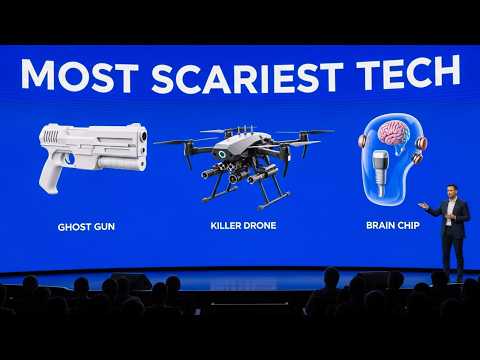
Dangerous technologies include tools whose misuse, failure, or large-scale deployment could cause severe and possibly irreversible harm. Nuclear weapons, engineered pathogens, powerful artificial intelligence, autonomous weapons, and geoengineering are often discussed together, although their risks and benefits differ sharply. The central difficulty is uncertainty: waiting for proof of harm may be reckless, yet restricting research too early can prevent medicine, clean energy, or safety innovations.
The debate therefore concerns more than whether technology is “good” or “bad.” It asks how society should make decisions when experts disagree, benefits may be distributed unevenly, and a small chance of catastrophe affects everyone. Possible approaches range from voluntary professional standards to licensing, international treaties, public oversight, and temporary moratoriums. Each creates its own problems: who has legitimate authority, how can rules be enforced across borders, and could strict controls concentrate power in governments or large companies? A thoughtful discussion can distinguish ordinary risk from existential risk, and individual blame from shared institutional responsibility.
The debate therefore concerns more than whether technology is “good” or “bad.” It asks how society should make decisions when experts disagree, benefits may be distributed unevenly, and a small chance of catastrophe affects everyone. Possible approaches range from voluntary professional standards to licensing, international treaties, public oversight, and temporary moratoriums. Each creates its own problems: who has legitimate authority, how can rules be enforced across borders, and could strict controls concentrate power in governments or large companies? A thoughtful discussion can distinguish ordinary risk from existential risk, and individual blame from shared institutional responsibility.
Useful vocabulary
Approx. CEFR · Topic relevance
dual-use
able to be used for both beneficial and harmful purposes
Gene-editing research is dual-use because it could improve health or be misused.
precautionary principle
the idea that potential serious harm can justify preventive action despite uncertainty
The precautionary principle may support pausing a technology before all its risks are proven.
moratorium
an agreed temporary stop to an activity
A global moratorium could create time to develop safety rules.
irreversible
impossible or extremely difficult to change back
Some people argue that irreversible environmental risks require stricter limits.
governance
the systems and processes used to direct, regulate, and oversee something
Effective governance should include scientists, governments, and the public.
existential risk
a risk that could permanently destroy or severely limit humanity’s future
The key question is whether a low-probability existential risk is ever acceptable.
Useful expressions
The crucial distinction is between … and …
Use this to separate two ideas that are often treated as the same.
The crucial distinction is between regulating an application and banning the underlying research.
That argument depends on the assumption that …
Use this to identify an unstated belief behind a claim.
That argument depends on the assumption that experts can reliably predict long-term harms.
Even if we accept that point, it does not necessarily follow that …
Use this to challenge a conclusion without rejecting the whole argument.
Even if we accept that innovation brings benefits, it does not necessarily follow that every experiment should proceed.
The burden of proof should lie with …
Use this to discuss who must demonstrate safety, necessity, or effectiveness.
For technologies with global consequences, the burden of proof should lie with the developers.
We should weigh the probability of harm against the scale of harm.
Use this to compare a risk’s likelihood with the seriousness of its possible outcome.
We should weigh the probability of harm against the scale of harm, especially when the damage cannot be reversed.
Sources & further reading
Question list
- Ice breaking
- Main topic
- Free talk
| Q1. | What’s a moment when you realized you had changed for the better? |
|---|---|
| Q2. | What dances from other countries do you like? |
| Q3. | If you could redesign the next morning of your life, how would it start? |
| Q4. | Let’s say you could host a dinner party with anyone—real or fictional. Who’s invited? |
| Q5. | What would you do if you suddenly gained the ability to speak every language fluently? |
| Q6. | Describe a dream you had that still lingers in your thoughts. |
| Q7. | Would you prefer to go on a two-week luxury cruise or go backpacking for six months? |
| Q8. | What is your favorite childhood game or toy? |
| Q1. | Should potentially dangerous technologies be banned before their risks are fully understood? |
|---|---|
| Q2. | Who should decide whether a technology is too dangerous to develop? |
| Q3. | Can the potential benefits of a technology justify an irreversible risk? |
| Q4. | Should scientists be legally responsible for technologies that cause catastrophic harm? |
| Q5. | Should governments or private companies control the development of high-risk technologies? |
| Q6. | Does society have a moral obligation to pursue technologies that could save millions of lives? |
| Q7. | Is slowing technological development a realistic way to protect future generations? |
| Q8. | Should humanity ever accept the possibility of extinction in exchange for extraordinary technological progress? |
| Q1. | Have you ever learned something unexpected from an elder? |
|---|---|
| Q2. | How do you find comfort during uncertain times? |
| Q3. | How do you think schools can better engage and involve students in the decision-making process? |
| Q4. | Which sound relaxes you most? |
| Q5. | What societal adjustments would be necessary if humans lived twice as long? |
| Q6. | What's your favorite flower? |
| Q7. | If you could switch careers instantly, what would you try? |
| Q8. | What would you most like to learn? |
Rules


Please be kind and respectful.
Note: You can be banned for violating any of these rules
No flirting! Don't ask for other people's social network, number etc. if he/she refuses to give them.
Note: You can be banned for violating any of these rules
Give others an equal opportunity to speak.
Note: You can be banned for violating any of these rules
Avoid Smoking / Drinking while you are talking.
Note: You can be banned for violating any of these rules
Turning your camera on is mandatory.
Note: You can be banned for violating any of these rules
Ready to join the conversation?
Book your spot and bring your perspective to the discussion.