
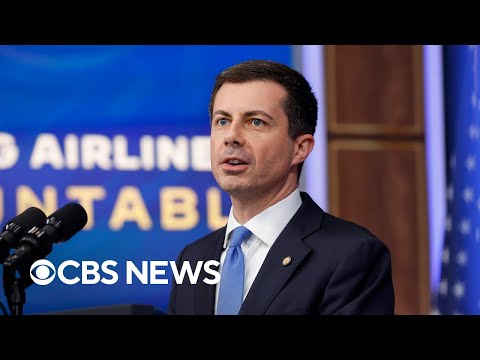
Should Airlines Be Required to Compensate Passengers for Long Delays?
Learn topic-related expressions and join the speaking club to practice them!
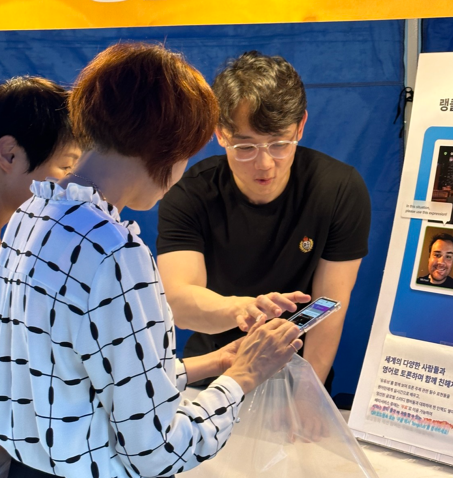

Hi there! I'm Jonah from Langclub. I'm interested in new technologies to help people learn languages and connecting people.

Topic guide Optional
A quick way to understand the topic and find useful language. Read as much or as little as you like.
1-minute overview
A long flight delay is more than an inconvenience: it can mean missed work, family events, hotel bookings and connections. The central question is whether an airline should merely get passengers to their destination eventually, or also pay when its operations consume hours of their time. Supporters of mandatory compensation see it as a basic consumer right and an incentive for better planning, staffing and communication. Critics argue that aviation depends on crowded airports, air-traffic control and weather, so a simple payout rule may be unfair or may raise fares for everyone.
Rules already vary sharply. In the United States, a long delay can trigger a refund if a traveler declines to fly, but domestic delay payments are generally not legally required. European-style systems link compensation to arrival delays while allowing exceptions for extraordinary circumstances; Canada combines duties to assist, rebook or refund with compensation in some cases. A useful discussion separates accountability from blame: weather may be unavoidable, but airlines still decide how promptly they inform, reroute and care for people. The hard policy choices are the delay threshold, the size of payment, proof of cause, and whether buses, trains and ferries should face comparable duties.
Rules already vary sharply. In the United States, a long delay can trigger a refund if a traveler declines to fly, but domestic delay payments are generally not legally required. European-style systems link compensation to arrival delays while allowing exceptions for extraordinary circumstances; Canada combines duties to assist, rebook or refund with compensation in some cases. A useful discussion separates accountability from blame: weather may be unavoidable, but airlines still decide how promptly they inform, reroute and care for people. The hard policy choices are the delay threshold, the size of payment, proof of cause, and whether buses, trains and ferries should face comparable duties.
Useful vocabulary
Approx. CEFR · Topic relevance
compensation
Money or another benefit given for loss, harm or serious inconvenience.
Compensation should reflect the time passengers lose, not just their direct expenses.
extraordinary circumstances
Unusual events outside a company’s reasonable control that may remove legal liability.
A severe storm may count as extraordinary circumstances, but poor maintenance should not.
rebooking
Arranging a passenger’s travel again on a later or different service.
Fast rebooking can be more valuable than a small cash payment.
liability
Legal responsibility for damage, loss or a failure to meet an obligation.
The law must define when an airline has liability for a missed connection.
deterrent
Something designed to discourage unwanted behaviour by making it costly or risky.
Large payments could act as a deterrent against unrealistic scheduling.
knock-on effect
An indirect result that causes further problems elsewhere.
One delayed aircraft can have a knock-on effect across an airline’s whole network.
Useful expressions
The key distinction is between ... and ...
Use this to separate two ideas that are often confused.
The key distinction is between an unavoidable disruption and poor handling of a disruption.
That argument depends on the assumption that ...
Use this to identify the belief supporting a claim.
That argument depends on the assumption that compensation would improve airline behaviour.
I would make an exception only if ...
Use this to propose a rule while setting a clear limit.
I would make an exception only if the airline could show that safety was genuinely at risk.
The policy may solve one problem while creating another.
Use this to recognize a trade-off.
The policy may solve one problem while creating another by increasing ticket prices.
The burden of proof should rest with ...
Use this to say who should have to provide evidence.
The burden of proof should rest with the airline, because it has the operational information.
Question list
- Ice breaking
- Main topic
- Free talk
| Q1. | When does time go too fast for you? |
|---|---|
| Q2. | How do you usually approach making difficult decisions? |
| Q3. | Have you ever had a cultural experience that inspired you? |
| Q4. | Have you ever participated in a cultural exchange program? |
| Q5. | Where do you prefer to reset your emotions? |
| Q6. | Describe an act of kindness you witnessed that had a profound effect on you. |
| Q7. | What’s a quirky tradition or habit unique to your family or culture? |
| Q8. | Describe a book, film, or artwork that left a lasting impression on you. |
| Q1. | What is the worst travel delay you have experienced? |
|---|---|
| Q2. | How did the airline handle it? |
| Q3. | Should weather and strikes count as the airline's responsibility? |
| Q4. | Does compensation change airline behaviour, or just ticket prices? |
| Q5. | How much is a lost day of your life worth? |
| Q6. | Should trains, buses and ferries follow the same rules? |
| Q7. | Why do compensation rules differ so much between countries? |
| Q8. | What would you write into a passenger rights law? |
| Q1. | Given a chance which person would you like to interview? |
|---|---|
| Q2. | What would you do differently if there were 30 hours in a day? |
| Q3. | How do you contribute to peaceful discussions? |
| Q4. | What are some of the most important ethical considerations to keep in mind when traveling and engaging with other cultures? |
| Q5. | Where does compassion fit into your approach to decision-making? |
| Q6. | How do you think traveling alone versus traveling with others can impact the overall experience and personal growth? |
| Q7. | How do you think we can promote greater access to education in underprivileged communities? |
| Q8. | Have you ever felt truly connected to a stranger? What sparked that feeling? |
Rules


Please be kind and respectful.
Note: You can be banned for violating any of these rules
No flirting! Don't ask for other people's social network, number etc. if he/she refuses to give them.
Note: You can be banned for violating any of these rules
Give others an equal opportunity to speak.
Note: You can be banned for violating any of these rules
Avoid Smoking / Drinking while you are talking.
Note: You can be banned for violating any of these rules
Turning your camera on is mandatory.
Note: You can be banned for violating any of these rules
Ready to join the conversation?
Book your spot and bring your perspective to the discussion.