
Should Buy Now, Pay Later Be Regulated Like Credit Cards?
Learn topic-related expressions and join the speaking club to practice them!


I’m Ken, a Kenyan accountant with a special love for languages. I enjoy cross-cultural conversations and love hearing different accents from around the world come together through one shared language. I especially enjoy easy, judgment-free conversations where there is no pressure for perfection—just people connecting over random topics.

Topic guide Optional
A quick way to understand the topic and find useful language. Read as much or as little as you like.
1-minute overview
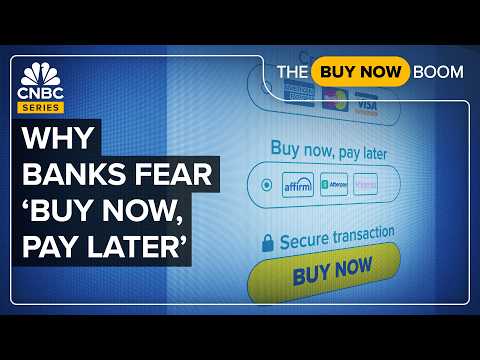
Buy now, pay later (BNPL) lets a shopper receive a product immediately and repay the price in several installments, often four payments over a short period. Many plans advertise no interest when every payment is made on time, and the simple checkout process can make a purchase feel more manageable than paying the full amount at once. Unlike a traditional credit card, a typical pay-in-four plan is usually tied to a single purchase, has a fixed repayment schedule, and may not offer a revolving line of credit.
The debate is not simply about whether BNPL is good or bad. Supporters see it as a transparent budgeting tool and an alternative to high-interest card debt. Critics argue that multiple small plans can hide a person’s total commitments, while late fees, automated payments, returns, and credit reporting can create problems. Regulation is also unsettled: the U.S. CFPB issued guidance in 2024 treating certain BNPL accounts like credit cards for some protections, then withdrew that guidance in 2025. The key question is whether equivalent risks require equivalent rules, or whether different products deserve tailored safeguards.
The debate is not simply about whether BNPL is good or bad. Supporters see it as a transparent budgeting tool and an alternative to high-interest card debt. Critics argue that multiple small plans can hide a person’s total commitments, while late fees, automated payments, returns, and credit reporting can create problems. Regulation is also unsettled: the U.S. CFPB issued guidance in 2024 treating certain BNPL accounts like credit cards for some protections, then withdrew that guidance in 2025. The key question is whether equivalent risks require equivalent rules, or whether different products deserve tailored safeguards.
Useful vocabulary
Approx. CEFR · Topic relevance
installment
one of several fixed payments used to repay a purchase or loan
The low installment made the laptop seem affordable, but I had three other payments due that month.
revolving credit
credit that can be borrowed, repaid, and borrowed again up to a limit
A credit card usually provides revolving credit, whereas a pay-in-four plan is often for one purchase only.
affordability check
an assessment of whether a borrower can realistically make the required payments
Providers should carry out an affordability check before approving larger BNPL purchases.
late fee
a charge imposed when a payment is not made by its due date
A small late fee may be manageable once, but repeated fees can make a cheap purchase expensive.
credit reporting
the sharing of borrowing and repayment information with credit bureaus
Credit reporting could reward reliable users, but it could also damage someone’s score after a missed payment.
regulatory arbitrage
gaining an advantage by operating under less strict rules than similar services
Critics say different rules for BNPL and credit cards may encourage regulatory arbitrage.
Useful expressions
The central trade-off is between convenience and consumer protection.
Use this to frame the debate around two competing priorities.
The central trade-off is between convenient short-term finance and protection from unaffordable debt.
That comparison is valid only up to a point.
Use this to accept a comparison while identifying its limits.
Comparing BNPL with credit cards is valid only up to a point because their repayment structures differ.
We should distinguish the product itself from the way it is marketed.
Use this to separate a financial tool from advertising or design choices.
We should distinguish the product itself from the way it is marketed at the checkout page.
The risk may be cumulative rather than obvious in a single transaction.
Use this to explain how several small commitments can become serious together.
The risk may be cumulative rather than obvious in a single transaction, especially for frequent shoppers.
A proportionate response would be to...
Use this to propose regulation that matches the level of risk.
A proportionate response would be to require clearer disclosures and affordability checks for higher-value plans.
Question list
- Ice breaking
- Main topic
- Free talk
| Q1. | Do you get a lot of free time or are you busy most of the time? |
|---|---|
| Q2. | Do you know the history of your family well? How far back can you trace your roots? |
| Q3. | When is the last time you couldn't stop laughing? |
| Q4. | What beautiful moment have you accidentally captured on your phone? |
| Q5. | Have you ever had a life-changing experience while traveling? |
| Q6. | Did your parents choose your name(s)? |
| Q7. | Describe a creative process that feels natural and intuitive for you. |
| Q8. | How do you recognize opportunities hidden inside problems? |
| Q1. | Have you ever used or considered using buy now, pay later? |
|---|---|
| Q2. | Why are these plans attractive to shoppers? |
| Q3. | How are they different from credit cards? |
| Q4. | Can small installments encourage people to spend too much? |
| Q5. | Who should be responsible when users misunderstand the risks? |
| Q6. | Should providers check whether customers can afford the payments? |
| Q7. | Would stricter rules make these services safer or less useful? |
| Q8. | Should buy now, pay later follow the same rules as credit cards? |
| Q1. | Have you ever shared an unforgettable meal with others? |
|---|---|
| Q2. | How much control do we have over the workings of our autonomous body functions? |
| Q3. | What makes kindness memorable in relationships? |
| Q4. | In your opinion, what makes a city feel welcoming or unwelcoming to outsiders? |
| Q5. | If you died today, would you have any regrets? |
| Q6. | How would you describe your friends? |
| Q7. | What recent observation stayed with you? |
| Q8. | What's the best piece of advice you've ever received? |
Rules


Please be kind and respectful.
Note: You can be banned for violating any of these rules
No flirting! Don't ask for other people's social network, number etc. if he/she refuses to give them.
Note: You can be banned for violating any of these rules
Give others an equal opportunity to speak.
Note: You can be banned for violating any of these rules
Avoid Smoking / Drinking while you are talking.
Note: You can be banned for violating any of these rules
Turning your camera on is mandatory.
Note: You can be banned for violating any of these rules
Ready to join the conversation?
Book your spot and bring your perspective to the discussion.