
Should Cashless Shops Be Required to Accept Cash?
Learn topic-related expressions and join the speaking club to practice them!
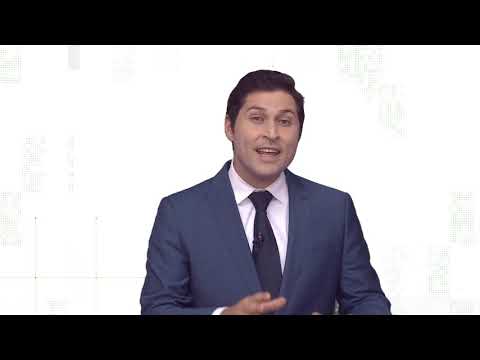

Albert, an engineer and explorer.
Hello everyone! My name is Albert and I am super happy to meet each person here! I love communicating in English and therefore I try to practice it as much as I can. I am an engineer by my background, and I like to know how everything works, as well as I like travelling, music, all sorts of activities and adventures.

Topic guide Optional
A quick way to understand the topic and find useful language. Read as much or as little as you like.
1-minute overview
Cashless payment is increasingly convenient: cards and phones can speed up checkout, reduce the need to count change, and may lower the risk of theft at a shop. Yet cash remains widely used in the United States, especially for small purchases, budgeting, privacy, emergencies, and by people who do not have reliable access to bank accounts, cards, smartphones, or digital identification.
The debate is therefore about more than technology. Supporters of cash-acceptance rules argue that a physical shop should not exclude customers simply because of how they pay, particularly when it sells essential goods. Opponents emphasize business autonomy, the costs of storing and depositing cash, and staff safety. Federal law does not generally force U.S. private businesses to accept cash, although some states and cities have their own requirements. A possible compromise is to require cash for everyday necessities while allowing limited exceptions for genuinely cash-free services. The bigger question is whether convenience for most customers can justify barriers for a smaller but potentially vulnerable group.
The debate is therefore about more than technology. Supporters of cash-acceptance rules argue that a physical shop should not exclude customers simply because of how they pay, particularly when it sells essential goods. Opponents emphasize business autonomy, the costs of storing and depositing cash, and staff safety. Federal law does not generally force U.S. private businesses to accept cash, although some states and cities have their own requirements. A possible compromise is to require cash for everyday necessities while allowing limited exceptions for genuinely cash-free services. The bigger question is whether convenience for most customers can justify barriers for a smaller but potentially vulnerable group.
Useful vocabulary
Approx. CEFR · Topic relevance
cashless-only
accepting digital payments but refusing notes and coins
A cashless-only café may be efficient, but it can exclude some customers.
financial exclusion
being unable to fully use financial services or participate in everyday economic life
Critics say cashless shops can increase financial exclusion.
legal tender
money officially recognized for paying debts under the law
Some people assume legal tender must be accepted in every shop, but the rules are more complex.
merchant fee
a charge paid by a business to process a card or digital payment
For a small purchase, a merchant fee can take a noticeable share of the profit.
payment trail
a record showing when, where, and how a payment was made
Cash leaves less of a payment trail than a card transaction.
contingency
a planned response to a possible problem or emergency
Cash can be a useful contingency when networks or payment systems fail.
Useful expressions
The key trade-off is between ___ and ___.
Use this to identify two competing priorities.
The key trade-off is between efficiency for businesses and access for customers.
That argument assumes that ___.
Use this to reveal an unstated idea behind a claim.
That argument assumes that everyone has a bank card or smartphone.
It matters whether we are talking about ___ rather than ___.
Use this to make an important distinction.
It matters whether we are talking about luxury shopping rather than essential services.
A narrow exception might be justified if ___.
Use this to propose a limited, conditional rule.
A narrow exception might be justified if handling cash creates a serious safety risk.
The policy may be convenient in principle, but uneven in practice.
Use this to challenge a policy that affects groups differently.
The policy may be convenient in principle, but uneven in practice for unbanked customers.
Question list
- Ice breaking
- Main topic
- Free talk
| Q1. | What’s the hardest part of learning English? |
|---|---|
| Q2. | How do you stay open-minded in conversations about differing views? |
| Q3. | If you could know either when you die or how, which would you choose? |
| Q4. | Have you ever snuck out of the house? |
| Q5. | If you could set up a pop-up shop, what would you sell? |
| Q6. | What is your dream job? |
| Q7. | What is your favorite season for traveling? |
| Q8. | What habit do you think would make the biggest positive impact if everyone adopted it? |
| Q1. | How often do you use cash in everyday life? |
|---|---|
| Q2. | Why do some businesses prefer cashless payments? |
| Q3. | Who may be disadvantaged by cashless shops? |
| Q4. | Should a private business be free to choose which payments it accepts? |
| Q5. | Is cash more private than digital payment? |
| Q6. | Could accepting cash create extra costs or security risks? |
| Q7. | Should the rule be different for essential goods such as food or medicine? |
| Q8. | Will cash disappear completely in the future? |
| Q1. | Imagine your ideal day with no responsibilities—what would you do? |
|---|---|
| Q2. | How do you like to celebrate your achievements? |
| Q3. | What role does self-reflection play in your life? |
| Q4. | What is one thing you are passionate about? |
| Q5. | How can we learn to accept and embrace change in our lives? |
| Q6. | How do you maintain focus during long meetings? |
| Q7. | Why do some people enjoy puzzles, riddles, or brain games more than others? |
| Q8. | If your life philosophy were a billboard slogan, what would it say? |
Rules


Please be kind and respectful.
Note: You can be banned for violating any of these rules
No flirting! Don't ask for other people's social network, number etc. if he/she refuses to give them.
Note: You can be banned for violating any of these rules
Give others an equal opportunity to speak.
Note: You can be banned for violating any of these rules
Avoid Smoking / Drinking while you are talking.
Note: You can be banned for violating any of these rules
Turning your camera on is mandatory.
Note: You can be banned for violating any of these rules
Ready to join the conversation?
Book your spot and bring your perspective to the discussion.