
Should Citizens Be Required to Serve on Juries?
Learn topic-related expressions and join the speaking club to practice them!


Hi! I’m Evelyn. I’m from Taiwan and currently doing a Master’s degree in occupational therapy in Australia. I love meeting new people and chatting with people from different backgrounds. I’m really looking forward to having great conversations with you!

Topic guide Optional
A quick way to understand the topic and find useful language. Read as much or as little as you like.
1-minute overview
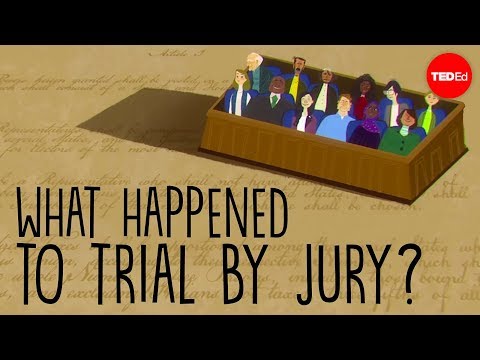
Jury service asks ordinary citizens to take part directly in the justice system. In the United States, jurors generally assess evidence and determine facts, while judges explain the law and manage the trial. Supporters see this division as a democratic safeguard: decisions about guilt or liability are not left entirely to state-appointed professionals. Serving can also make legal institutions feel less distant and more accountable to the public.
Yet the duty can impose real costs. Long or complex trials may disrupt work, caregiving, income, and mental well-being, especially when employers offer limited paid leave. Federal law protects permanent employees from being fired, intimidated, or coerced for federal jury service, but it does not generally require employers to keep paying their salary. Critics also question whether inexperienced jurors can understand technical evidence or avoid unconscious bias. The central issue is whether compulsory participation produces a more legitimate verdict, or whether fairness requires wider exemptions, stronger financial support, and greater reliance on professional judges.
Yet the duty can impose real costs. Long or complex trials may disrupt work, caregiving, income, and mental well-being, especially when employers offer limited paid leave. Federal law protects permanent employees from being fired, intimidated, or coerced for federal jury service, but it does not generally require employers to keep paying their salary. Critics also question whether inexperienced jurors can understand technical evidence or avoid unconscious bias. The central issue is whether compulsory participation produces a more legitimate verdict, or whether fairness requires wider exemptions, stronger financial support, and greater reliance on professional judges.
Useful vocabulary
Approx. CEFR · Topic relevance
civic duty
A responsibility people have as members of a community or country.
Some people see jury service as a civic duty rather than an inconvenience.
impartial
Fair and not influenced by personal opinions, relationships, or prejudice.
A juror must try to remain impartial even in an emotionally difficult case.
deliberation
Careful group discussion before reaching a decision.
During deliberation, jurors may interpret the same evidence differently.
exemption
Official permission not to take part in something that is normally required.
People with serious caregiving responsibilities may ask for an exemption or a delay.
expert testimony
Evidence given in court by a person with specialized knowledge or training.
Expert testimony can make a trial difficult for non-specialist jurors to follow.
representative cross-section
A group that reasonably reflects the different backgrounds in a wider community.
A jury should ideally be drawn from a representative cross-section of society.
Useful expressions
The strongest case for this is that...
Use this to introduce the most persuasive argument in favor of a position.
The strongest case for this is that juries bring community values into legal decisions.
That principle becomes harder to apply when...
Use this to show where a simple rule meets a practical difficulty.
That principle becomes harder to apply when a trial lasts several weeks.
We should distinguish between... and...
Use this to separate two ideas that are often treated as the same.
We should distinguish between protecting a worker’s job and guaranteeing their full salary.
The question is not simply whether..., but whether...
Use this to reframe a debate around a deeper issue.
The question is not simply whether jurors are experts, but whether they can judge evidence fairly.
This may improve legitimacy, although it does not necessarily guarantee...
Use this to recognize a benefit while adding a careful limitation.
This may improve legitimacy, although it does not necessarily guarantee an accurate verdict.
Question list
- Ice breaking
- Main topic
- Free talk
| Q1. | If you could start a charity, what would it be for? |
|---|---|
| Q2. | Have you ever experienced a place that seemed to slow down time? |
| Q3. | Where would you revisit to thank your past self? |
| Q4. | Have you ever been caught off guard by your own emotions? |
| Q5. | What’s a song that feels like it was written just for you? |
| Q6. | If you could have an unlimited supply of one material or object, what would you choose? |
| Q7. | If you could swap lives with someone for a week, who would it be? |
| Q8. | Share a time when slowing down helped you notice something important. |
| Q1. | Would you be willing to serve on a jury? |
|---|---|
| Q2. | Is jury service a responsibility that citizens should accept? |
| Q3. | Should people be allowed to refuse jury duty because they are too busy? |
| Q4. | Can ordinary citizens make fair decisions in complicated trials? |
| Q5. | Are professional judges more reliable than juries? |
| Q6. | Should employers be required to support workers who serve on juries? |
| Q7. | Could jury duty help people understand the justice system better? |
| Q8. | Would you prefer to be judged by a judge or by a group of ordinary citizens? |
| Q1. | What games did you play as a kid? |
|---|---|
| Q2. | Let’s say you’re in charge of setting the national priorities for the next decade. What comes first? |
| Q3. | Are you a morning person or a night person? |
| Q4. | How do you maintain emotional safety in relationships? |
| Q5. | Describe the most beautiful sunset or sunrise you’ve ever seen. |
| Q6. | Some people enjoy extreme sports for the adrenaline. What’s the most daring thing you’ve ever done? |
| Q7. | What helps you see situations from multiple angles? |
| Q8. | How do you maintain momentum during busy weeks? |
Rules


Please be kind and respectful.
Note: You can be banned for violating any of these rules
No flirting! Don't ask for other people's social network, number etc. if he/she refuses to give them.
Note: You can be banned for violating any of these rules
Give others an equal opportunity to speak.
Note: You can be banned for violating any of these rules
Avoid Smoking / Drinking while you are talking.
Note: You can be banned for violating any of these rules
Turning your camera on is mandatory.
Note: You can be banned for violating any of these rules
Ready to join the conversation?
Book your spot and bring your perspective to the discussion.