
Should Companies Be Required to Have Gender Quotas on Their Boards?
Learn topic-related expressions and join the speaking club to practice them!


Hello World! My name is Sultan, and I'm a traveler in the world of information.
I'm a person who will work and invest all of my efforts in the progress of humanity as long as I am alive. So let's create a place where we can grow together, learn, experiment, and open something new that can help us improve not only our English skills but also our lives, and level up every day!
(It may sound crazy, but I like crazy things) ^_*

Topic guide Optional
A quick way to understand the topic and find useful language. Read as much or as little as you like.
1-minute overview
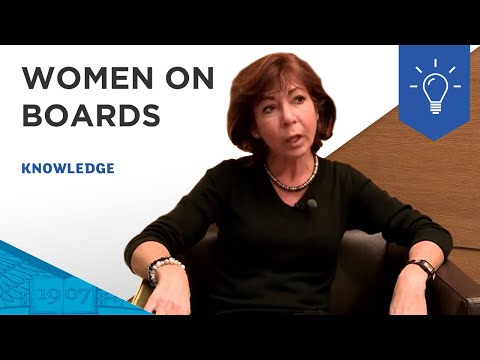
Corporate boards set strategic direction, appoint and oversee chief executives, and are expected to represent shareholders’ interests. Yet their membership has often been drawn from narrow professional networks, especially people with previous executive or board experience. Representation varies greatly by country and sector. In the UK, voluntary targets and public reporting have helped lift women’s representation on FTSE 350 boards above 40%. Across the EU, large listed companies faced board-balance targets from June 2026.
Supporters of quotas say voluntary systems can normalize delay: firms may endorse equality while repeatedly choosing familiar candidates. A binding target can force companies to widen searches, make selection criteria transparent, and measure results. Critics worry that a quota can encourage box-ticking, stigmatize appointees, or treat a symptom rather than the unequal career paths that shape who becomes board-ready. The central issue is whether fairness means selecting each individual without regard to gender, or redesigning a process whose past outcomes may not have been neutral. Discussion can also compare hard legal rules with reporting requirements, investor pressure, and time-limited policies.
Supporters of quotas say voluntary systems can normalize delay: firms may endorse equality while repeatedly choosing familiar candidates. A binding target can force companies to widen searches, make selection criteria transparent, and measure results. Critics worry that a quota can encourage box-ticking, stigmatize appointees, or treat a symptom rather than the unequal career paths that shape who becomes board-ready. The central issue is whether fairness means selecting each individual without regard to gender, or redesigning a process whose past outcomes may not have been neutral. Discussion can also compare hard legal rules with reporting requirements, investor pressure, and time-limited policies.
Useful vocabulary
Approx. CEFR · Topic relevance
board quota
A rule requiring a minimum proportion of board seats to be held by a particular group.
A board quota may change who is considered for leadership roles.
non-executive director
A board member who provides oversight but does not manage the company day to day.
The policy focuses on non-executive directors rather than senior managers.
talent pipeline
The group of people gaining the experience needed for future senior roles.
Quotas may work better when companies also strengthen the talent pipeline.
tokenism
Making a limited symbolic effort to include a group without giving it real influence.
Critics argue that a single appointment can become tokenism if power does not change.
disclosure regime
A system that requires companies to publish specified information publicly.
A disclosure regime can expose companies that make little progress.
sunset clause
A rule stating that a law or policy ends automatically on a specified date unless renewed.
A sunset clause could make a quota temporary rather than permanent.
Useful expressions
The key distinction is between representation and influence.
Use this to question whether numerical balance also changes decision-making power.
The key distinction is between representation and influence: who speaks, leads committees, and shapes strategy?
That argument assumes a level playing field.
Use this to challenge claims that selection has always been purely merit-based.
That argument assumes a level playing field, but access to senior roles has not always been equal.
We should separate the short-term mechanism from the long-term goal.
Use this to distinguish quotas from the broader aim of workplace equality.
We should separate the short-term mechanism from the long-term goal of fair leadership opportunities.
The unintended consequence may be more important than the headline result.
Use this to examine possible side effects of a policy.
The unintended consequence may be more important than the headline result if appointees face greater scrutiny.
Compared with voluntary targets, this approach has a stronger enforcement mechanism.
Use this to compare legal quotas with softer policy tools.
Compared with voluntary targets, this approach has a stronger enforcement mechanism, but it may create more resistance.
Question list
- Ice breaking
- Main topic
- Free talk
| Q1. | What is your favorite childhood memory? |
|---|---|
| Q2. | What recent experience reminded you of your strengths? |
| Q3. | What’s something you’ve recently tried that challenged your usual way of thinking? |
| Q4. | How do you celebrate your birthday? |
| Q5. | Do you prefer order or chaos? |
| Q6. | Where do you see yourself thriving? |
| Q7. | If you could sharpen one mental skill today, what skill would you choose? |
| Q8. | What do you wish was illegal? |
| Q1. | Who sits on the boards of major companies in your country? |
|---|---|
| Q2. | Why has voluntary change been so slow? |
| Q3. | Does a quota fix a problem or hide it? |
| Q4. | Do quotas undermine the people they are meant to help? |
| Q5. | Would you rather be hired for merit alone and wait longer for change? |
| Q6. | Should quotas expire once balance is reached? |
| Q7. | Which is more effective: legal quotas or public reporting? |
| Q8. | What would you legislate if the decision were yours? |
| Q1. | Who, according to you is the most overrated person in history? |
|---|---|
| Q2. | How has social media affected body image? |
| Q3. | What is the best thing you have ever bought? |
| Q4. | Imagine a world where artificial intelligence makes all legal decisions. How would this affect justice systems? |
| Q5. | How do you create hope during difficult times? |
| Q6. | What, if anything, is too serious to joke about? |
| Q7. | What are your thoughts on the potential impact of deepfake technology on the credibility of news and media content? |
| Q8. | Why do difficult conversations sometimes deepen relationships? |
Rules


Please be kind and respectful.
Note: You can be banned for violating any of these rules
No flirting! Don't ask for other people's social network, number etc. if he/she refuses to give them.
Note: You can be banned for violating any of these rules
Give others an equal opportunity to speak.
Note: You can be banned for violating any of these rules
Avoid Smoking / Drinking while you are talking.
Note: You can be banned for violating any of these rules
Turning your camera on is mandatory.
Note: You can be banned for violating any of these rules
Ready to join the conversation?
Book your spot and bring your perspective to the discussion.