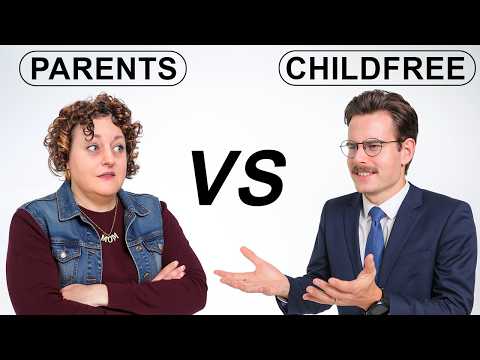
Should Companies Offer the Same Benefits to Parents and Employees Without Children?
Learn topic-related expressions and join the speaking club to practice them!


Hello World! My name is Sultan, and I'm a traveler in the world of information.
I'm a person who will work and invest all of my efforts in the progress of humanity as long as I am alive. So let's create a place where we can grow together, learn, experiment, and open something new that can help us improve not only our English skills but also our lives, and level up every day!
(It may sound crazy, but I like crazy things) ^_*

Topic guide Optional
A quick way to understand the topic and find useful language. Read as much or as little as you like.
1-minute overview
Many employers offer generous support to parents, such as paid parental leave, childcare help, and flexible hours. Employees without children sometimes feel they receive less, even though they may also have caring duties, health needs, or personal goals. Surveys cited by recruitment and HR sources suggest that large majorities of respondents believe parents receive better treatment and more benefits, though these polls are not always representative and should be read cautiously.
The debate is partly about definition. Equal treatment can mean giving everyone identical benefits, or it can mean giving people comparable support for different needs. Parental leave also responds to a legal and social purpose: protecting newborn care, health, and job security. Critics of extra parent-specific perks say they can shift unpaid workload onto colleagues, while defenders warn that flattening benefits could weaken support for families.
Solutions range from flexible benefit budgets and general personal leave to better cover planning during absences. The key tension is how to balance fairness, business costs, culture, and the changing needs of employees across life stages.
Useful vocabulary
Approx. CEFR · Topic relevance
equity
/ˈɛkwɪti/fair treatment that accounts for different needs, not necessarily identical treatment
Some employees see equity as more important than giving everyone exactly the same package.
flexible benefits budget
a fixed allowance employees can spend on benefits that suit their own circumstances
A flexible benefits budget could fund childcare for one person and language classes for another.
workload spillover
extra work passing to colleagues when someone is absent
Without temporary cover, parental leave can create workload spillover for the rest of the team.
caregiver
/ˈkɛrˌɡɪvər/a person who looks after a child, relative, or someone needing support
A caregiver might be a parent, but also someone supporting an ageing relative.
resentment
/rɪˈzɛntmənt/bitter feeling caused by perceived unfair treatment
Resentment can grow when colleagues feel their personal time is valued less.
life stage
a period of life with typical needs, such as early career, parenthood, or retirement planning
Benefits tied to life stage could include fertility support, eldercare, or sabbaticals.
Useful expressions
That depends on how we define fairness
Use it to challenge an assumption by showing that a key concept has more than one meaning.
That depends on how we define fairness: identical benefits or equal access to support?
On the one hand, but on the other hand
Use it to compare two valid pressures before giving a view.
On the one hand, parents need protected leave, but on the other hand, colleagues carry extra work.
To a certain extent
Use it to partly agree while limiting a claim.
To a certain extent, equal benefits are fair, but needs still differ.
What worries me about that approach is
Use it to raise a risk politely without rejecting the whole idea.
What worries me about that approach is that smaller firms may reduce parental support.
That overlooks the fact that
Use it to challenge an argument by adding missing evidence or context.
That overlooks the fact that many childless employees also care for relatives.
Question list
- Ice breaking
- Main topic
- Free talk
| Q1. | Where do you feel excitement about the future? |
|---|---|
| Q2. | Have you ever been on a blind date? |
| Q3. | Do you have a big family? |
| Q4. | How do you create joy in an ordinary moment? |
| Q5. | If you had to choose what your next chapter focuses on, what theme fits best? |
| Q6. | If you could have any famous athlete as a trainer, who would it be and why? |
| Q7. | What's your favorite type of scenery or landscape? |
| Q8. | How has travel influenced your personal values, beliefs, or worldview? |
| Q1. | Which workplace benefits would matter most to you personally? |
|---|---|
| Q2. | Does fair treatment always mean giving every employee exactly the same benefits? |
| Q3. | Should employees without children receive extra leave for other responsibilities? |
| Q4. | How should a team cover work during parental leave? |
| Q5. | Would a flexible benefits budget make this situation fairer? |
| Q6. | Could equal benefits discourage companies from supporting new parents? |
| Q7. | How do family expectations in your culture affect this debate? |
| Q8. | What benefit could support employees at different stages of life? |
| Q1. | Why does helping others clarify our own priorities? |
|---|---|
| Q2. | What are your thoughts on the importance of self-awareness and introspection? |
| Q3. | Why do we sometimes feel grateful for difficult moments later? |
| Q4. | Why do unexpected moments become some of our favorite memories? |
| Q5. | If you could travel back in time, which part of your life would you go back to? |
| Q6. | If you could travel back in time 3 years, what advice would you give yourself? |
| Q7. | Is there a limit to human knowledge, and if so, what are the implications? |
| Q8. | What is something you wish people cared less about? |
Rules


Please be kind and respectful.
Note: You can be banned for violating any of these rules
No flirting! Don't ask for other people's social network, number etc. if he/she refuses to give them.
Note: You can be banned for violating any of these rules
Give others an equal opportunity to speak.
Note: You can be banned for violating any of these rules
Avoid Smoking / Drinking while you are talking.
Note: You can be banned for violating any of these rules
Turning your camera on is mandatory.
Note: You can be banned for violating any of these rules
Ready to join the conversation?
Book your spot and bring your perspective to the discussion.