
Should Couples Share Their Phone Passwords?
Learn topic-related expressions and join the speaking club to practice them!


"Hello, everyone! I’m Arunima, and I’m currently pursuing a PhD in Computer Science in the US. I enjoy connecting with people, exploring thought-provoking topics, and helping others lead meaningful lives. I’m delighted to be part of the team and to support members of the community on their English-learning journeys!

Topic guide Optional
A quick way to understand the topic and find useful language. Read as much or as little as you like.
1-minute overview
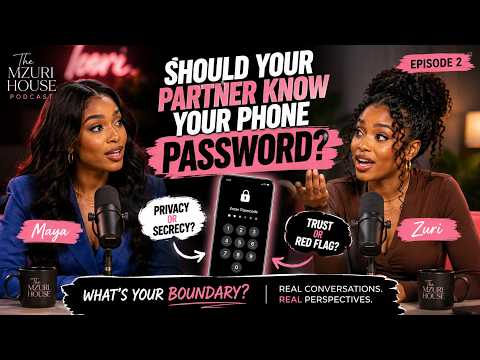
Smartphones have made a familiar relationship question more complicated: is access a practical convenience, a gesture of closeness, or a test of loyalty? Some couples exchange passcodes so that a partner can answer an urgent call, use maps, or manage a shared household. Others see a phone as a container for private thoughts, work messages, friendships, financial information, and conversations that belong partly to other people. Surveys suggest password sharing is common, but common practice does not create a universal rule.
The central distinction may be between access and surveillance. Knowing a password does not automatically mean that someone has permission to search messages, while refusing to share one does not automatically prove dishonesty. The difficult task is to turn vague expectations into clear, mutual boundaries: when access is acceptable, what remains private, and how concerns should be raised. Marriage, parenthood, past betrayal, cultural norms, and safety can all change the answer. A healthy agreement should be voluntary, reciprocal, and open to revision as circumstances change.
The central distinction may be between access and surveillance. Knowing a password does not automatically mean that someone has permission to search messages, while refusing to share one does not automatically prove dishonesty. The difficult task is to turn vague expectations into clear, mutual boundaries: when access is acceptable, what remains private, and how concerns should be raised. Marriage, parenthood, past betrayal, cultural norms, and safety can all change the answer. A healthy agreement should be voluntary, reciprocal, and open to revision as circumstances change.
Useful vocabulary
Approx. CEFR · Topic relevance
digital boundary
A limit that defines acceptable behavior around devices, accounts, and online information.
For us, a digital boundary is asking before opening the other person’s messages.
consent
Freely given agreement to a specific action or arrangement.
Knowing a password is not the same as having consent to read every conversation.
surveillance
Close monitoring of someone’s actions, often without a justified need.
Checking a partner’s phone every night can turn transparency into surveillance.
reciprocal
Mutual; involving the same responsibility or privilege for both people.
A reciprocal agreement should not give one partner more access than the other.
autonomy
The ability to make personal choices independently.
Even in marriage, many people believe each partner needs some digital autonomy.
breach of trust
An action that damages confidence in a relationship.
Reading private messages without permission may feel like a breach of trust.
Useful expressions
It depends on whether access is offered freely or expected as proof.
Use this to distinguish voluntary sharing from pressure.
It depends on whether access is offered freely or expected as proof.
We should separate practical access from the right to inspect.
Use this to clarify that convenience and monitoring are different issues.
We should separate practical access from the right to inspect.
The stronger argument is not for total openness, but for negotiated boundaries.
Use this to present a balanced position.
The stronger argument is not for total openness, but for negotiated boundaries.
That assumption risks treating privacy as evidence of guilt.
Use this to challenge suspicion-based reasoning.
That assumption risks treating privacy as evidence of guilt.
A fair standard would have to work equally well for both partners.
Use this to test whether a rule is reciprocal.
A fair standard would have to work equally well for both partners.
Sources & further reading
Question list
- Ice breaking
- Main topic
- Free talk
| Q1. | What was the last problem you solved and how did you do it? |
|---|---|
| Q2. | How do you remind yourself to slow down and enjoy the present moment? |
| Q3. | What’s a cause you would champion if you had unlimited resources? |
| Q4. | If you could design your perfect day, what would it look like? |
| Q5. | Have you ever had a mentor or role model? How did they impact you? |
| Q6. | What do you do when you feel anxious? |
| Q7. | Which literary character's wardrobe would you love to have and why? |
| Q8. | If you discovered you had a hidden talent, what do you hope it would be? |
| Q1. | Does sharing a password show trust or reduce privacy? |
|---|---|
| Q2. | Should people in serious relationships still have private digital spaces? |
| Q3. | Is refusing to share a password a reason to become suspicious? |
| Q4. | Is knowing a password different from regularly checking someone's phone? |
| Q5. | Should couples agree on digital boundaries early in a relationship? |
| Q6. | Can too much transparency create unhealthy behavior? |
| Q7. | Should marriage change how much privacy partners expect? |
| Q8. | What matters more in a relationship: openness or personal space? |
| Q1. | Which sunrise location is on your travel wish list? |
|---|---|
| Q2. | How do you evaluate whether a goal is worth pursuing? |
| Q3. | If you could have three wishes, what would your wishes be? |
| Q4. | How do you define spirituality? |
| Q5. | What type of stories inspire you the most? |
| Q6. | How do you recognize personal growth in others? |
| Q7. | How do you approach building long-term relationships? |
| Q8. | What is the most interesting start-up you've heard of recently and why? |
Rules


Please be kind and respectful.
Note: You can be banned for violating any of these rules
No flirting! Don't ask for other people's social network, number etc. if he/she refuses to give them.
Note: You can be banned for violating any of these rules
Give others an equal opportunity to speak.
Note: You can be banned for violating any of these rules
Avoid Smoking / Drinking while you are talking.
Note: You can be banned for violating any of these rules
Turning your camera on is mandatory.
Note: You can be banned for violating any of these rules
Ready to join the conversation?
Book your spot and bring your perspective to the discussion.