
Should Customers Be Allowed to Bring Their Own Containers to Any Restaurant?
Learn topic-related expressions and join the speaking club to practice them!
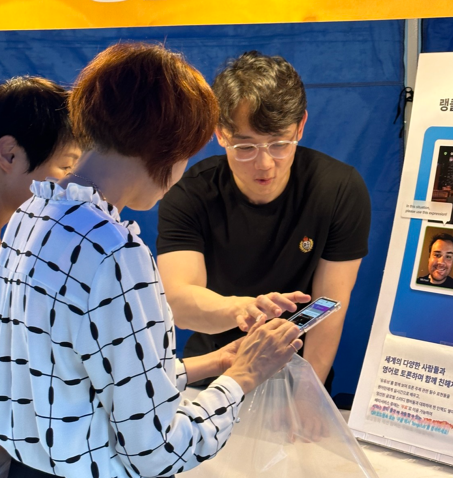

Hi there! I'm Jonah from Langclub. I'm interested in new technologies to help people learn languages and connecting people.

Topic guide Optional
A quick way to understand the topic and find useful language. Read as much or as little as you like.
1-minute overview
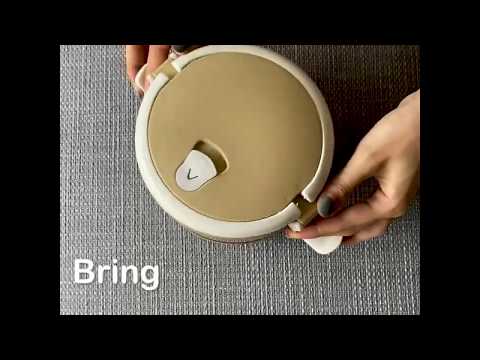
Bringing a personal container for takeaway food seems like a simple way to cut single-use packaging. It could be especially useful for regular customers, large portions, leftovers, and delivery orders. Yet the environmental benefit depends on repetition: a durable container must be used many times, and the system must not create excessive washing, transport, or operational waste.
The main obstacle is not necessarily whether reuse is possible, but how to make it safe and practical in very different restaurants. In the United States, the FDA Food Code is guidance rather than a single national restaurant law, and local rules can differ. Current guidance allows reusable-container systems when containers are appropriate, clean, sanitized where necessary, and visually inspected. Restaurants may still worry about contamination, staff training, delays, and unclear responsibility for a dirty or damaged container. A workable policy might therefore combine clear acceptance standards, a contact-free handoff process, and incentives such as a small discount or deposit-based container exchange. The larger question is whether convenience can be redesigned without making sustainability an extra burden for either customers or workers.
The main obstacle is not necessarily whether reuse is possible, but how to make it safe and practical in very different restaurants. In the United States, the FDA Food Code is guidance rather than a single national restaurant law, and local rules can differ. Current guidance allows reusable-container systems when containers are appropriate, clean, sanitized where necessary, and visually inspected. Restaurants may still worry about contamination, staff training, delays, and unclear responsibility for a dirty or damaged container. A workable policy might therefore combine clear acceptance standards, a contact-free handoff process, and incentives such as a small discount or deposit-based container exchange. The larger question is whether convenience can be redesigned without making sustainability an extra burden for either customers or workers.
Useful vocabulary
Approx. CEFR · Topic relevance
single-use packaging
Packaging designed to be used once and then discarded.
Single-use packaging is convenient, but its environmental cost is easy to overlook.
cross-contamination
The transfer of harmful substances or germs from one surface, food, or container to another.
The restaurant needs a process that prevents cross-contamination during handoff.
sanitized
Cleaned in a way that reduces germs to a safe level.
A container may look clean without being properly sanitized.
visual inspection
A quick check of an item’s condition by looking at it carefully.
Staff could carry out a visual inspection before accepting a customer’s container.
deposit-based system
A system in which users pay a refundable amount until they return an item.
A deposit-based system could make reusable delivery containers easier to manage.
operational burden
Extra time, work, cost, or complexity created for an organization.
The policy may reduce waste but create an operational burden during busy hours.
Useful expressions
The environmental case is strongest when...
Use this to identify the conditions under which an environmental argument is convincing.
The environmental case is strongest when each container is reused regularly.
That benefit needs to be weighed against...
Use this to introduce a cost, risk, or competing priority.
That benefit needs to be weighed against the extra work required at the counter.
A distinction should be made between...
Use this to separate two cases that may require different policies.
A distinction should be made between a coffee cup refill and a container for hot meals.
The policy would only be workable if...
Use this to state a practical condition for success.
The policy would only be workable if staff had clear authority to reject unsuitable containers.
It shifts responsibility from one party to another.
Use this to analyze who carries the cost, effort, or risk.
A strict inspection rule shifts responsibility from customers to restaurant employees.
Sources & further reading
Question list
- Ice breaking
- Main topic
- Free talk
| Q1. | What reusable item do you carry regularly? |
|---|---|
| Q2. | Which takeaway food travels well? |
| Q3. | How much planning goes into your meals? |
| Q4. | What habit helps you create less waste? |
| Q5. | Do you remember to bring shopping bags? |
| Q6. | Which kitchen container is most useful to you? |
| Q7. | What makes a restaurant easy to visit often? |
| Q8. | When do you choose convenience over sustainability? |
| Q1. | Have you ever brought your own container for food? |
|---|---|
| Q2. | How much waste could this habit realistically prevent? |
| Q3. | What hygiene concerns might restaurants have? |
| Q4. | Who should be responsible if a customer's container is unsuitable? |
| Q5. | Should restaurants offer a discount for reusable containers? |
| Q6. | Would this policy slow down kitchen service? |
| Q7. | How could delivery services support reusable containers? |
| Q8. | What would make bringing a container feel normal and convenient? |
| Q1. | How can businesses make low-waste choices effortless for customers? |
|---|---|
| Q2. | Would a deposit system work better than personal containers? |
| Q3. | What design would make reusable packaging easier to clean? |
| Q4. | Should local governments set one hygiene standard for this practice? |
| Q5. | How can restaurants avoid embarrassing customers whose containers are rejected? |
| Q6. | Could shared container networks work across competing businesses? |
| Q7. | Which incentives actually change people's everyday habits? |
| Q8. | What would persuade you to remember a container every time? |
Rules


Please be kind and respectful.
Note: You can be banned for violating any of these rules
No flirting! Don't ask for other people's social network, number etc. if he/she refuses to give them.
Note: You can be banned for violating any of these rules
Give others an equal opportunity to speak.
Note: You can be banned for violating any of these rules
Avoid Smoking / Drinking while you are talking.
Note: You can be banned for violating any of these rules
Turning your camera on is mandatory.
Note: You can be banned for violating any of these rules
Ready to join the conversation?
Book your spot and bring your perspective to the discussion.