
Should Daily Hotel Room Cleaning Be Available Only on Request?
Learn topic-related expressions and join the speaking club to practice them!
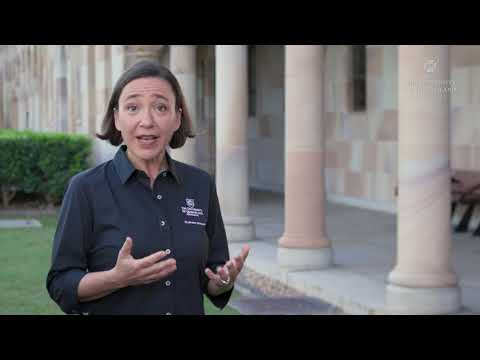


Hi! I’m Evelyn. I’m from Taiwan and currently doing a Master’s degree in occupational therapy in Australia. I love meeting new people and chatting with people from different backgrounds. I’m really looking forward to having great conversations with you!

Topic guide Optional
A quick way to understand the topic and find useful language. Read as much or as little as you like.
1-minute overview
Many hotels now make daily room cleaning an opt-in service: guests receive it when they ask, rather than automatically. Supporters argue that fewer cleanings can reduce laundry, water use, energy use, detergents, and waste. Research on changing the default suggests that requests for cleaning fall substantially without necessarily lowering overall guest satisfaction.
However, the policy is not simply a question of environmental responsibility. Some guests need regular cleaning because of disability, illness, children, long stays, cultural expectations, or a need for fresh towels and rubbish removal. Housekeepers may also be affected: fewer routine cleans could reduce staffing needs, while rooms left uncleaned for several days may become harder and slower to clean. The key tension is whether a hotel can make the sustainable option the easy option without turning a paid service into an inconvenient privilege. A fair policy would make requests simple, free, reliable, and clearly explained at booking and check-in, while measuring environmental results alongside guest experience and working conditions.
However, the policy is not simply a question of environmental responsibility. Some guests need regular cleaning because of disability, illness, children, long stays, cultural expectations, or a need for fresh towels and rubbish removal. Housekeepers may also be affected: fewer routine cleans could reduce staffing needs, while rooms left uncleaned for several days may become harder and slower to clean. The key tension is whether a hotel can make the sustainable option the easy option without turning a paid service into an inconvenient privilege. A fair policy would make requests simple, free, reliable, and clearly explained at booking and check-in, while measuring environmental results alongside guest experience and working conditions.
Useful vocabulary
Approx. CEFR · Topic relevance
opt-in
A system in which people receive a service only after actively asking for it.
An opt-in system is fair only if every guest knows how to request cleaning.
default
The option that happens automatically if a person makes no choice.
Making no daily cleaning the default may change behavior more than an environmental message does.
housekeeping
The hotel department responsible for cleaning rooms and supplying items such as towels.
The policy should be designed with housekeeping staff, not only hotel managers.
accessibility
The extent to which a service is usable by people with different needs and abilities.
Accessibility means that a guest should not have to make repeated phone calls to receive essential cleaning.
workload
The amount of work that a person or team is expected to complete.
A lower number of room cleans may still create a heavier workload if rooms are dirtier.
unintended consequence
An effect that was not planned or expected when a policy was introduced.
An unintended consequence could be more complaints or tougher cleaning shifts at checkout.
Useful expressions
The environmental case is strongest when...
Use this to state the conditions needed for a sustainability argument to be convincing.
The environmental case is strongest when the hotel measures real reductions in laundry and energy use.
This shifts the burden from ___ to ___.
Use this to examine who must make extra effort under a new policy.
This shifts the burden from the hotel to guests who must remember to request basic services.
The outcome may depend less on the policy itself than on...
Use this to identify implementation as the key variable.
The outcome may depend less on the policy itself than on how clearly and reliably it is communicated.
A short-term saving could create a longer-term cost.
Use this to challenge decisions based only on immediate efficiency.
A short-term saving could create a longer-term cost if guests stop returning because service feels limited.
We should distinguish between choice and exclusion.
Use this to question whether an apparently voluntary system is genuinely accessible to everyone.
We should distinguish between choice and exclusion when guests face language, mobility, or technology barriers.
Question list
- Ice breaking
- Main topic
- Free talk
| Q1. | Have you ever been surprised by the outcome of a spontaneous decision? |
|---|---|
| Q2. | What atmosphere makes conversations flow easily? |
| Q3. | How do you recognize when a conversation becomes meaningful? |
| Q4. | What is “beauty”? |
| Q5. | Who is the funniest person you've met? |
| Q6. | Have you ever had an unexpected encounter that shifted your outlook on life? |
| Q7. | What new experience are you eager to try? |
| Q8. | If you discovered you have more courage than you thought, what would you do? |
| Q1. | When staying at a hotel, how often do you actually need room cleaning? |
|---|---|
| Q2. | Why might guests prefer privacy instead of automatic daily service? |
| Q3. | How much water, energy, and staff time could hotels save by cleaning less? |
| Q4. | Could request-only cleaning make a hotel feel less comfortable or professional? |
| Q5. | How should guests request towels, toiletries, or urgent cleaning? |
| Q6. | Should guests receive a discount or reward for skipping room cleaning? |
| Q7. | How might less frequent cleaning affect hotel workers and their hours? |
| Q8. | What policy would balance guest comfort, worker needs, and environmental benefits? |
| Q1. | How would you change the world if you could? |
|---|---|
| Q2. | Can men also be victims of an abusive relationship? |
| Q3. | Let’s say you could host a roundtable with three historical figures. Who are they and why? |
| Q4. | What is the most interesting or unusual skill you have? |
| Q5. | Have you ever taken music lessons? If so, which instrument(s) did you learn to play? |
| Q6. | What helps you stay focused during conversations? |
| Q7. | Is creativity more essential than discipline in solving today’s problems? |
| Q8. | Have you passed up on any chances that you now regret? What were they? |
Rules


Please be kind and respectful.
Note: You can be banned for violating any of these rules
No flirting! Don't ask for other people's social network, number etc. if he/she refuses to give them.
Note: You can be banned for violating any of these rules
Give others an equal opportunity to speak.
Note: You can be banned for violating any of these rules
Avoid Smoking / Drinking while you are talking.
Note: You can be banned for violating any of these rules
Turning your camera on is mandatory.
Note: You can be banned for violating any of these rules
Ready to join the conversation?
Book your spot and bring your perspective to the discussion.