
Should Eating Insects Become More Normal?
Learn topic-related expressions and join the speaking club to practice them!


Marhaban everyone! my name is Bilel and I'm from Tunisia . I have a bachelor's degree in English (International Relations). I have worked as a translator, International Business Developer and a director in a teaching center. After COVID, I started my carrier as a part-time English teacher in Tunis, the capital city of Tunisia. I'm an ambitious person, and never give up my dream of working for the Ministry of Foreign Affairs of Tunisia, and why not be an ambassador someday!?
I'm thrilled to see you all in the Langclub sessions.

Topic guide Optional
A quick way to understand the topic and find useful language. Read as much or as little as you like.
1-minute overview
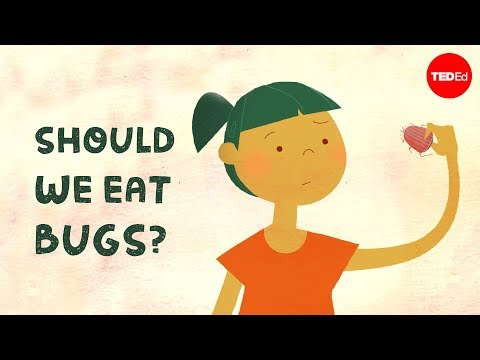
Edible insects, often called entomophagy, are already part of everyday food cultures in many parts of Asia, Africa, and Latin America. They may be eaten whole, roasted, or fried, but they can also be milled into flour and added to snacks, pasta, burgers, or protein bars. Supporters point to their protein and micronutrients, and to the possibility that some insect farms could use less land, feed, and water than conventional livestock.
Yet sustainability is not automatic: results depend on the insect species, energy used for heating and processing, feed sources, transport, and the scale of production. Food safety, allergy risks, price, regulation, animal welfare, and taste also matter. Perhaps the largest obstacle is cultural rather than technical. A visible cricket can trigger disgust for one person but signal tradition or a delicacy for another. Processing insects into familiar foods may reduce hesitation, although critics may see that as avoiding an honest conversation about what people are eating. The wider issue is whether changing diets should be a personal choice, a market development, or a public responsibility.
Yet sustainability is not automatic: results depend on the insect species, energy used for heating and processing, feed sources, transport, and the scale of production. Food safety, allergy risks, price, regulation, animal welfare, and taste also matter. Perhaps the largest obstacle is cultural rather than technical. A visible cricket can trigger disgust for one person but signal tradition or a delicacy for another. Processing insects into familiar foods may reduce hesitation, although critics may see that as avoiding an honest conversation about what people are eating. The wider issue is whether changing diets should be a personal choice, a market development, or a public responsibility.
Useful vocabulary
Approx. CEFR · Topic relevance
entomophagy
the practice of eating insects
Entomophagy is ordinary in some food cultures but still unusual in others.
food neophobia
reluctance to try unfamiliar foods
Food neophobia may explain why some people reject insect-based snacks before tasting them.
feed conversion efficiency
how effectively an animal turns feed into body mass or protein
Supporters argue that insects may have better feed conversion efficiency than cattle.
life-cycle assessment
a method for measuring environmental effects across a product\\\'s full life
A life-cycle assessment can show whether insect farming is genuinely lower-impact.
sensory appeal
the attractiveness of a food\\\'s taste, smell, texture, and appearance
Insect flour may be easier to accept because it changes the product\\\'s sensory appeal.
allergen
a substance that can cause an allergic reaction
Clear labels are important because insect products can be allergens for some consumers.
Useful expressions
The environmental case depends heavily on how it is produced.
Use this to avoid treating sustainability claims as automatic.
The environmental case depends heavily on how it is produced, not simply on the ingredient itself.
There is a difference between being technically feasible and socially acceptable.
Use this to compare practical possibility with public attitudes.
Insect protein may be technically feasible, but social acceptance could take much longer.
That reaction may be culturally learned rather than purely natural.
Use this to examine disgust, preference, or tradition without judging people.
Feeling disgusted by insects may be culturally learned rather than purely natural.
We should distinguish between a niche product and a scalable solution.
Use this to challenge claims about future impact.
We should distinguish between a niche protein bar and a scalable solution for everyday diets.
The question is not whether it is perfect, but whether it is an improvement on the alternatives.
Use this to make a realistic comparison between imperfect options.
The question is not whether insect farming is perfect, but whether it improves on high-impact meat production.
Sources & further reading
Question list
- Ice breaking
- Main topic
- Free talk
| Q1. | What is your favorite musical or Broadway show and why? |
|---|---|
| Q2. | Where do you reconnect with memories from childhood? |
| Q3. | What’s a memory that reminds you of the importance of slowing down and savoring life? |
| Q4. | Where would you revisit to thank your past self? |
| Q5. | If you were a piece of furniture, what would you be and why? |
| Q6. | Have you ever lived elsewhere? |
| Q7. | How do you keep yourself motivated during repetitive or tedious tasks? |
| Q8. | If you could instantly become an expert in any musical instrument, which one would you choose and why? |
| Q1. | Would you try food made from insects? |
|---|---|
| Q2. | Why do some cultures accept eating insects while others find it disgusting? |
| Q3. | Can people learn to enjoy foods they originally dislike? |
| Q4. | Should environmental concerns influence what we eat? |
| Q5. | Would insect-based food become more acceptable if you could not see the insects? |
| Q6. | Could insects become a realistic alternative to meat? |
| Q7. | Should schools encourage people to try more sustainable foods? |
| Q8. | What would need to change before insect-based food became normal in your country? |
| Q1. | Can men also be victims of an abusive relationship? |
|---|---|
| Q2. | What are your thoughts on the importance of community and social connection in our lives? |
| Q3. | Should personal expression be valued over social conformity? |
| Q4. | What is one thing you're good at that people don't expect? |
| Q5. | Why do some memories feel more vivid than others? |
| Q6. | Imagine a society where people only work three days a week. How would leisure activities change? |
| Q7. | If you could solve one major world problem, which one would you choose and why? |
| Q8. | What makes clarity important in conversations? |
Rules


Please be kind and respectful.
Note: You can be banned for violating any of these rules
No flirting! Don't ask for other people's social network, number etc. if he/she refuses to give them.
Note: You can be banned for violating any of these rules
Give others an equal opportunity to speak.
Note: You can be banned for violating any of these rules
Avoid Smoking / Drinking while you are talking.
Note: You can be banned for violating any of these rules
Turning your camera on is mandatory.
Note: You can be banned for violating any of these rules
Ready to join the conversation?
Book your spot and bring your perspective to the discussion.