
Should Everyone Receive a Basic Income?
Learn topic-related expressions and join the speaking club to practice them!

I'm Teacher Michael, a licensed English teacher.
I'm originally from the United States, but I have been working as a full-time TEFL-certified high school English teacher in Thailand since 2013. I have a Bachelor's Degree in International Relations and I am currently studying for my Master's Degree in Liberal Arts.

Topic guide Optional
A quick way to understand the topic and find useful language. Read as much or as little as you like.
1-minute overview
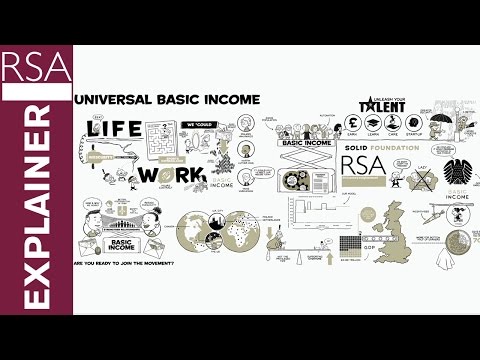
A basic income is a regular cash payment that people receive individually, without a work requirement or a means test. Supporters see it as a floor beneath everyone: it could reduce insecurity, simplify complicated benefit systems, and give people more freedom to study, care for relatives, start a business, or leave an unsuitable job. Because it is universal, even higher-income people would receive it, although they might contribute more through taxes.
The central question is not only whether cash helps, but how a large, permanent programme would reshape public choices. Critics worry about its cost, possible tax increases, and whether some recipients would reduce paid work. They also argue that money cannot replace services such as healthcare, housing support, education, and disability care. Evidence from pilots is mixed rather than decisive: Finland’s 2017–2018 experiment found only small employment effects but improved perceived security and wellbeing. Alaska’s annual dividend offers another, limited example of broadly shared public cash. A city-level trial could test practical effects, but its results might not fully predict a national system.
The central question is not only whether cash helps, but how a large, permanent programme would reshape public choices. Critics worry about its cost, possible tax increases, and whether some recipients would reduce paid work. They also argue that money cannot replace services such as healthcare, housing support, education, and disability care. Evidence from pilots is mixed rather than decisive: Finland’s 2017–2018 experiment found only small employment effects but improved perceived security and wellbeing. Alaska’s annual dividend offers another, limited example of broadly shared public cash. A city-level trial could test practical effects, but its results might not fully predict a national system.
Useful vocabulary
Approx. CEFR · Topic relevance
unconditional
/ˌʌnkənˈdɪʃənəl/Given without rules that recipients must meet, such as working or proving low income.
An unconditional payment may reduce the stress of constantly proving eligibility.
means test
An assessment of a person’s income and assets to decide whether they qualify for support.
A basic income would avoid the means test, but that would make it less targeted.
social safety net
Public support that protects people from serious financial hardship.
I see basic income as one part of a broader social safety net.
work incentive
A reason, often financial, that encourages someone to take or keep a job.
The key issue is whether the payment weakens or strengthens work incentives.
fiscal sustainability
Whether a government can afford a policy over the long term.
Any national proposal must be judged by its fiscal sustainability, not only its intentions.
pilot programme
A small-scale trial used to test a policy before wider implementation.
A pilot programme could reveal unexpected effects on families and local businesses.
Useful expressions
The strongest case for this policy is that...
Use this to introduce the most persuasive argument in favour of an idea.
The strongest case for this policy is that it gives people security when their income suddenly falls.
That depends heavily on how it is funded.
Use this to qualify a claim by shifting attention to taxes, spending, or other funding choices.
A basic income could be affordable, but that depends heavily on how it is funded.
We should distinguish between a short-term pilot and a permanent national scheme.
Use this to compare policies that may look similar but operate at very different scales.
We should distinguish between a short-term pilot and a permanent national scheme.
The trade-off is between universality and targeting.
Use this to frame the choice between giving support to everyone and concentrating it on those with greatest need.
The trade-off is between universality and targeting: universal payments are simpler, but targeted support may cost less.
It is not clear that cash can substitute for public services.
Use this to challenge the assumption that direct payments can replace services.
It is not clear that cash can substitute for public services such as healthcare or disability support.
Sources & further reading
Question list
- Ice breaking
- Main topic
- Free talk
| Q1. | If you could create a new sport, what would it be like? |
|---|---|
| Q2. | If you could be an Olympic athlete, what sport would you choose and why? |
| Q3. | What’s a moment in your life when you felt pure joy? |
| Q4. | What is your favorite thing to cook or bake? |
| Q5. | What little thing restores your sense of hope? |
| Q6. | What are some of your favorite ways to stay active and healthy? |
| Q7. | Have you ever discovered a surprising connection between two seemingly unrelated parts of your life? |
| Q8. | Where would you want to watch a life-changing sunrise? |
| Q1. | What would you do with a small monthly payment from the government? |
|---|---|
| Q2. | Could a basic income help people try new jobs? |
| Q3. | Would some people work less if everyone received one? |
| Q4. | Who should pay for a basic income? |
| Q5. | Should wealthy people receive it too? |
| Q6. | Could it reduce stress for families? |
| Q7. | What public services should remain even if everyone gets cash? |
| Q8. | Would you support testing it in one city first? |
| Q1. | What skills are you focused on cultivating right now? |
|---|---|
| Q2. | How do you prevent ambition from overshadowing your well-being? |
| Q3. | What are your thoughts on the concept of work-life balance? |
| Q4. | What is the role of morality in a successful society? |
| Q5. | What makes you really angry? |
| Q6. | Can TV advertising be a force for good? |
| Q7. | What’s an unconventional decision you made that led to an unexpected reward? |
| Q8. | When do you feel most hopeful about the future? |
Rules


Please be kind and respectful.
Note: You can be banned for violating any of these rules
No flirting! Don't ask for other people's social network, number etc. if he/she refuses to give them.
Note: You can be banned for violating any of these rules
Give others an equal opportunity to speak.
Note: You can be banned for violating any of these rules
Avoid Smoking / Drinking while you are talking.
Note: You can be banned for violating any of these rules
Turning your camera on is mandatory.
Note: You can be banned for violating any of these rules
Ready to join the conversation?
Book your spot and bring your perspective to the discussion.