Should Guests Help Clean Up After a Meal?
Learn topic-related expressions and join the speaking club to practice them!


Marhaban everyone! my name is Bilel and I'm from Tunisia . I have a bachelor's degree in English (International Relations). I have worked as a translator, International Business Developer and a director in a teaching center. After COVID, I started my carrier as a part-time English teacher in Tunis, the capital city of Tunisia. I'm an ambitious person, and never give up my dream of working for the Ministry of Foreign Affairs of Tunisia, and why not be an ambassador someday!?
I'm thrilled to see you all in the Langclub sessions.

Topic guide Optional
A quick way to understand the topic and find useful language. Read as much or as little as you like.
1-minute overview
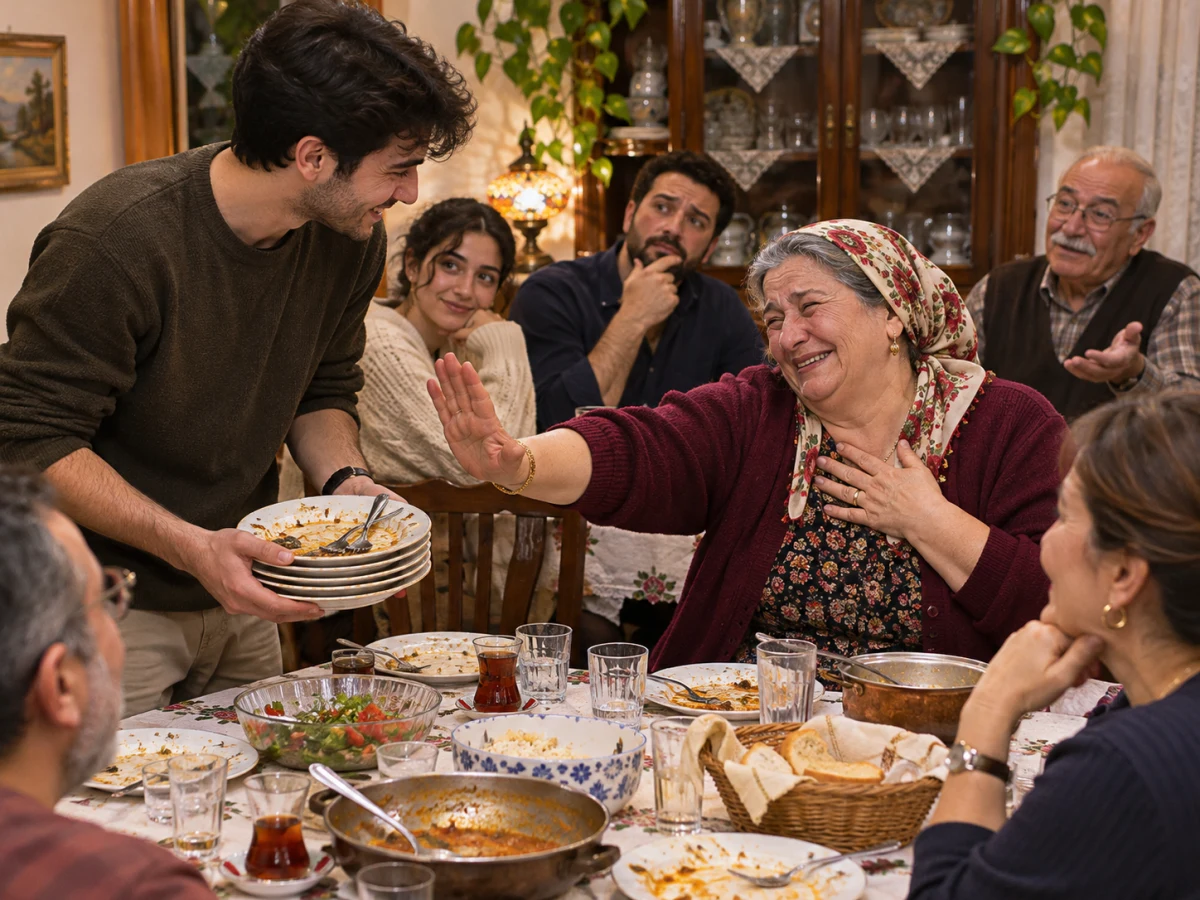
In many homes, the end of a meal raises a quiet question: should guests stand up and start clearing plates, or stay seated and let the host take charge? Etiquette writers often say a good guest at least offers to help. Others note that some hosts see the kitchen as private space, and that a refusal can be sincere rather than polite.
Customs vary widely. In some cultures, helping shows warmth and equality. In others, a guest who works is treated as an insult to the host's hospitality, so staying seated is the respectful choice. Context matters too. Close friends may be expected to join in. A first-time visitor, a formal dinner, or a meal with paid help may call for a lighter touch.
The tension is between generosity and autonomy. An offer can signal gratitude, but insisting can create pressure. A host who accepts may feel relieved, or awkward about asking. Reading signals, offering once or twice, and thanking the host well are common ways to handle it.
Useful vocabulary
Approx. CEFR · Topic relevance
hospitality
the friendly and generous way of welcoming and looking after guests
In my family, refusing a guest's help is part of showing hospitality.
reciprocity
/ˌrɛsɪˈprɑsɪti/a mutual exchange in which favors or kindness are returned
Helping with dishes can feel like a small act of reciprocity for a good meal.
etiquette
/ˈɛtɪkɪt/accepted rules of polite behavior in a social setting
Dinner etiquette differs a lot between countries, even among friends.
insist
to keep asking or saying something firmly, even after a first refusal
I offered twice, but I didn't want to insist if she really preferred to do it alone.
imposition
/ˌɪmpəˈzɪʃən/something that puts an unfair or unwelcome burden on someone
Some hosts see a guest's help as an imposition, since they must then direct and supervise it.
gracious
/ˈɡreɪʃəs/polite, kind, and generous in a way that puts others at ease
A gracious guest accepts a refusal without making the host feel awkward.
Useful expressions
It comes down to
Use it to identify the deciding factor in a complex issue.
It comes down to whether the host sees help as kindness or as criticism.
That depends on the context
Use it to qualify a general claim by pointing to situational differences.
That depends on the context: a casual family lunch is not a formal dinner.
By the same token
Use it to add a point that follows the same logic as the previous one.
Guests shouldn't be forced to work; by the same token, hosts shouldn't be judged for accepting help.
I see where you're coming from, but
Use it to acknowledge another view politely before challenging it.
I see where you're coming from, but an offer can still create pressure for the host.
as opposed to
Use it to compare two contrasting approaches or situations.
Close friends often just start clearing, as opposed to asking permission like new guests.
Question list
- Ice breaking
- Main topic
- Free talk
| Q1. | If you could have any celebrity as a mentor, who would it be and why? |
|---|---|
| Q2. | Has a book or movie ever shifted the way you view the world? Which one? |
| Q3. | How do you protect your time without feeling selfish? |
| Q4. | What's the most interesting or unique job you've ever had? |
| Q5. | What do you value most in your relationships? |
| Q6. | What is your favorite way to spend time with family? |
| Q7. | Where do you like to escape to when life feels overwhelming? |
| Q8. | How do you cope with waiting for answers you cannot control? |
| Q1. | What do guests usually do after a meal in your culture? |
|---|---|
| Q2. | Have you ever felt unsure whether to offer help at someone's home? |
| Q3. | Would you feel offended if a host refused your help? |
| Q4. | Should close friends help more than first-time visitors? |
| Q5. | Which tasks are comfortable for guests to help with? |
| Q6. | How can a host politely ask guests to help clean? |
| Q7. | Would an expensive dinner change what you expect from guests? |
| Q8. | What is a good way to thank a host who wants no help? |
| Q1. | Do you think your generation is better than previous generation? |
|---|---|
| Q2. | How do you choose who to ask for advice? |
| Q3. | How do you react to unplanned changes? |
| Q4. | How do you think we can address the issue of human trafficking? |
| Q5. | What are your thoughts on the role of art in social justice movements? |
| Q6. | What news sources do you trust, and why? |
| Q7. | What's the most interesting or surprising fact you've learned recently? |
| Q8. | What was your first impression of me? |
Rules


Please be kind and respectful.
Note: You can be banned for violating any of these rules
No flirting! Don't ask for other people's social network, number etc. if he/she refuses to give them.
Note: You can be banned for violating any of these rules
Give others an equal opportunity to speak.
Note: You can be banned for violating any of these rules
Avoid Smoking / Drinking while you are talking.
Note: You can be banned for violating any of these rules
Turning your camera on is mandatory.
Note: You can be banned for violating any of these rules
Ready to join the conversation?
Book your spot and bring your perspective to the discussion.