
Should Inheritance Be Taxed More Heavily Than Income?
Learn topic-related expressions and join the speaking club to practice them!
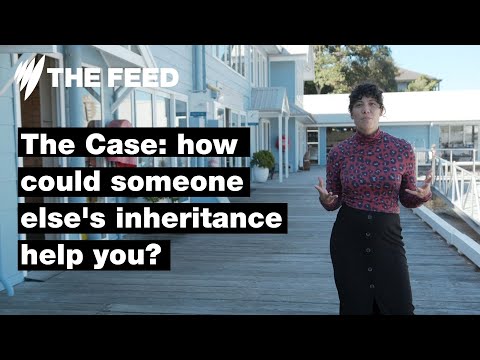

Marhaban everyone! my name is Bilel and I'm from Tunisia . I have a bachelor's degree in English (International Relations). I have worked as a translator, International Business Developer and a director in a teaching center. After COVID, I started my carrier as a part-time English teacher in Tunis, the capital city of Tunisia. I'm an ambitious person, and never give up my dream of working for the Ministry of Foreign Affairs of Tunisia, and why not be an ambassador someday!?
I'm thrilled to see you all in the Langclub sessions.

Topic guide Optional
A quick way to understand the topic and find useful language. Read as much or as little as you like.
1-minute overview
Inheritance is often described as wealth received rather than wealth earned, which raises a basic fairness question: should tax systems take more from large transfers of family wealth than from wages or salaries? Supporters of heavier inheritance taxation argue that it can limit the advantages people receive simply through birth and help fund public services without increasing taxes on work. They also note that wealth tends to be more unevenly distributed than income.
Critics respond that inherited assets may already have been taxed through income, business, property, or capital-gains taxes. They worry about forcing the sale of a family home or business, encouraging avoidance, and weakening the desire to save or build a company. The details matter greatly: an estate tax is charged to the estate before distribution, while an inheritance tax is charged to recipients. In the United States, federal estate tax rules in 2026 exempt estates up to $15 million per person, so the debate is often less about ordinary inheritances than about very large fortunes. Policy choices include exemptions, progressive rates, special treatment for businesses, and rules for gifts made during life.
Critics respond that inherited assets may already have been taxed through income, business, property, or capital-gains taxes. They worry about forcing the sale of a family home or business, encouraging avoidance, and weakening the desire to save or build a company. The details matter greatly: an estate tax is charged to the estate before distribution, while an inheritance tax is charged to recipients. In the United States, federal estate tax rules in 2026 exempt estates up to $15 million per person, so the debate is often less about ordinary inheritances than about very large fortunes. Policy choices include exemptions, progressive rates, special treatment for businesses, and rules for gifts made during life.
Useful vocabulary
Approx. CEFR · Topic relevance
estate tax
A tax charged on a deceased person’s property before it is passed to heirs.
An estate tax can target large fortunes without taxing every individual recipient.
inheritance tax
A tax paid by a person who receives money or property from someone who has died.
A recipient-based inheritance tax could charge different rates to different heirs.
progressive taxation
A system in which the tax rate rises as income, wealth, or a transfer becomes larger.
A progressive system might exempt modest inheritances but apply higher rates to multi-million-dollar transfers.
equality of opportunity
The idea that people should have broadly fair chances to succeed, regardless of family background.
Supporters see inheritance tax as one tool for improving equality of opportunity.
tax avoidance
Legal arrangements designed to reduce a tax bill, sometimes against the spirit of the rules.
Complex trusts can make tax avoidance easier for people with expert advisers.
liquidity
The availability of cash or assets that can be quickly turned into cash.
A family business may be valuable on paper but lack the liquidity to pay a large tax bill immediately.
Useful expressions
The crucial distinction is between... and...
Use it to separate two ideas that are often treated as identical.
The crucial distinction is between taxing an estate and taxing the people who inherit it.
That argument depends heavily on the assumption that...
Use it to identify an underlying belief or condition.
That argument depends heavily on the assumption that inherited wealth reduces motivation to work.
We should weigh the principle against the practical consequences.
Use it to compare moral goals with likely real-world effects.
We should weigh the principle against the practical consequences for small businesses.
A more targeted approach might be to...
Use it to propose a narrower alternative to a broad policy.
A more targeted approach might be to tax very large lifetime transfers rather than modest inheritances.
The policy becomes harder to justify when...
Use it to set a limit or challenge an extreme position.
The policy becomes harder to justify when it forces heirs to sell a viable business immediately.
Question list
- Ice breaking
- Main topic
- Free talk
| Q1. | If you could instantly become fluent in a musical instrument, which one would it be? |
|---|---|
| Q2. | How do you deal with stress or difficult situations? |
| Q3. | How do you stay motivated during challenging times in business? |
| Q4. | If you could make someone’s day without them knowing, how would you do it? |
| Q5. | What’s a passion or interest you’ve had since you were young? |
| Q6. | If you could ask for encouragement today, what kind of words would help? |
| Q7. | What's one piece of advice you would give to someone just starting out in your field? |
| Q8. | How do you define empathy, and why is it important? |
| Q1. | Why do people often view inherited wealth differently from earned income? |
|---|---|
| Q2. | Should families be free to pass all their wealth to the next generation? |
| Q3. | How large should an inheritance be before tax becomes reasonable? |
| Q4. | Could a higher inheritance tax give people fairer opportunities? |
| Q5. | How might inheritance tax affect family homes or small businesses? |
| Q6. | Should cash, property, and businesses all be taxed in the same way? |
| Q7. | What might wealthy families do to avoid a higher inheritance tax? |
| Q8. | Which is fairer to tax more heavily: inherited wealth or earned income? |
| Q1. | What brings clarity to your life? |
|---|---|
| Q2. | What are your thoughts on the role of public art in cities? |
| Q3. | How do you react when people interrupt you? |
| Q4. | How do you define success and what does it mean to you? |
| Q5. | What experience made you more confident than before? |
| Q6. | How do you respond to constructive criticism you disagree with? |
| Q7. | If you could relive any day, which would it be and why? |
| Q8. | What helps you understand different perspectives? |
Rules


Please be kind and respectful.
Note: You can be banned for violating any of these rules
No flirting! Don't ask for other people's social network, number etc. if he/she refuses to give them.
Note: You can be banned for violating any of these rules
Give others an equal opportunity to speak.
Note: You can be banned for violating any of these rules
Avoid Smoking / Drinking while you are talking.
Note: You can be banned for violating any of these rules
Turning your camera on is mandatory.
Note: You can be banned for violating any of these rules
Ready to join the conversation?
Book your spot and bring your perspective to the discussion.