
Should Museums Let Visitors Touch Some Exhibits?
Learn topic-related expressions and join the speaking club to practice them!

Hi there! I'm Jonah from Langclub. I'm interested in new technologies to help people learn languages and connecting people.

Topic guide Optional
A quick way to understand the topic and find useful language. Read as much or as little as you like.
1-minute overview
Most museums ask visitors not to touch because even clean hands leave oils, moisture, and dirt behind. Repeated contact can gradually damage delicate surfaces, especially on paintings, paper, textiles, photographs, and archaeological objects. Accidental drops or pressure on a weak area can also cause permanent harm. Protecting an object is not only about its financial value; it is about preserving evidence of the past for future visitors.
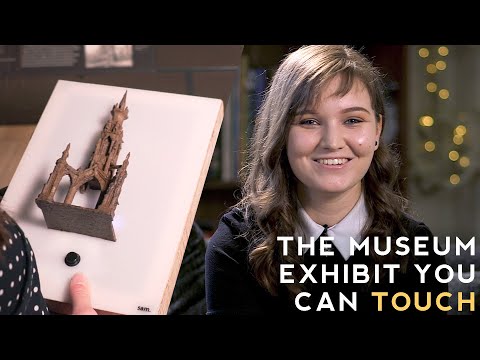
Yet touch can make learning more immediate. Feeling the weight of a tool, the roughness of stone, or the shape of a sculpture may reveal details that labels and photographs cannot. Tactile experiences can also make museums more accessible to blind and low-vision visitors. Rather than choosing between total access and total protection, museums can offer sturdy original objects, replicas, tactile models, supervised handling sessions, or digital touch-based experiences. The challenge is deciding which objects can safely be handled, by whom, and under what conditions.
Yet touch can make learning more immediate. Feeling the weight of a tool, the roughness of stone, or the shape of a sculpture may reveal details that labels and photographs cannot. Tactile experiences can also make museums more accessible to blind and low-vision visitors. Rather than choosing between total access and total protection, museums can offer sturdy original objects, replicas, tactile models, supervised handling sessions, or digital touch-based experiences. The challenge is deciding which objects can safely be handled, by whom, and under what conditions.
Useful vocabulary
Approx. CEFR · Topic relevance
tactile
/ˈtæktaɪl/Related to the sense of touch.
A tactile display could help visitors notice the tool’s rough surface and heavy weight.
replica
/ˈrɛplɪkə/A copy made to look like an original object.
I would be happy to touch a replica if the original were displayed safely nearby.
conservation
/ˌkɑnsərˈveɪʃən/The professional protection and care of cultural or historical objects.
In my view, conservation should take priority when an object is unique and fragile.
handling session
A planned activity in which people are allowed to hold selected objects.
A handling session led by a museum educator seems safer than unrestricted touching.
wear and tear
Gradual damage caused by frequent use or contact.
Even gentle touching can create wear and tear when thousands of people visit each week.
provenance
/ˈprɑvənəns/The documented history of an object’s ownership and origin.
Touching a copied artifact may still start an interesting conversation about its provenance.
Useful expressions
The key distinction is between ... and ...
Use this to separate two ideas that may seem similar.
The key distinction is between touching an original object and exploring a well-made copy.
That benefit has to be weighed against ...
Use this to recognize an advantage while introducing a cost or risk.
That benefit has to be weighed against the risk of cumulative damage.
It depends largely on ...
Use this to give a conditional rather than absolute opinion.
It depends largely on the material, age, and condition of the exhibit.
A reasonable compromise would be to ...
Use this to propose a balanced solution.
A reasonable compromise would be to offer replicas alongside protected originals.
I would challenge the assumption that ...
Use this to question an idea politely but directly.
I would challenge the assumption that looking is always enough for meaningful learning.
Sources & further reading
Question list
- Ice breaking
- Main topic
- Free talk
| Q1. | How do you stay energized throughout the day? |
|---|---|
| Q2. | How often do you exercise? |
| Q3. | If you could create a museum exhibit about your life, what would be its main theme? |
| Q4. | Where does your curiosity take you on quiet days? |
| Q5. | Have you ever learned something new about yourself through travel? |
| Q6. | What is the significance of 'dreams' in our lives? |
| Q7. | What hobby would you pick up if you had zero fear of failing? |
| Q8. | Have you ever been backpacking? |
| Q1. | What museum object would you most want to touch? |
|---|---|
| Q2. | Could touching an object help you understand its history? |
| Q3. | Which exhibits would be too fragile to handle? |
| Q4. | Would you enjoy a museum with copies you could touch? |
| Q5. | How could museums keep hands-on exhibits clean? |
| Q6. | Should visitors need supervision around old objects? |
| Q7. | What makes a museum visit memorable for you? |
| Q8. | Would touching exhibits make museums more welcoming? |
| Q1. | If you could live in any period of history, which one would you choose and why? |
|---|---|
| Q2. | How often do you surprise others? how does it go? |
| Q3. | Many people are passionate about cooking. Is there a recipe you’ve perfected and love sharing with others? |
| Q4. | Is there something the world has turned a blind eye to that bothers you? |
| Q5. | How do you think the concept of "remote healing" or the |
| Q6. | How can humor serve as a tool for dealing with difficult topics? |
| Q7. | What is the most significant issue facing women today and how would you address it? |
| Q8. | Why do people smile unconsciously when they remember something joyful? |
Rules


Please be kind and respectful.
Note: You can be banned for violating any of these rules
No flirting! Don't ask for other people's social network, number etc. if he/she refuses to give them.
Note: You can be banned for violating any of these rules
Give others an equal opportunity to speak.
Note: You can be banned for violating any of these rules
Avoid Smoking / Drinking while you are talking.
Note: You can be banned for violating any of these rules
Turning your camera on is mandatory.
Note: You can be banned for violating any of these rules
Ready to join the conversation?
Book your spot and bring your perspective to the discussion.