Should Museums Return Objects Taken From Other Countries?
Learn topic-related expressions and join the speaking club to practice them!


Hello World! My name is Sultan, and I'm a traveler in the world of information.
I'm a person who will work and invest all of my efforts in the progress of humanity as long as I am alive. So let's create a place where we can grow together, learn, experiment, and open something new that can help us improve not only our English skills but also our lives, and level up every day!
(It may sound crazy, but I like crazy things) ^_*

Topic guide Optional
A quick way to understand the topic and find useful language. Read as much or as little as you like.
1-minute overview
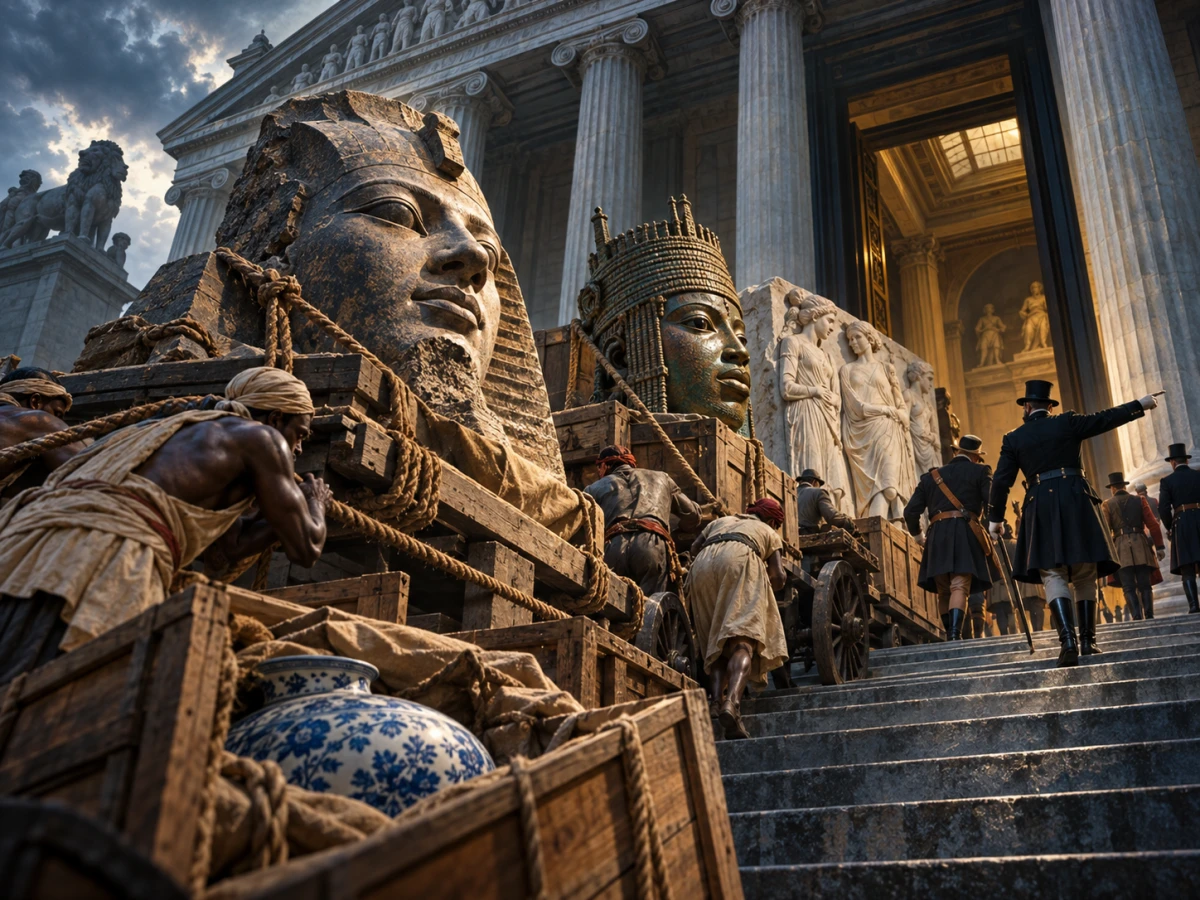
Museums around the world hold objects that arrived through colonial conquest, military expeditions, unequal trade, excavation, purchase, or theft. Today, many source communities and governments ask for them back. The best-known cases include the Benin Bronzes, most of which were seized by British forces in 1897, and the Parthenon Marbles, removed from Athens in the early nineteenth century. In June 2026, three Swiss museums returned 18 Benin Bronzes to Nigeria. This shows that restitution is no longer rare, even though the most famous disputes remain unresolved.
Supporters of return argue that these objects are tied to identity, memory, religion, and justice, and that they belong with the people who made them. Opponents and cautious voices raise other concerns. Some stress legal ownership and the difficulty of judging historical acquisitions by present standards. Others point to conservation, security, and the idea of universal museums that let global audiences compare cultures in one place. Between full return and full retention, loans, shared custody, and joint research offer middle paths.
Supporters of return argue that these objects are tied to identity, memory, religion, and justice, and that they belong with the people who made them. Opponents and cautious voices raise other concerns. Some stress legal ownership and the difficulty of judging historical acquisitions by present standards. Others point to conservation, security, and the idea of universal museums that let global audiences compare cultures in one place. Between full return and full retention, loans, shared custody, and joint research offer middle paths.
Useful vocabulary
Approx. CEFR · Topic relevance
restitution
/ˌrɛstɪˈtuʃən/The act of giving back something that was lost, taken, or wrongly acquired.
For many communities, restitution is about more than objects; it is about acknowledging past harm.
provenance
/ˈprɑvənəns/The documented history of who owned an object and how it moved over time.
Weak provenance records made it hard to prove how the statue had left the country.
repatriation
/riˌpeɪtriˈeɪʃən/The return of an object, or of human remains, to its country or community of origin.
The repatriation of the mask was celebrated in the village where it had been made.
custody
/ˈkʌstədi/The responsibility for protecting and caring for something, often by legal right.
Shared custody might allow two museums to display the object in turn.
universal museum
A large institution that claims to present the world's cultures together for all humanity.
Defenders of the universal museum say visitors can compare civilizations under one roof.
plunder
/ˈplʌndər/To take goods by force, especially in war; also the goods taken.
Some objects in European collections were plunder from military campaigns.
Useful expressions
That depends on what we mean by
Use it to challenge a loose term and make the discussion more precise.
That depends on what we mean by ownership: legal title or cultural connection?
It's one thing to..., but quite another to...
Use it to separate two ideas that are often confused.
It's one thing to admit an acquisition was unjust, but quite another to decide the remedy.
To be fair to both sides
Use it to introduce a balanced point before or after criticism.
To be fair to both sides, safety concerns can be real, but they shouldn't become permanent excuses.
That argument cuts both ways
Use it to show that a point can support opposing conclusions.
That argument cuts both ways, because global access can also justify returning objects to a local audience.
What's at stake here is
Use it to name the deeper issue beneath a disagreement.
What's at stake here is who gets to tell a culture's story.
Question list
- Ice breaking
- Main topic
- Free talk
| Q1. | What advice would you give to someone who is struggling to find a sense of belonging within their family? |
|---|---|
| Q2. | If you could visit any planet in the solar system, which would it be and why? |
| Q3. | How do you perceive the concept of right place right time? |
| Q4. | How do you sense when someone needs support? |
| Q5. | What are some of the most important factors to consider when trying to maintain a healthy and balanced diet in today's world? |
| Q6. | What would you name your autobiography if it had to be a comedy? |
| Q7. | Share a humorous or awkward cultural misunderstanding you’ve experienced. |
| Q8. | What do you attribute the biggest successes in your life to? How about your biggest failures? |
| Q1. | What object from your country would you like the world to see? |
|---|---|
| Q2. | Why might people want a cultural object returned home? |
| Q3. | Does it matter how a museum originally obtained an object? |
| Q4. | Who should decide where a disputed object belongs? |
| Q5. | Could sharing an object between museums be a fair solution? |
| Q6. | Should an object's safety affect the decision to return it? |
| Q7. | How would returning objects change your experience of visiting a museum? |
| Q8. | What could museums offer visitors after returning important objects? |
| Q1. | How do you improve your English listening? |
|---|---|
| Q2. | What makes dialogues more engaging to you? |
| Q3. | Some people enjoy extreme sports for the adrenaline. What’s the most daring thing you’ve ever done? |
| Q4. | Some people argue that technology has disconnected us more than it has connected us. What’s your perspective? |
| Q5. | What's your favorite architectural style? |
| Q6. | How do you avoid assumptions during discussions? |
| Q7. | Why do some friendships last despite long periods without communication? |
| Q8. | How do you identify when a situation requires patience? |
Rules


Please be kind and respectful.
Note: You can be banned for violating any of these rules
No flirting! Don't ask for other people's social network, number etc. if he/she refuses to give them.
Note: You can be banned for violating any of these rules
Give others an equal opportunity to speak.
Note: You can be banned for violating any of these rules
Avoid Smoking / Drinking while you are talking.
Note: You can be banned for violating any of these rules
Turning your camera on is mandatory.
Note: You can be banned for violating any of these rules
Ready to join the conversation?
Book your spot and bring your perspective to the discussion.