
Should Online Marketplaces Be Responsible for Counterfeit Products?
Learn topic-related expressions and join the speaking club to practice them!

Hi! I’m Evelyn. I’m from Taiwan and currently doing a Master’s degree in occupational therapy in Australia. I love meeting new people and chatting with people from different backgrounds. I’m really looking forward to having great conversations with you!

Topic guide Optional
A quick way to understand the topic and find useful language. Read as much or as little as you like.
1-minute overview
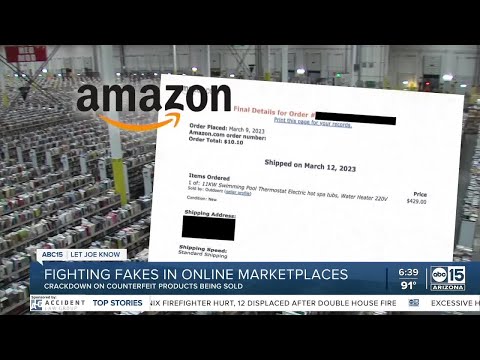
Online marketplaces make it easy for small businesses and individuals to reach customers, compare prices, and sell across borders. The same scale and speed, however, can make it easier for counterfeit goods to appear, disappear, and reappear under new seller accounts. The problem is not only economic: fake cosmetics, toys, electronics, medicines, and safety equipment may create real risks for buyers. Consumers may also struggle to tell whether a seller, review, or product description is trustworthy.
The central debate is how far a platform’s responsibility should go. Some argue that marketplaces should actively verify sellers, screen high-risk products, remove suspicious listings quickly, and compensate harmed customers. Others warn that making platforms legally responsible for every listing could raise costs, reduce choice, and create barriers for legitimate small sellers. Rules such as seller traceability and product checks aim to improve accountability, but enforcement is difficult when goods, sellers, payments, and deliveries cross national borders. A fair approach may need to combine prevention, rapid response, transparency, education, and meaningful remedies for consumers.
The central debate is how far a platform’s responsibility should go. Some argue that marketplaces should actively verify sellers, screen high-risk products, remove suspicious listings quickly, and compensate harmed customers. Others warn that making platforms legally responsible for every listing could raise costs, reduce choice, and create barriers for legitimate small sellers. Rules such as seller traceability and product checks aim to improve accountability, but enforcement is difficult when goods, sellers, payments, and deliveries cross national borders. A fair approach may need to combine prevention, rapid response, transparency, education, and meaningful remedies for consumers.
Useful vocabulary
Approx. CEFR · Topic relevance
counterfeit
Made to look like a genuine branded product but sold without authorization.
A counterfeit charger may look authentic but fail basic safety standards.
seller traceability
The ability to identify and follow the real person or business behind a sale.
Seller traceability makes it harder for banned traders to return under a new name.
due diligence
Reasonable checks made to prevent harm or confirm that someone is legitimate.
Platforms could use due diligence before allowing high-volume sellers to list goods.
liability
Legal responsibility for damage, loss, or wrongdoing.
The difficult question is whether a marketplace should share liability for a fake product.
redress
Money, replacement, repair, or another remedy for someone who has been harmed.
Fast redress matters when a customer has unknowingly bought an unsafe item.
de minimis threshold
A value limit below which imported goods may receive simplified customs treatment.
Some argue that a de minimis threshold can make small-parcel enforcement more difficult.
Useful expressions
The key distinction is between … and …
Use this to separate related ideas that should not be treated as identical.
The key distinction is between removing a listing after a complaint and preventing it from appearing.
That solution may address the symptom rather than the cause.
Use this to question whether a proposal tackles the underlying problem.
Fining buyers may address the symptom rather than the cause.
Responsibility should be proportionate to …
Use this to argue that obligations should reflect power, knowledge, or capacity.
Responsibility should be proportionate to the platform’s control over sellers and payments.
The trade-off becomes sharper when …
Use this to explain why a policy choice becomes more difficult in a particular case.
The trade-off becomes sharper when strict checks affect very small legitimate businesses.
We should judge the policy by its unintended effects as well as its aims.
Use this to evaluate a proposal beyond its stated intention.
We should judge the policy by its unintended effects as well as its aims.
Question list
- Ice breaking
- Main topic
- Free talk
| Q1. | Is there a specific time of day that you feel the most creative or motivated? |
|---|---|
| Q2. | What pleasant surprise warmed your heart? |
| Q3. | Where do you feel proud of your achievements quietly? |
| Q4. | What’s a story from your family history that continues to resonate with you? |
| Q5. | What’s a personal project you’ve always wanted to start, but haven’t yet? |
| Q6. | How do you keep your sense of humor alive during stressful situations? |
| Q7. | What is your favorite type of tea? |
| Q8. | Describe an aspect of your personality that you’ve grown to appreciate over time. |
| Q1. | Have you ever doubted whether a product sold online was real? |
|---|---|
| Q2. | What signs can help shoppers recognize a counterfeit product? |
| Q3. | Besides buyers, who else is harmed by the sale of fake goods? |
| Q4. | How carefully should marketplaces check sellers before allowing them to trade? |
| Q5. | What support should a buyer receive after discovering a counterfeit product? |
| Q6. | Should the seller or marketplace carry more responsibility for the refund? |
| Q7. | How reliable are customer reviews for identifying suspicious products? |
| Q8. | What rule would protect shoppers without making online selling too difficult? |
| Q1. | What advice would you give someone who’s always late? |
|---|---|
| Q2. | What is one thing you have learned from a mentor or role model? |
| Q3. | Why do we often remember conversations that seemed ordinary at the time? |
| Q4. | What is the most defining moment of your life so far and why? |
| Q5. | Who do you know who is living life to the fullest? |
| Q6. | What makes a memory comforting for you? |
| Q7. | What would you do if you knew you could not fail? |
| Q8. | How has your culture influenced global trends? |
Rules


Please be kind and respectful.
Note: You can be banned for violating any of these rules
No flirting! Don't ask for other people's social network, number etc. if he/she refuses to give them.
Note: You can be banned for violating any of these rules
Give others an equal opportunity to speak.
Note: You can be banned for violating any of these rules
Avoid Smoking / Drinking while you are talking.
Note: You can be banned for violating any of these rules
Turning your camera on is mandatory.
Note: You can be banned for violating any of these rules
Ready to join the conversation?
Book your spot and bring your perspective to the discussion.