
Should Online Reviews Be Verified Before They Are Published?
Learn topic-related expressions and join the speaking club to practice them!


"Hello, everyone! I’m Arunima, and I’m currently pursuing a PhD in Computer Science in the US. I enjoy connecting with people, exploring thought-provoking topics, and helping others lead meaningful lives. I’m delighted to be part of the team and to support members of the community on their English-learning journeys!

Topic guide Optional
A quick way to understand the topic and find useful language. Read as much or as little as you like.
1-minute overview
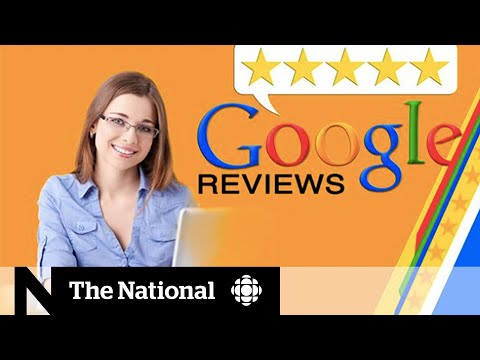
Online reviews have become a form of market information: a short comment and a star rating can influence a buyer’s confidence, a company’s visibility, and a small firm’s reputation. Yet the system is vulnerable to fabricated reviews, undisclosed incentives, coordinated attacks, and the selective removal of criticism. In the United States, the Federal Trade Commission’s Consumer Reviews and Testimonials Rule, effective in 2024, prohibits several deceptive practices, including buying or selling fake reviews and suppressing genuine negative feedback.
Verification could mean very different things: confirming a purchase, checking identity privately, detecting suspicious patterns, or requiring evidence only when a review is challenged. Stronger checks may improve reliability, but they can also exclude people who paid in cash, received a gift, or fear retaliation. They may also give platforms more personal data and more power to decide which experiences count. The central issue is not simply whether every review is true; honest opinions can differ. It is whether a system can authenticate real experience, disclose conflicts of interest, treat praise and criticism fairly, and explain its decisions.
Verification could mean very different things: confirming a purchase, checking identity privately, detecting suspicious patterns, or requiring evidence only when a review is challenged. Stronger checks may improve reliability, but they can also exclude people who paid in cash, received a gift, or fear retaliation. They may also give platforms more personal data and more power to decide which experiences count. The central issue is not simply whether every review is true; honest opinions can differ. It is whether a system can authenticate real experience, disclose conflicts of interest, treat praise and criticism fairly, and explain its decisions.
Useful vocabulary
Approx. CEFR · Topic relevance
verified purchase
A review linked to a confirmed transaction on a platform.
A verified-purchase label may reassure buyers, but it does not prove that the reviewer is unbiased.
fabricated review
A review invented by someone without a genuine customer experience.
The platform removed hundreds of fabricated reviews posted within one day.
review suppression
The hiding, removal, or discouragement of genuine reviews, especially negative ones.
A company should not use review suppression to make its rating look stronger than it is.
anonymity
The condition of keeping a person’s identity unknown.
Anonymity can help customers speak honestly about sensitive services.
conflict of interest
A personal or financial connection that may affect someone’s judgment.
A reviewer should disclose a conflict of interest if they received a free product.
red flag
A sign that suggests a possible problem or risk.
Many nearly identical five-star reviews are a red flag for shoppers.
Useful expressions
The key distinction is between... and...
Use this to separate two ideas that are often treated as identical.
The key distinction is between verifying a purchase and verifying an opinion.
That approach may solve one problem while creating another.
Use this to acknowledge a benefit while introducing a trade-off.
That approach may solve the fake-review problem while creating privacy concerns.
The burden of proof should rest with...
Use this to discuss who should be responsible for providing evidence.
The burden of proof should rest with the platform when it removes a review.
We should be careful not to assume that...
Use this to challenge an oversimplified claim.
We should be careful not to assume that anonymous reviews are automatically dishonest.
The real test is whether...
Use this to identify the standard by which a policy should be judged.
The real test is whether the system treats negative and positive reviews consistently.
Question list
- Ice breaking
- Main topic
- Free talk
| Q1. | What’s a personal accomplishment that felt especially meaningful, even if no one else noticed? |
|---|---|
| Q2. | Where would you locate your personal starting point in life? |
| Q3. | Tell a story about a challenge that looked minor at first but became a major life lesson. |
| Q4. | Can you cook well? |
| Q5. | How do you think social media has impacted the way people consume news and information? |
| Q6. | How do you express enthusiasm naturally? |
| Q7. | Is conflict inevitable? |
| Q8. | What’s a cause or mission that deeply resonates with your values? |
| Q1. | How much do reviews influence what you buy? |
|---|---|
| Q2. | Can you usually tell when a review is fake? |
| Q3. | Who is harmed most by fake reviews: shoppers or small businesses? |
| Q4. | Should platforms be legally responsible for reviews they host? |
| Q5. | Would verification make reviews more honest, or just fewer? |
| Q6. | Is anonymity necessary for people to be truthful? |
| Q7. | Should negative reviews face the same checks as positive ones? |
| Q8. | How would you design a review system people could trust? |
| Q1. | How do you stay connected to your cultural heritage or family traditions? |
|---|---|
| Q2. | What is the relationship between consciousness and the physical world? |
| Q3. | Is it time to eliminate physical cash completely? |
| Q4. | Do you have a favourite poem/quote? Share some lines with us! |
| Q5. | How do you think we can address the issue of human trafficking? |
| Q6. | Describe a simple act of kindness you experienced that had a lasting effect on you. |
| Q7. | What makes you remember certain pieces of advice? |
| Q8. | Do you often hold the door open for strangers in public? |
Rules


Please be kind and respectful.
Note: You can be banned for violating any of these rules
No flirting! Don't ask for other people's social network, number etc. if he/she refuses to give them.
Note: You can be banned for violating any of these rules
Give others an equal opportunity to speak.
Note: You can be banned for violating any of these rules
Avoid Smoking / Drinking while you are talking.
Note: You can be banned for violating any of these rules
Turning your camera on is mandatory.
Note: You can be banned for violating any of these rules
Ready to join the conversation?
Book your spot and bring your perspective to the discussion.