
Should Online Stores Charge Customers for Returning Unwanted Products?
Learn topic-related expressions and join the speaking club to practice them!

Hi there! I'm Jonah from Langclub. I'm interested in new technologies to help people learn languages and connecting people.

Topic guide Optional
A quick way to understand the topic and find useful language. Read as much or as little as you like.
1-minute overview
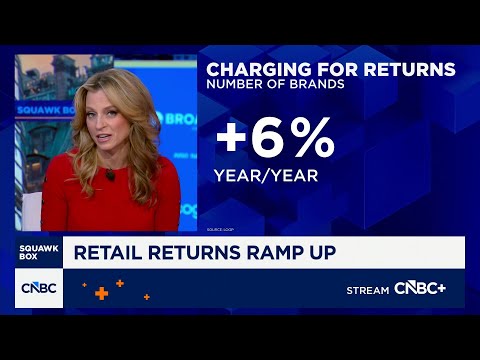
Online shopping lets people compare prices, read reviews, and buy products without visiting a store. But it also creates a problem: shoppers cannot always judge size, quality, colour, or suitability before paying. Free returns became a way to reduce that uncertainty and encourage customers to buy with confidence. In the United States, online purchases are returned more often than purchases made in physical stores, while many shoppers say that free returns influence where they buy.
For businesses, however, a returned item involves transport, inspection, repackaging, possible discounting, and sometimes waste. A fee for a simple change-of-mind return could make these costs more visible and discourage ordering several versions of the same product. Yet a strict policy may feel unfair when product information is unclear or inaccurate, and it can damage trust. A balanced approach might distinguish between customer choice and retailer responsibility: defective, wrongly described, or damaged goods should be returned free, while clearly disclosed fees could apply in some other cases.
For businesses, however, a returned item involves transport, inspection, repackaging, possible discounting, and sometimes waste. A fee for a simple change-of-mind return could make these costs more visible and discourage ordering several versions of the same product. Yet a strict policy may feel unfair when product information is unclear or inaccurate, and it can damage trust. A balanced approach might distinguish between customer choice and retailer responsibility: defective, wrongly described, or damaged goods should be returned free, while clearly disclosed fees could apply in some other cases.
Useful vocabulary
Approx. CEFR · Topic relevance
return fee
A charge paid by a customer when sending an unwanted purchase back to a seller.
A small return fee may be reasonable if the policy is clear before checkout.
change-of-mind return
A return because the buyer no longer wants the item, rather than because it is faulty.
I would treat a change-of-mind return differently from a return for a defective product.
reverse logistics
The transport and processing of products after customers send them back.
Reverse logistics can be expensive because each returned item must be checked and sorted.
restocking fee
A charge intended to cover the cost of checking and preparing a returned item for resale.
A restocking fee seems more defensible for an opened electronic device than for an unopened shirt.
misleading
Giving an inaccurate impression that may cause someone to make the wrong choice.
If the online photos were misleading, the customer should not pay to return the product.
resale value
The amount of money a business can get by selling an item again.
A return may have a low resale value if its packaging has been damaged.
Useful expressions
The key distinction is between … and …
Use it to separate two cases that should perhaps be treated differently.
The key distinction is between an honest sizing problem and a customer who repeatedly orders without intending to keep anything.
That cost does not disappear; it is simply borne by …
Use it to show that a supposedly free service still has someone paying for it.
That cost does not disappear; it is simply borne by the retailer, other customers, or the environment.
A blanket policy may overlook important differences.
Use it to challenge one rule for every situation.
A blanket policy may overlook important differences between clothing, electronics, and defective goods.
The policy should be proportionate to the reason for the return.
Use it to argue that the response should match the situation.
The policy should be proportionate to the reason for the return and the condition of the item.
The short-term saving could come at the expense of trust.
Use it to compare immediate financial benefits with longer-term relationships.
Charging every customer a fee might reduce costs, but the short-term saving could come at the expense of trust.
Question list
- Ice breaking
- Main topic
- Free talk
| Q1. | What was the best opportunity you ever received? |
|---|---|
| Q2. | If you could have a conversation with your future self, what would you ask? |
| Q3. | How do you celebrate your achievements? |
| Q4. | Describe a creative process that feels natural and intuitive for you. |
| Q5. | Do you have any close relatives that you're really close to? |
| Q6. | How do you approach collaboration with people very different from you? |
| Q7. | What is your favorite smell, and why? |
| Q8. | Have you ever cancelled a social network account? Why did you do it and was it easy? |
| Q1. | Have you ever returned something you bought online? |
|---|---|
| Q2. | Why have free returns become so common? |
| Q3. | Is it fair for customers to pay when they simply change their mind? |
| Q4. | Would return fees make people shop more carefully? |
| Q5. | Should defective or misleading products always be returned for free? |
| Q6. | Could stricter return policies hurt customer trust? |
| Q7. | Who should bear the environmental and delivery costs of returns? |
| Q8. | What return policy would be fairest for both shoppers and businesses? |
| Q1. | What do you think are the most important qualities of a successful school system? |
|---|---|
| Q2. | How do you determine the right time to open up? |
| Q3. | What makes self-awareness important to you? |
| Q4. | Why do we avoid difficult conversations even when they lead to clarity? |
| Q5. | What helps you make decisions under pressure? |
| Q6. | How do you approach improving your communication skills? |
| Q7. | Why do stories shape how we see ourselves? |
| Q8. | What initiative would best support caregivers and parents in your community? |
Rules


Please be kind and respectful.
Note: You can be banned for violating any of these rules
No flirting! Don't ask for other people's social network, number etc. if he/she refuses to give them.
Note: You can be banned for violating any of these rules
Give others an equal opportunity to speak.
Note: You can be banned for violating any of these rules
Avoid Smoking / Drinking while you are talking.
Note: You can be banned for violating any of these rules
Turning your camera on is mandatory.
Note: You can be banned for violating any of these rules
Ready to join the conversation?
Book your spot and bring your perspective to the discussion.