
Should People Be Allowed to Keep Exotic Animals as Pets?
Learn topic-related expressions and join the speaking club to practice them!


Hi there! I'm Jonah from Langclub. I'm interested in new technologies to help people learn languages and connecting people.

Topic guide Optional
A quick way to understand the topic and find useful language. Read as much or as little as you like.
1-minute overview
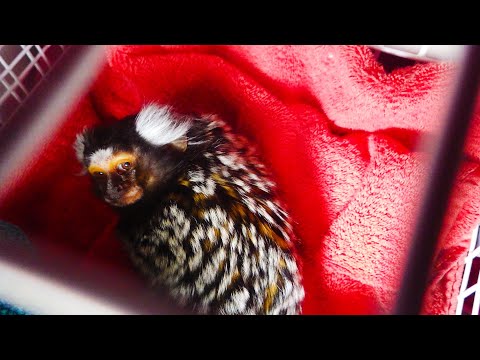
Exotic pets can include reptiles, parrots, primates, large cats, amphibians, and many other non-domesticated species. People may be drawn to their beauty, rarity, intelligence, or the sense that caring for an unusual animal is meaningful. Supporters argue that responsible, knowledgeable owners can provide high-quality care, especially for captive-bred animals, and that outright bans may punish careful people rather than prevent neglect.
Critics respond that wild or non-domesticated animals often have complex needs for space, diet, social contact, stimulation, and climate that an ordinary home cannot reproduce. There are also public-health and safety concerns: some animals can injure people or carry diseases, even when they appear healthy. The trade can be another point of tension. Legal, regulated breeding may reduce pressure on wild populations in some cases, while poorly controlled demand can encourage illegal capture and trafficking. Rules therefore range from permits and inspections to species-specific bans. The central question is whether excellent individual care can outweigh an animal’s natural needs, wider ecological risks, and society’s duty to prevent harm.
Critics respond that wild or non-domesticated animals often have complex needs for space, diet, social contact, stimulation, and climate that an ordinary home cannot reproduce. There are also public-health and safety concerns: some animals can injure people or carry diseases, even when they appear healthy. The trade can be another point of tension. Legal, regulated breeding may reduce pressure on wild populations in some cases, while poorly controlled demand can encourage illegal capture and trafficking. Rules therefore range from permits and inspections to species-specific bans. The central question is whether excellent individual care can outweigh an animal’s natural needs, wider ecological risks, and society’s duty to prevent harm.
Useful vocabulary
Approx. CEFR · Topic relevance
domesticated
Bred over many generations to live closely with humans.
Dogs are domesticated, but a tiger remains a wild animal even if it is raised by people.
captive-bred
Born and raised in human care rather than taken from the wild.
Some people argue that captive-bred reptiles create fewer conservation concerns than wild-caught ones.
animal welfare
An animal’s physical health and psychological quality of life.
The debate should consider animal welfare, not only whether the owner has good intentions.
enrichment
Activities or environments that encourage an animal’s natural behaviour.
A large enclosure is not necessarily enough if the animal has no enrichment or social interaction.
trafficking
The illegal trade and transport of animals or animal products.
High demand for rare pets can make wildlife trafficking more profitable.
species-specific
Designed for or limited to one particular type of animal.
A species-specific law might permit small reptiles but prohibit large cats and primates.
Useful expressions
The key distinction may be between … and …
Use this to separate two ideas that are often treated as the same.
The key distinction may be between captive-bred animals and animals taken from the wild.
That argument depends on the assumption that …
Use this to reveal an idea that must be true for an argument to work.
That argument depends on the assumption that an ordinary home can meet the animal’s behavioural needs.
Good intentions do not necessarily translate into …
Use this to question whether care or enthusiasm produces the desired result.
Good intentions do not necessarily translate into a good quality of life for the animal.
We should weigh individual liberty against …
Use this to frame a conflict between personal choice and a broader responsibility.
We should weigh individual liberty against animal welfare and public safety.
A blanket ban may be too broad, but …
Use this to offer a qualified position rather than an all-or-nothing view.
A blanket ban may be too broad, but licensing alone may not prevent irresponsible ownership.
Sources & further reading
Question list
- Ice breaking
- Main topic
- Free talk
| Q1. | Picture a world where everyone shares their honest thoughts. What would you say first? |
|---|---|
| Q2. | Describe a time when you felt an overwhelming sense of belonging. |
| Q3. | Do you prefer texting or talking on the phone? Why? |
| Q4. | What’s your favorite drink? |
| Q5. | What’s something you’ve always been curious to learn but haven’t explored yet? |
| Q6. | Describe a project or endeavor that allowed you to fully immerse yourself in the process. |
| Q7. | Describe an interesting story you've seen recently about a scientific finding or a new technological development. |
| Q8. | What time do you usually go to sleep? What time do you usually get up? |
| Q1. | Why do some people want unusual animals as pets? |
|---|---|
| Q2. | Can wild animals ever be happy living in a home? |
| Q3. | Should people need a special license to own exotic animals? |
| Q4. | Is owning an exotic pet different from keeping a dog or cat? |
| Q5. | Could the exotic pet trade threaten animals in the wild? |
| Q6. | Should dangerous animals be completely banned as pets? |
| Q7. | Is good treatment enough to justify keeping a wild animal? |
| Q8. | Where should society draw the line between personal freedom and animal welfare? |
| Q1. | What moment recently brought you joy? |
|---|---|
| Q2. | What do you do when you are feeling worried? |
| Q3. | What's the most important thing in your life right now? |
| Q4. | How would you change the world if you could? |
| Q5. | How do you handle emotionally intense situations? |
| Q6. | Are video games a form of art? |
| Q7. | Why do people attach meaning to personal rituals? |
| Q8. | Do you think shame is a natural human emotion or something that society drills into us? |
Rules


Please be kind and respectful.
Note: You can be banned for violating any of these rules
No flirting! Don't ask for other people's social network, number etc. if he/she refuses to give them.
Note: You can be banned for violating any of these rules
Give others an equal opportunity to speak.
Note: You can be banned for violating any of these rules
Avoid Smoking / Drinking while you are talking.
Note: You can be banned for violating any of these rules
Turning your camera on is mandatory.
Note: You can be banned for violating any of these rules
Ready to join the conversation?
Book your spot and bring your perspective to the discussion.