
Should People Be Paid for Caring for Family Members?
Learn topic-related expressions and join the speaking club to practice them!


Hello everyone! I'm Geetanjali Tiwari from New Delhi, India. I recently graduated in English and Political Science, and I'm looking forward to beginning my master's journey.I'm an avid reader, a curious learner, and someone who loves meaningful conversations. I believe that language is more than just words, it's a way to connect with people, exchange ideas, and understand different cultures.
That's what I enjoy most about LangClub, and I'm excited to create a welcoming space where we can all learn from one another.

Topic guide Optional
A quick way to understand the topic and find useful language. Read as much or as little as you like.
1-minute overview
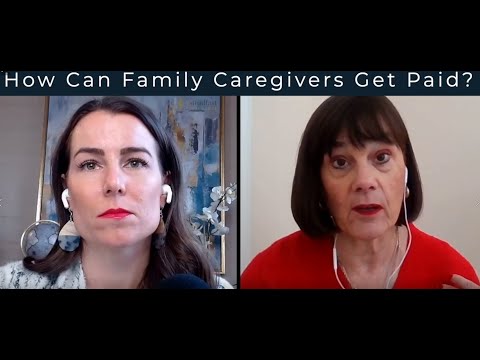
Family care includes far more than medical help. Relatives may prepare meals, manage money, arrange appointments, provide transport, help with bathing or mobility, supervise medication, and offer emotional support. In the United States, 63 million adults provided ongoing care in 2025 for someone with a medical condition or disability. Yet much of this work remains unpaid, even when it limits a carer’s income, sleep, health, or career choices.
Paying family carers could recognize skills and sacrifice, reduce financial pressure, and make it easier for people to remain at home. However, it also raises difficult questions: Who qualifies, how should care be assessed, and could money create tension or unequal expectations within families? Some argue that direct payment is essential; others favor paid leave, respite services, training, flexible work, and affordable professional care. Comparing care for children, older adults, and disabled relatives may reveal both shared needs and important differences.
Paying family carers could recognize skills and sacrifice, reduce financial pressure, and make it easier for people to remain at home. However, it also raises difficult questions: Who qualifies, how should care be assessed, and could money create tension or unequal expectations within families? Some argue that direct payment is essential; others favor paid leave, respite services, training, flexible work, and affordable professional care. Comparing care for children, older adults, and disabled relatives may reveal both shared needs and important differences.
Useful vocabulary
Approx. CEFR · Topic relevance
unpaid care
Regular support for another person that is not paid as employment.
Unpaid care can be emotionally meaningful but financially costly.
caregiver burden
The physical, emotional, and financial pressure experienced by someone who provides care.
Flexible working hours could reduce caregiver burden.
respite care
Temporary professional care that gives a regular carer time to rest or attend to other needs.
Respite care may prevent carers from becoming exhausted.
eligibility
/ˌɛlɪdʒəˈbɪləti/The condition of meeting the rules to receive a benefit or service.
Eligibility rules should include people caring for distant relatives or close friends.
compensation
/ˌkɑmpənˈseɪʃən/Money or benefits given in return for work, loss, or difficulty.
Compensation could acknowledge care without turning family life into a business.
care infrastructure
The services, policies, workers, and facilities that make care possible.
Payment alone will not solve problems caused by weak care infrastructure.
Useful expressions
The strongest case for this policy is that...
Use it to introduce the main argument in favor of an idea.
The strongest case for this policy is that it prevents carers from falling into poverty.
That depends largely on how the system is designed.
Use it to qualify a simple yes-or-no answer.
Whether payment harms family relationships depends largely on how the system is designed.
We should distinguish between recognition and replacement income.
Use it to separate two different aims of payment.
We should distinguish between recognition and replacement income when discussing a carer allowance.
The policy may solve one problem while creating another.
Use it to introduce a trade-off.
The policy may solve one problem while creating another, such as intrusive monitoring.
A fair approach would have to account for...
Use it to propose criteria for a balanced policy.
A fair approach would have to account for the intensity and duration of the care provided.
Sources & further reading
Question list
- Ice breaking
- Main topic
- Free talk
| Q1. | If you could live in any type of home, what would it be? |
|---|---|
| Q2. | Do you prefer quiet, remote destinations or bustling cities? |
| Q3. | Do your siblings like you? Why? |
| Q4. | If you could speak confidently about anything, what topic would you choose? |
| Q5. | Describe a time when you reconnected with someone after a long time apart. |
| Q6. | How do you recognize when it's time to take a new direction in life? |
| Q7. | Share a meaningful piece of wisdom you’ve received from an elder. |
| Q8. | If you could only wear one color for the rest of your life, what would it be and why? |
| Q1. | What kinds of care do family members provide every day? |
|---|---|
| Q2. | Should caring for a relative count as paid work? |
| Q3. | Who should pay someone who cares for family? |
| Q4. | Could payment change a family relationship? |
| Q5. | How might carers benefit from time off? |
| Q6. | What help do families need besides money? |
| Q7. | Should caring for children and older adults be treated alike? |
| Q8. | How could society recognize unpaid care more fairly? |
| Q1. | Were you a good student in school? Why or why not? |
|---|---|
| Q2. | If you could teach a mandatory life skills class to high school students, what would be the focus? |
| Q3. | Is kindness more powerful than intelligence in creating positive change? |
| Q4. | What helps you communicate confidently in groups? |
| Q5. | What type of experience helps you reset emotionally? |
| Q6. | If you could vanish to save humanity, would you do it? Why? |
| Q7. | How would you change the world if you could? |
| Q8. | If you were tasked with designing a global program to fight discrimination, what would it include? |
Rules


Please be kind and respectful.
Note: You can be banned for violating any of these rules
No flirting! Don't ask for other people's social network, number etc. if he/she refuses to give them.
Note: You can be banned for violating any of these rules
Give others an equal opportunity to speak.
Note: You can be banned for violating any of these rules
Avoid Smoking / Drinking while you are talking.
Note: You can be banned for violating any of these rules
Turning your camera on is mandatory.
Note: You can be banned for violating any of these rules
Ready to join the conversation?
Book your spot and bring your perspective to the discussion.