
Should People Be Paid to Donate Blood Plasma?
Learn topic-related expressions and join the speaking club to practice them!


Hello everyone, my name is Mateus, and I’m from Brazil. I have a strong interest in meaningful conversations, cultural exchange, and the sharing of ideas. I look forward to hosting sessions where participants can practice English, explore different perspectives, and engage in thoughtful and productive discussions together.

Topic guide Optional
A quick way to understand the topic and find useful language. Read as much or as little as you like.
1-minute overview
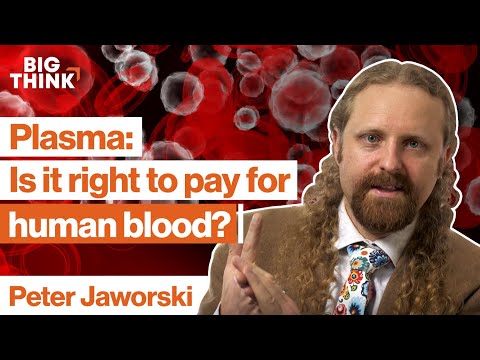
Plasma is the liquid part of blood. It can be processed into medicines used by people with immune disorders, bleeding conditions, and other serious illnesses. Unlike a transplant organ, plasma is replenished by the body, so it can be donated repeatedly under medical rules. Yet the fact that it comes from the human body makes payment ethically sensitive.
Some systems rely mainly on unpaid donation, arguing that health care should be based on solidarity and that money can create pressure to conceal health risks or donate too often. Other systems permit payment, often treating it as compensation for time and inconvenience and as a practical way to increase supply. The United States, for example, allows compensated source-plasma donation, while many countries emphasize voluntary unpaid donation.
The central tension is not simply altruism versus money. A well-designed system must consider donor health, informed consent, reliable screening, fair access to treatment, and whether financial need weakens a person’s freedom to say no. The strongest proposals often combine strict safety limits with protections against exploitation and transparent rules about compensation.
Some systems rely mainly on unpaid donation, arguing that health care should be based on solidarity and that money can create pressure to conceal health risks or donate too often. Other systems permit payment, often treating it as compensation for time and inconvenience and as a practical way to increase supply. The United States, for example, allows compensated source-plasma donation, while many countries emphasize voluntary unpaid donation.
The central tension is not simply altruism versus money. A well-designed system must consider donor health, informed consent, reliable screening, fair access to treatment, and whether financial need weakens a person’s freedom to say no. The strongest proposals often combine strict safety limits with protections against exploitation and transparent rules about compensation.
Useful vocabulary
Approx. CEFR · Topic relevance
plasma-derived medicines
Medical treatments manufactured from proteins collected from human plasma.
Plasma-derived medicines make the question of supply more urgent than it first appears.
compensated donation
Donation for which the donor receives money or another material benefit.
Compensated donation may increase supply, but it can also change who feels able to donate.
exploitation
Unfair use of someone’s situation, especially their financial vulnerability, for another’s benefit.
The main ethical concern is that payment could lead to exploitation of people in poverty.
informed consent
A person’s agreement after receiving and understanding relevant information about risks and procedures.
Payment does not automatically undermine informed consent, but it may complicate it.
donor eligibility
The health and other requirements a person must meet before being allowed to donate.
Strict donor eligibility rules can protect both donors and patients.
financial inducement
A payment or reward designed to encourage someone to take an action.
Some countries distinguish reasonable compensation from an excessive financial inducement.
Useful expressions
The ethical issue turns on whether...
Use this to identify the central condition in a moral argument.
The ethical issue turns on whether payment is genuine compensation or undue pressure.
There is a trade-off between... and...
Use this to show that two valuable goals may conflict.
There is a trade-off between maximizing supply and minimizing the risk of exploitation.
That argument assumes that...
Use this to uncover an unstated belief behind a claim.
That argument assumes that people can freely refuse payment even when they are under financial stress.
We should distinguish between... and...
Use this to separate ideas that are often treated as identical.
We should distinguish between reimbursing expenses and creating a strong profit motive.
A safeguard would only be credible if...
Use this to test whether a proposed protection would work in practice.
A safeguard would only be credible if donation limits were monitored across all clinics.
Question list
- Ice breaking
- Main topic
- Free talk
| Q1. | Have you ever been to a concert? |
|---|---|
| Q2. | Do you prefer the city or the countryside? |
| Q3. | Are you a spender or a saver? |
| Q4. | Where does your mind drift when you daydream? |
| Q5. | Where would you visit to spark creativity instantly? |
| Q6. | What is the scariest situation you have ever experienced? |
| Q7. | Have you ever had an experience that felt like pure magic? |
| Q8. | What’s an act of generosity you’ve received that stayed with you over the years? |
| Q1. | Would you donate plasma if you were paid for it? |
|---|---|
| Q2. | Why do some countries allow payment while others do not? |
| Q3. | Does paying donors increase supply in a useful way? |
| Q4. | Could payment pressure low-income people to donate too often? |
| Q5. | Is plasma donation meaningfully different from selling a body part? |
| Q6. | Should there be strict limits on how much a donor can earn? |
| Q7. | Would unpaid donation be more ethical even if shortages became worse? |
| Q8. | What system would best balance safety, fairness, and medical need? |
| Q1. | What do you do when you feel down? |
|---|---|
| Q2. | How do you navigate conversations where power dynamics are unequal? |
| Q3. | How do your family's views on politics, religion, or social issues compare to your own, and how do you navigate those differences? |
| Q4. | What role do you think schools should play in fostering a sense of civic responsibility and global citizenship among students? |
| Q5. | What is the best/worst first date experience you've ever had? |
| Q6. | Describe an item in your home that holds great sentimental value. |
| Q7. | What’s a small pleasure that feels like a luxury to you? |
| Q8. | What are some of the most important issues facing society today? |
Rules


Please be kind and respectful.
Note: You can be banned for violating any of these rules
No flirting! Don't ask for other people's social network, number etc. if he/she refuses to give them.
Note: You can be banned for violating any of these rules
Give others an equal opportunity to speak.
Note: You can be banned for violating any of these rules
Avoid Smoking / Drinking while you are talking.
Note: You can be banned for violating any of these rules
Turning your camera on is mandatory.
Note: You can be banned for violating any of these rules
Ready to join the conversation?
Book your spot and bring your perspective to the discussion.