
Should Popular Tourist Destinations Limit Daily Visitor Numbers?
Learn topic-related expressions and join the speaking club to practice them!


Hello World! My name is Sultan, and I'm a traveler in the world of information.
I'm a person who will work and invest all of my efforts in the progress of humanity as long as I am alive. So let's create a place where we can grow together, learn, experiment, and open something new that can help us improve not only our English skills but also our lives, and level up every day!
(It may sound crazy, but I like crazy things) ^_*

Topic guide Optional
A quick way to understand the topic and find useful language. Read as much or as little as you like.
1-minute overview
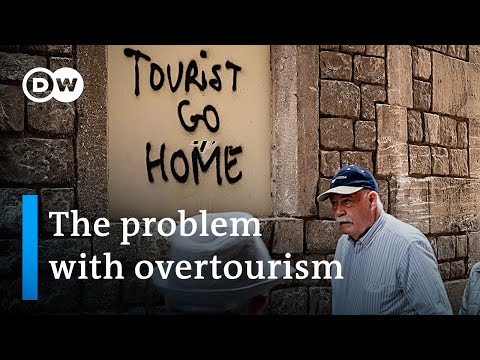
Overtourism is not simply a large number of visitors. A destination may feel overcrowded when daily life becomes harder for residents, public space is dominated by tour groups, housing shifts toward short-term rentals, or natural and cultural sites suffer damage. The problem is also uneven: a city may cope well in most neighborhoods but face intense pressure at a few landmarks, during cruise arrivals, or at particular times of day.
Daily visitor limits are one possible response, especially where space, infrastructure, or ecosystems are fragile. Venice has experimented with an access fee for some peak day-trip periods, illustrating a different approach: influencing demand through price and advance planning rather than setting a strict cap. Supporters of limits argue that communities deserve a stronger voice and that tourism should stay within social and environmental capacity. Critics worry that caps and higher fees can make travel less equal, hurt small businesses, or merely move crowds elsewhere. Effective policy may combine reservations, transport planning, short-term-rental rules, visitor dispersal, and meaningful resident participation.
Daily visitor limits are one possible response, especially where space, infrastructure, or ecosystems are fragile. Venice has experimented with an access fee for some peak day-trip periods, illustrating a different approach: influencing demand through price and advance planning rather than setting a strict cap. Supporters of limits argue that communities deserve a stronger voice and that tourism should stay within social and environmental capacity. Critics worry that caps and higher fees can make travel less equal, hurt small businesses, or merely move crowds elsewhere. Effective policy may combine reservations, transport planning, short-term-rental rules, visitor dispersal, and meaningful resident participation.
Useful vocabulary
Approx. CEFR · Topic relevance
overtourism
Tourism that harms residents’ quality of life, visitors’ experience, or the environment.
For me, overtourism begins when local people cannot use their own city comfortably.
carrying capacity
The level of use a place can handle without unacceptable social or environmental damage.
A daily limit should be based on carrying capacity, not on an arbitrary number.
day-tripper
A visitor who comes for the day without staying overnight.
Day-trippers may create intense pressure while contributing less to local accommodation businesses.
visitor dispersal
The deliberate spreading of tourists across places, routes, or seasons.
Visitor dispersal could help quieter neighborhoods, but residents may not want more tourism.
dynamic pricing
A system in which prices change according to demand, time, or conditions.
Dynamic pricing might encourage people to visit on weekday mornings instead of holiday weekends.
short-term rental
Housing rented to guests for brief stays rather than to long-term residents.
Restrictions on short-term rentals could protect housing for local residents.
Useful expressions
The key distinction is between ... and ...
Use this to separate visitor numbers from the wider effects of tourism.
The key distinction is between a busy destination and one where tourism disrupts ordinary life.
That solution addresses the symptom rather than the cause.
Use this to question whether a policy deals with the underlying problem.
Higher entry fees may reduce crowds, but they could address the symptom rather than the cause.
The benefits are likely to be distributed unevenly.
Use this to point out that different groups may gain or lose differently.
The benefits are likely to be distributed unevenly between hotels, residents, and day-trip businesses.
It depends on how the policy is designed and enforced.
Use this to qualify a broad claim about a proposed measure.
Whether a cap is fair depends on how the policy is designed and enforced.
We should not treat access as the only measure of fairness.
Use this to challenge the idea that low prices automatically make tourism fair.
We should not treat access as the only measure of fairness if local housing and public services are under pressure.
Question list
- Ice breaking
- Main topic
- Free talk
| Q1. | Do you prefer working alone or in a team? |
|---|---|
| Q2. | What is your favorite quote and why? |
| Q3. | What moment taught you joy in simplicity? |
| Q4. | What's the best invention you've seen most recently and what do you like about it? |
| Q5. | If you could feel one emotion more deeply, which emotion would you choose? |
| Q6. | What positive change surprised you about yourself? |
| Q7. | What activities make you happiest? Do you do them often? |
| Q8. | What is the greatest problem facing the world today? |
| Q1. | What makes a destination feel overcrowded? |
|---|---|
| Q2. | Who is most affected by overtourism? |
| Q3. | Should residents have more say than tourism businesses? |
| Q4. | Would daily visitor limits make travel fairer? |
| Q5. | Could higher entry fees reduce overcrowding without excluding ordinary travelers? |
| Q6. | What alternatives to visitor caps could protect local communities? |
| Q7. | How should limits be enforced across hotels, cruises, and day trips? |
| Q8. | Would you avoid a famous place to support lesser-known destinations? |
| Q1. | Why do people avoid slowing down even when they feel overwhelmed? |
|---|---|
| Q2. | How do you think we can promote greater political engagement? |
| Q3. | What is your favorite holiday and why? |
| Q4. | Should voting rights be extended to teenagers under 18? |
| Q5. | What is your favorite thing to cook or bake? |
| Q6. | What are your thoughts on the role of social media in society? |
| Q7. | Do you think technology is making our lives easier or more difficult? |
| Q8. | Do you consider yourself a fragile or resilient person? |
Rules


Please be kind and respectful.
Note: You can be banned for violating any of these rules
No flirting! Don't ask for other people's social network, number etc. if he/she refuses to give them.
Note: You can be banned for violating any of these rules
Give others an equal opportunity to speak.
Note: You can be banned for violating any of these rules
Avoid Smoking / Drinking while you are talking.
Note: You can be banned for violating any of these rules
Turning your camera on is mandatory.
Note: You can be banned for violating any of these rules
Ready to join the conversation?
Book your spot and bring your perspective to the discussion.