
Should Public Services Be Available Without a Smartphone?
Learn topic-related expressions and join the speaking club to practice them!


I’m Ken, a Kenyan accountant with a special love for languages. I enjoy cross-cultural conversations and love hearing different accents from around the world come together through one shared language. I especially enjoy easy, judgment-free conversations where there is no pressure for perfection—just people connecting over random topics.

Topic guide Optional
A quick way to understand the topic and find useful language. Read as much or as little as you like.
1-minute overview
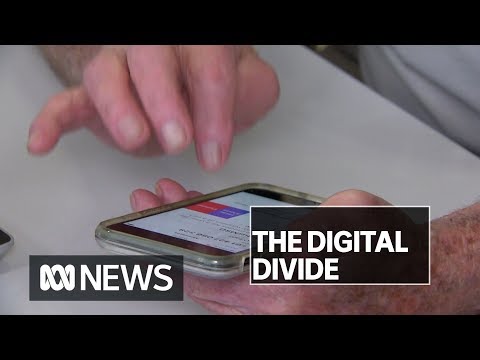
Smartphones have become a convenient front door to public services: booking medical appointments, applying for benefits, proving identity, receiving emergency information, and paying fees. They can reduce queues and paperwork, but convenience is not the same as universal access. A person may lack a device, reliable data, digital skills, a stable address, secure storage, or the ability to use small screens and app-based identity checks. Even people who own smartphones can be excluded by broken phones, depleted batteries, language barriers, disability, fraud fears, or systems that assume a single private user.
The policy challenge is to preserve efficient digital options without making them a condition of citizenship. An inclusive service might offer a genuine choice of phone, web, paper, telephone, trusted intermediary, and in-person routes, while keeping information consistent across them. Yet parallel channels cost money and can create delays or privacy risks. The hard question is not whether technology belongs in public life, but who carries the burden when it fails—and what minimum non-smartphone access a fair society should guarantee.
The policy challenge is to preserve efficient digital options without making them a condition of citizenship. An inclusive service might offer a genuine choice of phone, web, paper, telephone, trusted intermediary, and in-person routes, while keeping information consistent across them. Yet parallel channels cost money and can create delays or privacy risks. The hard question is not whether technology belongs in public life, but who carries the burden when it fails—and what minimum non-smartphone access a fair society should guarantee.
Useful vocabulary
Approx. CEFR · Topic relevance
digital exclusion
Being unable to participate fully because access to devices, internet, skills, or suitable services is limited.
Digital exclusion can turn a simple benefits application into a major obstacle.
offline alternative
A way to use a service without relying on the internet or an app.
A telephone line is useful only if it is a real offline alternative, not a last resort.
assisted access
Support from a person who helps someone complete a service, often by phone or in person.
Assisted access may help first-time users, but it should not remove their privacy or independence.
digital literacy
The ability to use digital tools safely, confidently, and effectively.
Providing free devices will have limited impact if digital literacy remains low.
authentication
The process of proving that a person is really who they claim to be.
Complex authentication can protect against fraud while also excluding legitimate users.
administrative burden
The time, effort, stress, and paperwork people face when dealing with public systems.
Traveling to an office during working hours can create a heavy administrative burden.
Useful expressions
The key distinction is between convenience and necessity.
Use this to argue that a useful digital option should not automatically become compulsory.
The key distinction is between convenience and necessity: an app may be convenient, but it should not be necessary for urgent care.
That solution shifts the burden onto...
Use this to identify who pays in time, money, effort, or risk.
That solution shifts the burden onto people who cannot afford a reliable device.
We should separate the ideal system from the realistic one.
Use this to bring practical limits into an ambitious proposal.
We should separate the ideal system from the realistic one, because staffing every local office may be difficult.
Efficiency for the provider may mean friction for the user.
Use this to challenge claims that automation benefits everyone equally.
Efficiency for the provider may mean friction for the user when identity checks fail repeatedly.
A fair policy needs a meaningful fallback.
Use this to argue that non-digital access must be practical, not merely theoretical.
A fair policy needs a meaningful fallback, such as a free phone service with trained staff.
Question list
- Ice breaking
- Main topic
- Free talk
| Q1. | Which recent decision made you think about accessing public services without a smartphone? |
|---|---|
| Q2. | Is accessing public services without a smartphone more important now than it was ten years ago? |
| Q3. | What story from your country relates to accessing public services without a smartphone? |
| Q4. | What would you most like to understand about accessing public services without a smartphone? |
| Q5. | What small detail about accessing public services without a smartphone do people often overlook? |
| Q6. | Which place or situation makes you think about accessing public services without a smartphone? |
| Q7. | Do people around you often discuss accessing public services without a smartphone? |
| Q8. | What feeling do you usually connect with accessing public services without a smartphone? |
| Q1. | Which real-world example could teach us most about accessing public services without a smartphone? |
|---|---|
| Q2. | How might wealthy and low-income people experience accessing public services without a smartphone differently? |
| Q3. | How might human behavior limit an ideal solution for accessing public services without a smartphone? |
| Q4. | How much should cost influence decisions about accessing public services without a smartphone? |
| Q5. | Does culture change what counts as a fair approach to accessing public services without a smartphone? |
| Q6. | What exception should any rule about accessing public services without a smartphone include? |
| Q7. | Would a voluntary system for accessing public services without a smartphone work better than a requirement? |
| Q8. | What trade-off are people most likely to ignore when discussing accessing public services without a smartphone? |
| Q1. | How might social media improve or worsen conversations about accessing public services without a smartphone? |
|---|---|
| Q2. | What question about accessing public services without a smartphone remained unanswered for you today? |
| Q3. | Would people adapt quickly or slowly to a major change in accessing public services without a smartphone? |
| Q4. | How might different generations compromise on accessing public services without a smartphone? |
| Q5. | How could art or entertainment explore accessing public services without a smartphone? |
| Q6. | How might children experience accessing public services without a smartphone differently from adults? |
| Q7. | What would make people trust a new system involving accessing public services without a smartphone? |
| Q8. | What new ethical question could grow out of accessing public services without a smartphone? |
Rules


Please be kind and respectful.
Note: You can be banned for violating any of these rules
No flirting! Don't ask for other people's social network, number etc. if he/she refuses to give them.
Note: You can be banned for violating any of these rules
Give others an equal opportunity to speak.
Note: You can be banned for violating any of these rules
Avoid Smoking / Drinking while you are talking.
Note: You can be banned for violating any of these rules
Turning your camera on is mandatory.
Note: You can be banned for violating any of these rules
Ready to join the conversation?
Book your spot and bring your perspective to the discussion.