Should Public Transport Be Free on Rainy Days?
Learn topic-related expressions and join the speaking club to practice them!


Marhaban everyone! my name is Bilel and I'm from Tunisia . I have a bachelor's degree in English (International Relations). I have worked as a translator, International Business Developer and a director in a teaching center. After COVID, I started my carrier as a part-time English teacher in Tunis, the capital city of Tunisia. I'm an ambitious person, and never give up my dream of working for the Ministry of Foreign Affairs of Tunisia, and why not be an ambassador someday!?
I'm thrilled to see you all in the Langclub sessions.

Topic guide Optional
A quick way to understand the topic and find useful language. Read as much or as little as you like.
1-minute overview
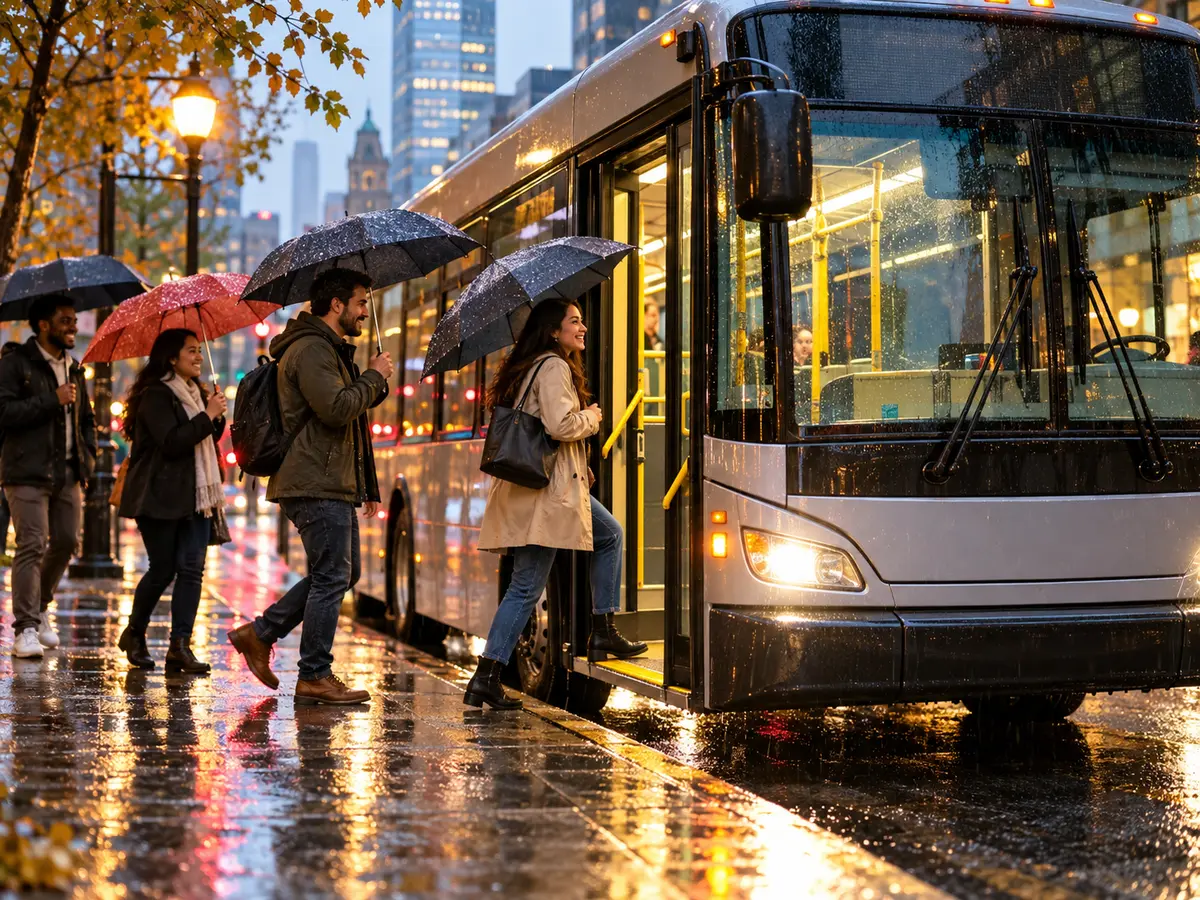
Rainy-day free transport is a simple idea with an appealing promise: people could avoid walking or cycling in bad weather, while cities might reduce traffic, accidents, and emissions. Research suggests that rain can temporarily lower bus ridership, whereas removing fares usually attracts more passengers. However, extra riders do not automatically mean fewer cars. Some may otherwise have walked, cycled, or delayed a short trip.
The policy also raises practical questions. A city would need a clear definition of rain, a reliable way to announce the offer, and enough vehicles for sudden demand. Heavy rain may disrupt roads and rail lines precisely when more people want to travel. The lost fare revenue would still have to come from somewhere, such as general taxes, employers, weather-emergency funds, or road-user charges. Supporters may see the plan as a humane public service; critics may prefer investing the same money in shelters, frequent service, and affordable fares every day. The central issue is whether a targeted incentive is fairer and more effective than improving the system for all riders.
The policy also raises practical questions. A city would need a clear definition of rain, a reliable way to announce the offer, and enough vehicles for sudden demand. Heavy rain may disrupt roads and rail lines precisely when more people want to travel. The lost fare revenue would still have to come from somewhere, such as general taxes, employers, weather-emergency funds, or road-user charges. Supporters may see the plan as a humane public service; critics may prefer investing the same money in shelters, frequent service, and affordable fares every day. The central issue is whether a targeted incentive is fairer and more effective than improving the system for all riders.
Useful vocabulary
Approx. CEFR · Topic relevance
fare-free transit
Public transport that passengers can use without paying a ticket price.
Fare-free transit may help low-income riders, but the city still has to fund the service.
ridership
/ˈraɪdərʃɪp/The number of people using a transport service over a period of time.
The council expects ridership to rise during the evening rush hour.
peak demand
The time when the greatest number of people want to use a service.
Free rides could create peak demand just when buses are already full.
revenue shortfall
The amount of money missing when income is lower than planned or needed.
A revenue shortfall could be covered through local taxes or government grants.
weather threshold
A defined weather level that triggers a policy or action.
Setting a weather threshold sounds fair, but light rain can feel serious to some travelers.
mode shift
A change from one form of travel to another, such as from driving to taking a bus.
The environmental benefits depend on whether the policy produces a real mode shift away from cars.
Useful expressions
The policy sounds attractive in principle, but its success would depend on implementation.
Use this to distinguish a good idea from the practical details needed to make it work.
The policy sounds attractive in principle, but its success would depend on implementation.
That benefit needs to be weighed against the cost to the wider public.
Use this to introduce a trade-off between a specific advantage and public spending.
That benefit needs to be weighed against the cost to the wider public.
It may address the symptom rather than the underlying problem.
Use this to argue that a proposal is temporary or incomplete.
It may address the symptom rather than the underlying problem of unreliable service.
The outcome would likely vary from one city to another.
Use this to avoid assuming that one policy will work equally everywhere.
The outcome would likely vary from one city to another, depending on density and service quality.
A more targeted approach might be to focus on those most affected.
Use this to suggest an alternative that directs support toward particular groups or places.
A more targeted approach might be to focus on routes with poor shelter and long waiting times.
Question list
- Ice breaking
- Main topic
- Free talk
| Q1. | How do you stay motivated when facing challenges? |
|---|---|
| Q2. | How do you adjust your skincare routine for different seasons? |
| Q3. | How do you create emotional boundaries with kindness? |
| Q4. | What role does 'curiosity' play in your life? |
| Q5. | What’s a personal value that guides most of your daily choices? |
| Q6. | If you could design your ideal city, what features would it have? |
| Q7. | What time of day feels most peaceful to you? |
| Q8. | What is your favorite type of hat? |
| Q1. | Do you use public transport when it rains? |
|---|---|
| Q2. | Could free rides help people stay dry? |
| Q3. | Would more passengers make buses too crowded? |
| Q4. | Who should pay for the free rides? |
| Q5. | Could this plan reduce traffic on rainy days? |
| Q6. | Should the offer apply to all kinds of rain? |
| Q7. | Would you change your travel plans for a free ride? |
| Q8. | What other days might deserve free transport? |
| Q1. | What is the most thought-provoking book you've read and why? |
|---|---|
| Q2. | Do you like your birthdays? |
| Q3. | How can schools help students maintain a healthy work-life balance? |
| Q4. | What makes listening an active skill? |
| Q5. | If every citizen had a say in drafting one national law, how would governments operate differently? |
| Q6. | Would you like to go on holiday to space? |
| Q7. | How do you prepare yourself for important events? |
| Q8. | What song makes you feel nostalgic? |
Rules


Please be kind and respectful.
Note: You can be banned for violating any of these rules
No flirting! Don't ask for other people's social network, number etc. if he/she refuses to give them.
Note: You can be banned for violating any of these rules
Give others an equal opportunity to speak.
Note: You can be banned for violating any of these rules
Avoid Smoking / Drinking while you are talking.
Note: You can be banned for violating any of these rules
Turning your camera on is mandatory.
Note: You can be banned for violating any of these rules
Ready to join the conversation?
Book your spot and bring your perspective to the discussion.