
Should Restaurants Offer Smaller Portions at Lower Prices?
Learn topic-related expressions and join the speaking club to practice them!


I’m Ken, a Kenyan accountant with a special love for languages. I enjoy cross-cultural conversations and love hearing different accents from around the world come together through one shared language. I especially enjoy easy, judgment-free conversations where there is no pressure for perfection—just people connecting over random topics.

Topic guide Optional
A quick way to understand the topic and find useful language. Read as much or as little as you like.
1-minute overview
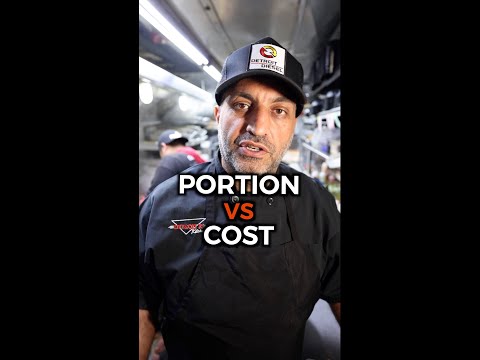
Restaurant portions sit at the intersection of value, appetite, health, and waste. Many diners like the feeling of getting a generous meal, especially when eating out is expensive. Yet a large plate can encourage people to eat beyond their hunger or leave edible food behind. The U.S. Environmental Protection Agency identifies serving-size adjustments and menu changes as practical ways food-service businesses can prevent wasted food before it is created.
Smaller, lower-priced options could give customers more control, but the idea is not as simple as cutting every dish in half. Restaurants still face fixed costs for staff, rent, preparation, and table service, so a smaller meal may not be proportionally cheaper. More choices can also complicate kitchens, slow service, or make menus harder to understand. On the other hand, flexible portions may attract budget-conscious diners, people with smaller appetites, and customers who prefer multiple courses or shared meals. The key question is whether portion choice creates genuine value rather than merely making a familiar dish seem more expensive.
Smaller, lower-priced options could give customers more control, but the idea is not as simple as cutting every dish in half. Restaurants still face fixed costs for staff, rent, preparation, and table service, so a smaller meal may not be proportionally cheaper. More choices can also complicate kitchens, slow service, or make menus harder to understand. On the other hand, flexible portions may attract budget-conscious diners, people with smaller appetites, and customers who prefer multiple courses or shared meals. The key question is whether portion choice creates genuine value rather than merely making a familiar dish seem more expensive.
Useful vocabulary
Approx. CEFR · Topic relevance
portion size
The amount of food served as one meal or one serving.
Portion size should reflect how hungry customers are likely to be.
plate waste
Food left uneaten by customers after it has been served.
The café tracked plate waste before changing its lunch menu.
fixed costs
Business expenses that remain similar regardless of how much is sold.
Fixed costs mean a half-size meal cannot always cost half as much.
price point
A particular price at which a product is offered or seems attractive.
A smaller entrée at a lower price point could bring in new customers.
perceived value
How worthwhile something seems to a customer compared with its price.
A large portion may increase perceived value even when much of it is wasted.
customization
The ability to adapt a product or service to an individual’s preferences.
Portion customization may make a menu feel more inclusive.
Useful expressions
The real trade-off is between ... and ...
Use this to identify two competing benefits or priorities.
The real trade-off is between customer choice and kitchen efficiency.
That assumes that ...
Use this to question an idea by revealing what it depends on.
That assumes that diners will see a smaller portion as a fair deal.
It depends largely on whether ...
Use this to give a conditional, nuanced view.
It depends largely on whether the price difference feels meaningful.
From an operational perspective, ...
Use this to examine an issue from the business side.
From an operational perspective, several portion sizes could complicate preparation.
A better comparison might be ...
Use this to reframe a discussion or challenge a weak comparison.
A better comparison might be between a smaller entrée and a shareable dish.
Question list
- Ice breaking
- Main topic
- Free talk
| Q1. | What is something you have changed your mind about? |
|---|---|
| Q2. | What everyday object do you use the most? |
| Q3. | What helps you feel comfortable in a group? |
| Q4. | What is one choice that made your life easier? |
| Q5. | Which season fits your personality best? |
| Q6. | What kind of stories capture your attention? |
| Q7. | When did you last try something unfamiliar? |
| Q8. | What does a good weekend look like to you? |
| Q1. | Do restaurant portions usually feel too large, too small, or about right? |
|---|---|
| Q2. | Would you order a smaller meal if it cost less? |
| Q3. | How could smaller portions reduce food waste? |
| Q4. | Should customers be able to choose from several portion sizes? |
| Q5. | Would smaller portions make restaurant pricing feel fairer? |
| Q6. | How might this choice affect a restaurant's costs and profits? |
| Q7. | Is sharing a large dish better than ordering smaller portions? |
| Q8. | What would your ideal menu system look like? |
| Q1. | What was the most surprising point raised today? |
|---|---|
| Q2. | Did your opinion become stronger or more flexible? |
| Q3. | Which value mattered most in your reasoning? |
| Q4. | What practical step could improve the situation? |
| Q5. | Who would be most affected by this issue? |
| Q6. | What information would help you decide more confidently? |
| Q7. | What is one risk and one benefit to remember? |
| Q8. | What question should a future session ask next? |
Rules


Please be kind and respectful.
Note: You can be banned for violating any of these rules
No flirting! Don't ask for other people's social network, number etc. if he/she refuses to give them.
Note: You can be banned for violating any of these rules
Give others an equal opportunity to speak.
Note: You can be banned for violating any of these rules
Avoid Smoking / Drinking while you are talking.
Note: You can be banned for violating any of these rules
Turning your camera on is mandatory.
Note: You can be banned for violating any of these rules
Ready to join the conversation?
Book your spot and bring your perspective to the discussion.