
Should Restaurants Show the Carbon Footprint of Each Dish?
Learn topic-related expressions and join the speaking club to practice them!


Hello everyone! I'm Geetanjali Tiwari from New Delhi, India. I recently graduated in English and Political Science, and I'm looking forward to beginning my master's journey.I'm an avid reader, a curious learner, and someone who loves meaningful conversations. I believe that language is more than just words, it's a way to connect with people, exchange ideas, and understand different cultures.
That's what I enjoy most about LangClub, and I'm excited to create a welcoming space where we can all learn from one another.

Topic guide Optional
A quick way to understand the topic and find useful language. Read as much or as little as you like.
1-minute overview
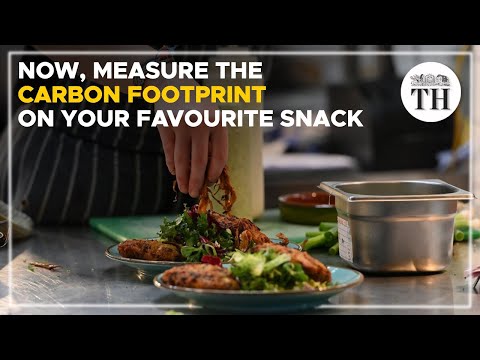
Carbon labels would show an estimate of greenhouse-gas emissions linked to a dish, often expressed as kilograms of carbon-dioxide equivalent. Supporters say that menus are a practical place to make climate information visible at the moment of choice. They also argue that labels could encourage restaurants to redesign recipes, source ingredients differently, and compete on lower-impact meals.
Yet a single number can conceal difficult judgments. A dish’s footprint depends on farming methods, land-use change, transport, energy, portion size, and food waste; seasonal menus and changing suppliers make calculation harder. Critics worry about misleading precision, confusing symbols, greenwashing, and compliance costs that weigh more heavily on small independent restaurants. The policy debate therefore reaches beyond whether diners deserve information. It concerns who sets a credible method, whether labels should be mandatory or voluntary, how price and access affect choice, and whether environmental scores should cover carbon alone or wider harms such as water use, biodiversity loss, and animal welfare.
Yet a single number can conceal difficult judgments. A dish’s footprint depends on farming methods, land-use change, transport, energy, portion size, and food waste; seasonal menus and changing suppliers make calculation harder. Critics worry about misleading precision, confusing symbols, greenwashing, and compliance costs that weigh more heavily on small independent restaurants. The policy debate therefore reaches beyond whether diners deserve information. It concerns who sets a credible method, whether labels should be mandatory or voluntary, how price and access affect choice, and whether environmental scores should cover carbon alone or wider harms such as water use, biodiversity loss, and animal welfare.
Useful vocabulary
Approx. CEFR · Topic relevance
carbon footprint
The total greenhouse-gas emissions associated with an activity, product, or meal.
A restaurant might calculate the carbon footprint of its beef burger and its lentil stew.
life-cycle assessment
A method for measuring environmental impacts from production through disposal.
A life-cycle assessment can include farming, packaging, transport, cooking, and waste.
carbon-dioxide equivalent
A common unit that converts different greenhouse gases into an equivalent amount of carbon dioxide.
The menu could show each dish’s emissions in grams of carbon-dioxide equivalent.
standardization
The creation of shared rules or methods so that results can be compared fairly.
Without standardization, two restaurants could calculate the same dish’s impact in very different ways.
greenwashing
Marketing that makes a product or company seem more environmentally responsible than it really is.
A vague green symbol without reliable data could be accused of greenwashing.
trade-off
A balance in which gaining one benefit requires accepting a cost or disadvantage.
There may be a trade-off between giving diners detailed information and keeping menus simple.
Useful expressions
The central issue is not simply whether..., but how...
Use this to move the discussion from a simple yes-or-no question to policy design.
The central issue is not simply whether labels are useful, but how they can be calculated fairly.
That argument rests on the assumption that...
Use this to identify an idea that must be true for an argument to work.
That argument rests on the assumption that diners will understand and use the information.
The benefits may be real, but they need to be weighed against...
Use this to acknowledge an advantage while introducing costs or risks.
The benefits may be real, but they need to be weighed against the burden on small businesses.
A one-size-fits-all approach could overlook...
Use this to question whether the same policy suits every place or group.
A one-size-fits-all approach could overlook differences between global chains and family-run cafés.
The key distinction is between informing choice and steering choice.
Use this to explore the boundary between transparency and pressure.
The key distinction is between informing choice and steering choice through warnings or higher prices.
Question list
- Ice breaking
- Main topic
- Free talk
| Q1. | What’s something you’ve been learning to accept with more compassion toward yourself? |
|---|---|
| Q2. | What’s your favorite way to spend time outdoors? |
| Q3. | Have you ever been deeply inspired by witnessing kindness in unexpected places? |
| Q4. | If you could have any historical figure as a mentor, who would it be and why? |
| Q5. | Do you like to watch movies with subtitles or dubbed in another language? |
| Q6. | If you could witness the best version of yourself, what would they be doing? |
| Q7. | How do you build trust with someone new? |
| Q8. | Do you ever buy used clothes? |
| Q1. | When choosing a meal, how much attention do you pay to environmental information? |
|---|---|
| Q2. | What would a carbon label need to show to be genuinely useful? |
| Q3. | Would seeing a high carbon score change what you ordered? |
| Q4. | Could carbon labels encourage restaurants to offer dishes that are better for the environment? |
| Q5. | What might make these labels confusing or misleading for customers? |
| Q6. | Who should be responsible for checking that the information is correct? |
| Q7. | Would customers accept higher prices for meals with a lower carbon footprint? |
| Q8. | Should every restaurant use environmental labels, or should each restaurant decide? |
| Q1. | How do you keep yourself from procrastinating? |
|---|---|
| Q2. | What is the significance of ‘play’ in your daily life? |
| Q3. | Do you think you can spend your whole life with one person? |
| Q4. | What is the role of vulnerability in building relationships? |
| Q5. | If you could be a professional athlete, which sport would you choose and why? |
| Q6. | How would you redesign mental health support systems if given the chance? |
| Q7. | What helps you navigate important transitions? |
| Q8. | Many artists say their work reflects their personal journeys—how do you view this connection? |
Rules


Please be kind and respectful.
Note: You can be banned for violating any of these rules
No flirting! Don't ask for other people's social network, number etc. if he/she refuses to give them.
Note: You can be banned for violating any of these rules
Give others an equal opportunity to speak.
Note: You can be banned for violating any of these rules
Avoid Smoking / Drinking while you are talking.
Note: You can be banned for violating any of these rules
Turning your camera on is mandatory.
Note: You can be banned for violating any of these rules
Ready to join the conversation?
Book your spot and bring your perspective to the discussion.