
Should Rich Countries Limit Recruitment of Doctors and Nurses from Countries With Staff Shortages?
Learn topic-related expressions and join the speaking club to practice them!


Marhaban everyone! my name is Bilel and I'm from Tunisia . I have a bachelor's degree in English (International Relations). I have worked as a translator, International Business Developer and a director in a teaching center. After COVID, I started my carrier as a part-time English teacher in Tunis, the capital city of Tunisia. I'm an ambitious person, and never give up my dream of working for the Ministry of Foreign Affairs of Tunisia, and why not be an ambassador someday!?
I'm thrilled to see you all in the Langclub sessions.

Topic guide Optional
A quick way to understand the topic and find useful language. Read as much or as little as you like.
1-minute overview
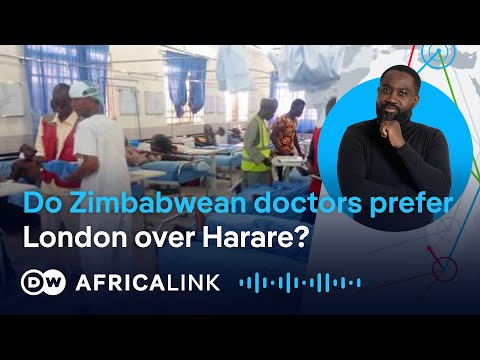
Rich countries increasingly rely on clinicians trained elsewhere to fill vacancies quickly. OECD data for 2023 show that foreign-trained professionals made up about one fifth of doctors and nearly one tenth of nurses on average, although dependence varies greatly. Migration can improve an individual’s income, safety, training and career prospects; it can also bring skills, remittances and professional links to countries of origin.
Yet when a health system already lacks staff, the departure of experienced workers may lengthen waiting times, weaken rural services and reduce capacity during emergencies. The ethical question is therefore not simply whether migration is good or bad. It concerns who bears the cost of training, retention and understaffing. The WHO framework encourages ethical recruitment, protection of workers’ rights and cooperation between source and destination countries.
Possible responses include expanding domestic education and retention, avoiding active recruitment from the most vulnerable systems, bilateral agreements, and co-investment in training or services. The difficult balance is between a person’s freedom to move and every community’s need for reliable care.
Yet when a health system already lacks staff, the departure of experienced workers may lengthen waiting times, weaken rural services and reduce capacity during emergencies. The ethical question is therefore not simply whether migration is good or bad. It concerns who bears the cost of training, retention and understaffing. The WHO framework encourages ethical recruitment, protection of workers’ rights and cooperation between source and destination countries.
Possible responses include expanding domestic education and retention, avoiding active recruitment from the most vulnerable systems, bilateral agreements, and co-investment in training or services. The difficult balance is between a person’s freedom to move and every community’s need for reliable care.
Useful vocabulary
Approx. CEFR · Topic relevance
medical brain drain
The loss of trained health professionals when they leave their home country to work abroad.
Medical brain drain can be especially damaging when rural hospitals have few specialists.
active recruitment
A deliberate effort by employers or agencies to attract workers from a particular place.
Some argue that active recruitment from countries with severe shortages should be restricted.
source country
The country from which a migrant worker leaves.
A source country may lose both experienced staff and the public investment used to train them.
destination country
The country where a migrant worker goes to live and work.
Destination countries should not treat overseas recruitment as a substitute for training enough staff locally.
retention
The ability of a health system to keep trained workers in their jobs over time.
Better working conditions may improve retention more effectively than one-time salary increases.
co-investment
Shared financial or practical support by two or more parties for a common goal.
Co-investment could mean that recruiting countries help fund nursing education in source countries.
Useful expressions
The central trade-off is between … and …
Use this to identify two values that are both important but may conflict.
The central trade-off is between individual mobility and equal access to healthcare.
That argument assumes that …
Use this to uncover an idea or condition that may not have been stated openly.
That argument assumes that workers who stay will have decent jobs and safe conditions.
We should distinguish between … and …
Use this to separate related issues that should not be treated as identical.
We should distinguish between restricting active recruitment and preventing individuals from applying freely.
The burden falls disproportionately on …
Use this to describe an unfairly unequal distribution of costs or harm.
The burden falls disproportionately on communities that have invested scarce resources in training staff.
A fairer model might involve …
Use this to propose a practical alternative without claiming it is a complete solution.
A fairer model might involve bilateral agreements that include training support and worker protections.
Question list
- Ice breaking
- Main topic
- Free talk
| Q1. | How do you keep yourself motivated during repetitive or tedious tasks? |
|---|---|
| Q2. | What’s an adventure you’ve always wanted to take purely for the experience? |
| Q3. | How do you foster courage and curiosity in moments of uncertainty? |
| Q4. | How do you adapt your approach when something isn’t working as planned? |
| Q5. | If you could live in any fictional city, where would it be and why? |
| Q6. | Describe a place that always feels like a source of renewal or energy for you. |
| Q7. | If you could see all the paths your life could have taken, what would you look for? |
| Q8. | Is not telling the full story a form of dishonesty? |
| Q1. | Do many countries depend too heavily on foreign-trained health workers? |
|---|---|
| Q2. | Why do doctors and nurses choose to move abroad? |
| Q3. | Is it fair for rich countries to recruit from places with serious staff shortages? |
| Q4. | Should individual workers be free to move wherever they want? |
| Q5. | Would higher salaries at home reduce medical brain drain? |
| Q6. | Should recruiting countries compensate the countries that trained these workers? |
| Q7. | Could recruitment limits unfairly restrict workers’ opportunities? |
| Q8. | What is the fairest way to balance worker freedom and public health needs? |
| Q1. | Is there a celebrity you respect the most? Who? |
|---|---|
| Q2. | What personal strength are you exploring lately? |
| Q3. | What makes empathy easy or difficult for you? |
| Q4. | What is your favorite type of tea or coffee? |
| Q5. | Imagine you’re writing a letter to someone you’ve never met but who inspires you. What would you say? |
| Q6. | What brings clarity to your life? |
| Q7. | Who has taught you the beauty of slowing down? |
| Q8. | What activity helps you reset your mood? |
Rules


Please be kind and respectful.
Note: You can be banned for violating any of these rules
No flirting! Don't ask for other people's social network, number etc. if he/she refuses to give them.
Note: You can be banned for violating any of these rules
Give others an equal opportunity to speak.
Note: You can be banned for violating any of these rules
Avoid Smoking / Drinking while you are talking.
Note: You can be banned for violating any of these rules
Turning your camera on is mandatory.
Note: You can be banned for violating any of these rules
Ready to join the conversation?
Book your spot and bring your perspective to the discussion.