Should Schools Let Students Use AI If They Explain How They Used It?
Learn topic-related expressions and join the speaking club to practice them!
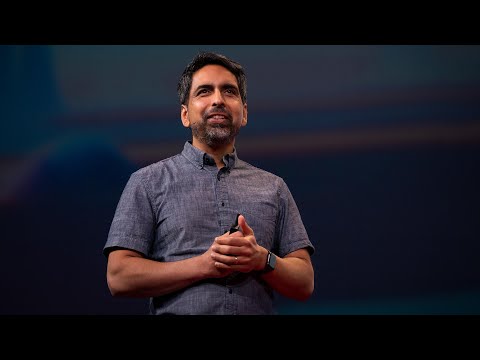


Hello everyone! I'm Geetanjali Tiwari from New Delhi, India. I recently graduated in English and Political Science, and I'm looking forward to beginning my master's journey.I'm an avid reader, a curious learner, and someone who loves meaningful conversations. I believe that language is more than just words, it's a way to connect with people, exchange ideas, and understand different cultures.
That's what I enjoy most about LangClub, and I'm excited to create a welcoming space where we can all learn from one another.

Topic guide Optional
A quick way to understand the topic and find useful language. Read as much or as little as you like.
1-minute overview
Generative AI has moved quickly into classrooms, and many schools are shifting from outright bans toward rules that say when AI is allowed, limited or prohibited. A common middle path is disclosure. Students may use AI for some tasks, but they must say which tool they used, what they asked it, and how they changed the result. Many school policy templates now take this approach, and some treat a forgotten disclosure as a learning issue before a disciplinary one.
Supporters say disclosure is honest and realistic. It treats AI as a tool that students will meet at university and at work. It also lets teachers see how students think. It may reduce the advantage held by families who can pay for private tutors.
Critics raise several doubts. Disclosure relies on trust, and students may leave things out or invent a tidy account. AI can also do the thinking that school is meant to build, such as drafting, summarising and problem-solving. Assessment is hard to design too. Teachers may need oral questions, drafts or in-class work to check real understanding. The central tension is between preparing students for AI and protecting their independent skills.
Useful vocabulary
Approx. CEFR · Topic relevance
disclosure
/dɪsˈkloʊʒər/The act of openly telling others information that might otherwise stay hidden.
Is disclosure enough, or should teachers also check what the student actually learned?
academic integrity
Honest behaviour in study and assessment, including original work and fair credit to sources.
For some schools, undeclared AI use is a breach of academic integrity even if the ideas are correct.
scaffolding
/ˈskæfoʊldɪŋ/Temporary support that helps learners reach a skill, then is gradually withdrawn.
AI explanations can work as scaffolding, but only if students later try the task without them.
cognitive offloading
Relying on a tool to do mental work so that you do not have to do it yourself.
Cognitive offloading is useful for routine tasks, but risky when the aim is to learn the skill.
oral defence
A spoken check in which a student answers questions to show they understand their written work.
A short oral defence might expose who really understands the essay they submitted.
equity
/ˈɛkwɪti/Fairness that gives people the support they need to have comparable opportunities.
Equity is the main argument for AI access, but unequal devices and skills could still widen gaps.
Useful expressions
That depends on what the assignment is meant to measure
Qualifying a general claim by linking it to a purpose.
That depends on what the assignment is meant to measure: if it tests writing, AI drafting defeats the point.
The line is blurrier than it first appears
Challenging a clear-cut distinction.
The line is blurrier than it first appears, because grammar suggestions can slowly become full rewriting.
On paper, this works, but in practice
Contrasting a policy's theory with real-world problems.
On paper, this works, but in practice students may only report what they expect teachers to accept.
To be fair to the other side
Acknowledging a strong opposing point before responding.
To be fair to the other side, banning AI is simple to explain and easy to enforce.
What are we actually trading off here
Examining costs and benefits behind a decision.
What are we actually trading off here: convenience now, or deeper skills later?
Question list
- Ice breaking
- Main topic
- Free talk
| Q1. | What are some of your favorite food-related books, movies, or documentaries that have inspired your culinary interests and passions? |
|---|---|
| Q2. | If you could have any celebrity as your best friend, who would you choose and why? |
| Q3. | How do you approach challenges that test your patience or resilience? |
| Q4. | Describe a moment when you realized how far you've come in your personal journey. |
| Q5. | What is your favorite type of cookie? |
| Q6. | Have you ever had an adventure that began with a simple “yes”? |
| Q7. | If you could have any type of job or career for one day, what would it be and why? |
| Q8. | What’s something new you learned recently? |
| Q1. | Have you used AI to understand something difficult? |
|---|---|
| Q2. | When does help from AI become cheating at school? |
| Q3. | What should students explain about their use of AI? |
| Q4. | Should teachers allow different AI rules for different assignments? |
| Q5. | How could a teacher check whether a student understands their work? |
| Q6. | Would banning AI disadvantage students who cannot afford private tutors? |
| Q7. | What skills might students lose if AI does too much? |
| Q8. | Would you trust a school that openly encourages careful AI use? |
| Q1. | Where do you like to watch the sunset? |
|---|---|
| Q2. | What makes your family unique? |
| Q3. | Imagine a world where artificial intelligence makes all legal decisions. How would this affect justice systems? |
| Q4. | How do you react when someone questions your intentions? |
| Q5. | What’s the most thought-provoking art you've ever seen? |
| Q6. | What matters more for happiness: experiences or material comforts? |
| Q7. | Why are online learning platforms becoming more popular globally? |
| Q8. | Do you think AI will replace most jobs in the future? |
Rules


Please be kind and respectful.
Note: You can be banned for violating any of these rules
No flirting! Don't ask for other people's social network, number etc. if he/she refuses to give them.
Note: You can be banned for violating any of these rules
Give others an equal opportunity to speak.
Note: You can be banned for violating any of these rules
Avoid Smoking / Drinking while you are talking.
Note: You can be banned for violating any of these rules
Turning your camera on is mandatory.
Note: You can be banned for violating any of these rules
Ready to join the conversation?
Book your spot and bring your perspective to the discussion.