
Should Scientists Release Genetically Modified Mosquitoes?
Learn topic-related expressions and join the speaking club to practice them!

Hello World! My name is Sultan, and I'm a traveler in the world of information.
I'm a person who will work and invest all of my efforts in the progress of humanity as long as I am alive. So let's create a place where we can grow together, learn, experiment, and open something new that can help us improve not only our English skills but also our lives, and level up every day!
(It may sound crazy, but I like crazy things) ^_*

Topic guide Optional
A quick way to understand the topic and find useful language. Read as much or as little as you like.
1-minute overview
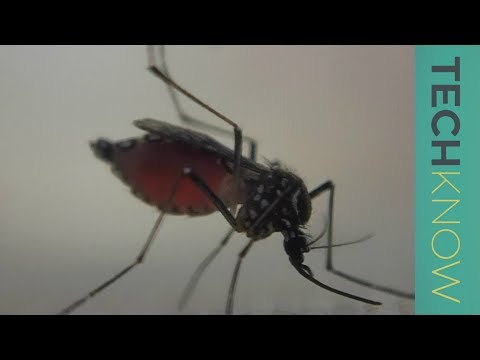
Genetically modified mosquitoes are designed to reduce disease transmission, usually by lowering the numbers of a particular mosquito species or making it less able to carry a pathogen. One approach releases modified males that mate with wild females; their offspring do not survive in the same way as normal mosquitoes. More ambitious proposals, such as gene drives, could spread a genetic trait through a population far more quickly. These technologies may complement—not automatically replace—methods such as removing standing water, using nets, and targeted insecticides.
The central debate is not simply whether mosquitoes are unpleasant. Diseases such as dengue, malaria, and Zika can cause severe harm, so delaying action also has consequences. Supporters emphasize potentially precise, species-focused disease control and reduced pesticide use. Critics ask whether field trials can reveal all ecological effects, whether a population might evolve resistance, and who should decide when an experiment affects a shared environment. The discussion therefore combines public health, scientific uncertainty, environmental responsibility, and democratic consent.
The central debate is not simply whether mosquitoes are unpleasant. Diseases such as dengue, malaria, and Zika can cause severe harm, so delaying action also has consequences. Supporters emphasize potentially precise, species-focused disease control and reduced pesticide use. Critics ask whether field trials can reveal all ecological effects, whether a population might evolve resistance, and who should decide when an experiment affects a shared environment. The discussion therefore combines public health, scientific uncertainty, environmental responsibility, and democratic consent.
Useful vocabulary
Approx. CEFR · Topic relevance
vector-borne disease
An illness transmitted by an animal or insect that carries a pathogen between hosts.
Dengue is a vector-borne disease because mosquitoes can transmit the virus.
population suppression
A strategy intended to reduce the number of individuals in a target species.
The release is designed for population suppression rather than the elimination of every mosquito.
gene drive
A genetic system designed to make a trait spread through a population faster than normal inheritance would allow.
A gene drive could be powerful, but its effects may be harder to reverse.
ecological ripple effect
An indirect environmental change that spreads through connected species or habitats.
We should consider whether removing one species could create an ecological ripple effect.
resistance
The ability of organisms to survive or adapt to a method meant to control them.
Mosquitoes may eventually develop resistance if the same control method is used repeatedly.
informed consent
Agreement made after people receive clear, relevant information about benefits and risks.
Some residents argue that meaningful informed consent is necessary before a local field trial.
Useful expressions
The key distinction is between a controlled trial and a permanent intervention.
Use it to separate a limited experiment from a long-term environmental change.
The key distinction is between a controlled trial and a permanent intervention, because the standards of proof may differ.
The benefits should be weighed against both known and unknown risks.
Use it to frame a balanced risk-benefit argument.
The benefits should be weighed against both known and unknown risks, rather than assumed to outweigh them.
That conclusion depends on how reversible the intervention really is.
Use it to challenge an argument based on the idea that a decision can easily be undone.
That conclusion depends on how reversible the intervention really is once the mosquitoes have bred in the wild.
We should compare this proposal with the realistic alternatives, not an ideal alternative.
Use it to question unfair comparisons with perfect disease control or zero risk.
We should compare this proposal with the realistic alternatives, not an ideal alternative that no community can afford.
Public acceptance is not the same as informed public participation.
Use it to distinguish passive approval from meaningful local involvement.
Public acceptance is not the same as informed public participation if residents receive information only after the decision is made.
Sources & further reading
Question list
- Ice breaking
- Main topic
- Free talk
| Q1. | If you had to wear a hat made of food, what type of food would you choose and why? |
|---|---|
| Q2. | What is one thing you've always wanted to try but haven't had the chance to yet? |
| Q3. | What’s something you’ve changed your mind about recently? |
| Q4. | What is the most ordinary-seeming thing that you find fascinating? |
| Q5. | How do you think the concept of "food as medicine" has evolved over time and across different cultural perspectives? |
| Q6. | Name an activity that instantly helps you feel calm and centered. |
| Q7. | What would you do if you could switch lives with any celebrity for a day? |
| Q8. | If you could create a new sport, what would it be like? |
| Q1. | Would you support releasing modified mosquitoes in your community? |
|---|---|
| Q2. | Is genetic technology acceptable if it can prevent serious diseases? |
| Q3. | What risks might come from changing a wild animal population? |
| Q4. | Should local residents be able to reject such experiments? |
| Q5. | Is doing nothing also a risk when mosquito-borne diseases kill people? |
| Q6. | How much evidence should scientists need before releasing modified animals? |
| Q7. | Should humans deliberately change ecosystems to protect human health? |
| Q8. | When do the possible benefits of new technology justify uncertain risks? |
| Q1. | What’s a flavor that instantly makes you smile? |
|---|---|
| Q2. | How do you balance being direct and being sensitive? |
| Q3. | Why are mental health conversations gaining more attention globally? |
| Q4. | What helps you build confidence in new environments? |
| Q5. | Think about a moment when you truly surprised yourself. What did you discover? |
| Q6. | How do you stay motivated during difficult times? |
| Q7. | How do you approach problem-solving in your daily life? |
| Q8. | Why do people find comfort in familiar routines? |
Rules


Please be kind and respectful.
Note: You can be banned for violating any of these rules
No flirting! Don't ask for other people's social network, number etc. if he/she refuses to give them.
Note: You can be banned for violating any of these rules
Give others an equal opportunity to speak.
Note: You can be banned for violating any of these rules
Avoid Smoking / Drinking while you are talking.
Note: You can be banned for violating any of these rules
Turning your camera on is mandatory.
Note: You can be banned for violating any of these rules
Ready to join the conversation?
Book your spot and bring your perspective to the discussion.