
Should Shops Let Customers Skip Lines for a Fee?
Learn topic-related expressions and join the speaking club to practice them!


Hello World! My name is Sultan, and I'm a traveler in the world of information.
I'm a person who will work and invest all of my efforts in the progress of humanity as long as I am alive. So let's create a place where we can grow together, learn, experiment, and open something new that can help us improve not only our English skills but also our lives, and level up every day!
(It may sound crazy, but I like crazy things) ^_*

Topic guide Optional
A quick way to understand the topic and find useful language. Read as much or as little as you like.
1-minute overview
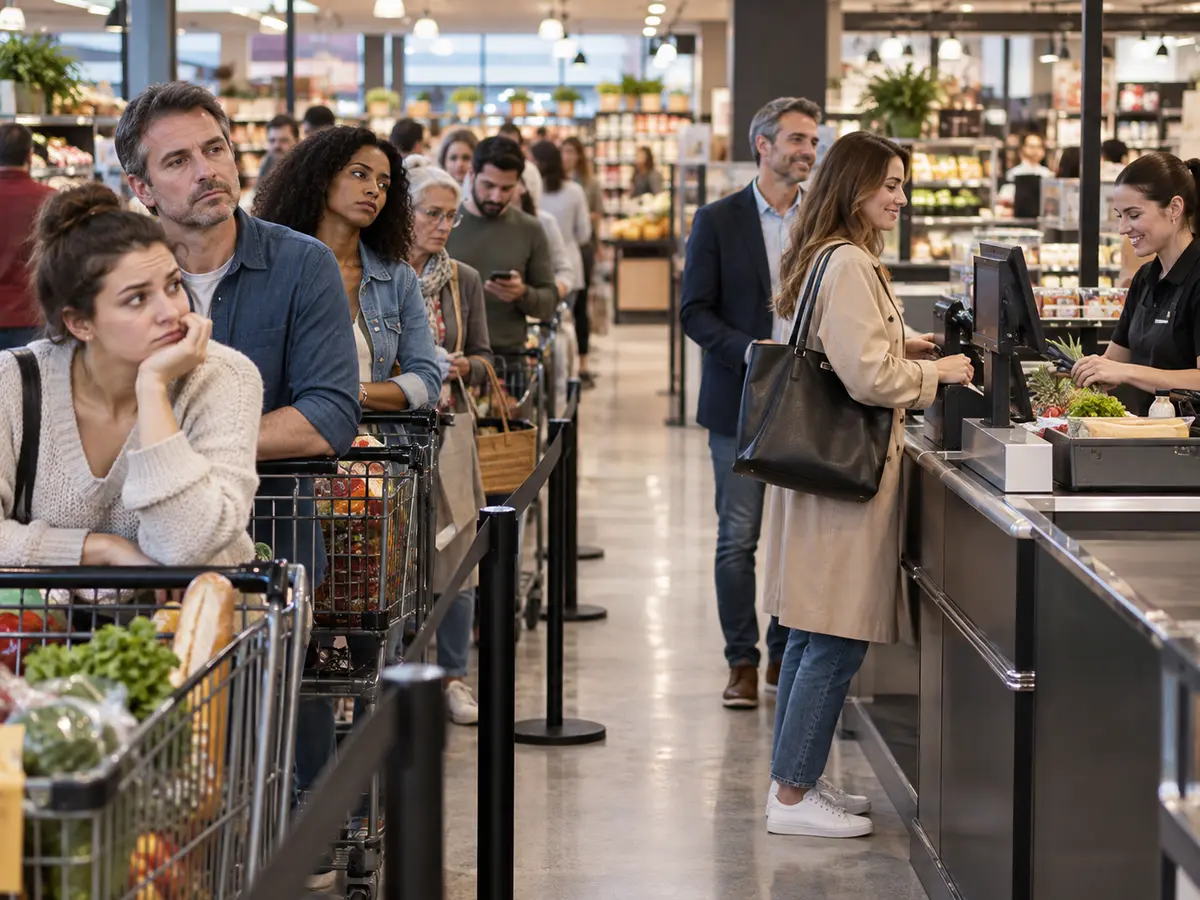
Paying to skip a queue is already common in travel, entertainment, and some online services. Supporters see it as a voluntary choice: people with limited time can pay, while shops gain revenue that might fund more staff or better service. A priority option could also separate quick purchases from complex ones, potentially making the whole system work more smoothly.
The main objection is fairness. A queue usually represents a simple social rule: first come, first served. When later arrivals move ahead because they can afford a fee, regular customers may feel that their time matters less. Research on priority queues also suggests that regular customers can face longer expected waits when others buy priority. The debate therefore depends on design: how many priority places are available, whether the rules are transparent, and whether priority is based on money, need, or both. The issue becomes more sensitive in places involving health, public services, or essential goods, where equal access may matter more than convenience.
The main objection is fairness. A queue usually represents a simple social rule: first come, first served. When later arrivals move ahead because they can afford a fee, regular customers may feel that their time matters less. Research on priority queues also suggests that regular customers can face longer expected waits when others buy priority. The debate therefore depends on design: how many priority places are available, whether the rules are transparent, and whether priority is based on money, need, or both. The issue becomes more sensitive in places involving health, public services, or essential goods, where equal access may matter more than convenience.
Useful vocabulary
Approx. CEFR · Topic relevance
first come, first served
A rule under which people are served in the order they arrive.
First come, first served feels fair, even if it is not always the fastest system.
paid priority
Faster access to a service in exchange for an extra payment.
Paid priority may be acceptable if it does not seriously slow the regular line.
queue-jumping
Moving ahead of others who arrived earlier, especially in a way seen as unfair.
Some people would describe a paid fast lane as legal queue-jumping.
two-tier service
A system that offers different levels of service to different groups.
A two-tier service can be efficient, but it can also make customers feel divided.
time-sensitive
Needing to happen quickly because delay has important consequences.
A parent collecting a child from school may have a time-sensitive reason to avoid a long wait.
congestion
/kənˈdʒestʃən/A situation in which too many people or vehicles are competing for limited space or service.
The store could use extra staff during peak-hour congestion instead of selling places in line.
Useful expressions
The fairness of the system depends on...
Use this to identify the conditions that make a policy acceptable or unacceptable.
The fairness of the system depends on whether regular customers are clearly protected.
That may be efficient in the short term, but...
Use this to recognize a benefit while raising a longer-term concern.
That may be efficient in the short term, but it could damage trust in the store.
We should distinguish between convenience and necessity.
Use this to separate ordinary preferences from urgent or essential needs.
We should distinguish between convenience and necessity when deciding who receives priority.
The burden would fall disproportionately on...
Use this to discuss when a policy affects one group more heavily than others.
The burden would fall disproportionately on people who cannot afford the extra fee.
A better test would be whether...
Use this to propose a clearer standard for judging an idea.
A better test would be whether the regular line still moves at a reasonable speed.
Sources & further reading
Question list
- Ice breaking
- Main topic
- Free talk
| Q1. | What was your most memorable Halloween costume? |
|---|---|
| Q2. | If you could witness any natural wonder in person, which would it be? |
| Q3. | What was the last film that you watched? |
| Q4. | Do you often go on holiday? |
| Q5. | What is your favorite type of fruit? |
| Q6. | What's the most interesting cultural festival or celebration you've experienced, and what did you learn from it? |
| Q7. | What new experience do you crave? |
| Q8. | What was a turning point in your life that shaped who you are today? |
| Q1. | How do you feel when someone pays to skip a line? |
|---|---|
| Q2. | When is a long wait especially difficult? |
| Q3. | Could priority lines make shopping faster for everyone? |
| Q4. | Should older customers get priority without paying? |
| Q5. | What is a fair price for saving ten minutes? |
| Q6. | Would you use this service at a busy store? |
| Q7. | How could shops keep the regular line moving? |
| Q8. | Are some places where paid priority should never be allowed? |
| Q1. | What are your thoughts on the use of renewable energy sources? |
|---|---|
| Q2. | How do you perceive the concept of 'introspection'? |
| Q3. | How do you think we can promote greater diversity and inclusion in the workplace? |
| Q4. | Do you think society places too much pressure on young people to succeed? |
| Q5. | What are your thoughts on the concept of power and authority? |
| Q6. | Why do we worry about things that rarely happen? |
| Q7. | Do you usually offer advice or wait until you're asked? |
| Q8. | In your view, has social media done more harm or good for society? |
Rules


Please be kind and respectful.
Note: You can be banned for violating any of these rules
No flirting! Don't ask for other people's social network, number etc. if he/she refuses to give them.
Note: You can be banned for violating any of these rules
Give others an equal opportunity to speak.
Note: You can be banned for violating any of these rules
Avoid Smoking / Drinking while you are talking.
Note: You can be banned for violating any of these rules
Turning your camera on is mandatory.
Note: You can be banned for violating any of these rules
Ready to join the conversation?
Book your spot and bring your perspective to the discussion.